Black Eyed Beans with Mushrooms

Knowing we would both be home late tonight, we cooked this on Sunday so that all we had to do was reheat it when we got home this evening. I wasn’t entirely convinced about this when Stephen suggested it but since I didn’t have an alternative suggestion, we decided to give it a go.
My main concern was whether the texture of the beans and mushrooms would work together. It wasn’t as bad as I imagined but I wasn’t completely sold, I think chopping the mushrooms smaller would have helped and we should have doubled up on the spices. This is a Madhur Jaffrey recipe and experience has shown that her seasoning is too mild for our tastes. And I know I always say it but this would definitely have been better as a side dish alongside a meat curry.


Chicken Tagine
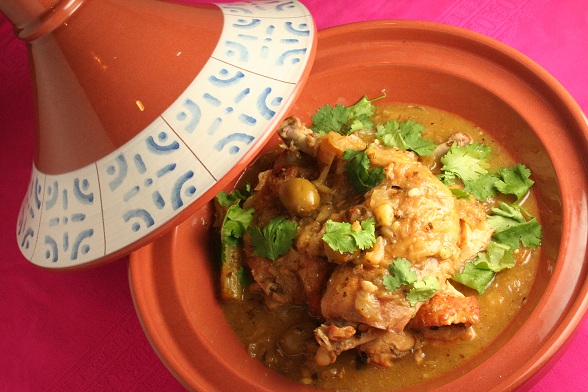
We had originally planned to cook this Moroccan recipe from Jamie Oliver’s new “Jamie Does…” cookbook last week but the “marinate and refrigerate overnight” foiled us. The same thing nearly happened today but luckily we realised in time and, rather than eat this for lunch as planned, we ate it for dinner instead. Not quite an overnight marinade but a good few hours in the fridge. This cookbook of course accompanies the current television series and the Moroccan episode was one of our favourites, including more unfamiliar and exotic-seeming ingredients and dishes than the other (all European) countries.
I thought we had cooked tagine a few times but a look back through the archives shows just one attempt back in 2007, I didn’t include the recipe in the post and simply said it was good. Not particularly helpful nor interesting to read. I can’t include the recipe here either because this is a Jamie recipe and he doesn’t like it when you do that, it’s not online so you would have to buy the book if you really wanted this exact recipe. Or just pick one of the hundreds of chicken tagine (with olives and preserved lemons) recipes available online, most are pretty similar.
This version included fennel which I don’t like much. I’m trying to like it though so this was a good way to start. It didn’t include any dried fruit which I also don’t like in savoury dishes; that would have been too much to cope with alongside the fennel. The fennel though was surprisingly good; the long cooking softened the harsh, aniseedy flavours and it seemed to meld well with the preserved lemons, coriander and cumin to give a background warmth and deep flavour. The chicken fell off the bone and there was plenty of liquid too which was full of flavour.
And that concludes our weekend of intensive cooking. Having planned a lazy weekend, we ended up spending most of the time in the kitchen. We ate well though and are well prepared for the week ahead so it was time well spent.
Crab Toasts and Skate Wings with Clams

Our plans for dinner changed quite a few times, but eventually I found myself walking out of a fishmonger with one live crab, two skate wings and a dozen or so clams. Kerri had a plan to make crab on toast as a starter, which sounded good. For main course we decided just to cook the skate wings quite plainly and serve them with the clams scattered over them and use the clam cooking liquid as a sauce.

Obviously the first thing to consider was how to kill the crab. Reading a couple of books came up with this method which sounded reasonable and quite humane: Put the crab into the freezer for a couple of hours, which renders it comatose, then skewer it through the hole under its tail flap and again through its mouth and that kills it. Then cook it. Sounded fairly simple. I felt that we needed some video confirmation of this though, so had a quick search on the web but sadly youtube is full of video clips of people fighting with live, flailing crabs, trying not to get pinched by their claws while trying to kill them. Not what I was after and not what I particularly wanted to see either.
So we stuck with what the book described, said goodbye to our crab and placed it into the freezer. Two hours later, took it out and it was thankfully unconscious and had stopped moving. A quick couple of stabs with a skewer and it was dead. Then into a pot of salted water to boil for 12 minutes before removing it and letting it cool. If we do this again we’ll definitely film it and post it online as an example of how to do it because it was quite simple.

When the crab had cooled, we removed the shell, twisted off the legs and claws and started to extract the meat. The brown meat was quite easy to get out, but the white meat was another story, as anyone who has cooked a crab or ordered one in a restaurant will know. The body has many little cavities in it, so it needs to be cut apart and the meat extracted from each cavity carefully. Kerri set about the claws and legs with a mallet, cracking them and extracting the meat from them too, which worked rather well and she got pretty much all of it out.
We mashed the brown meat with some chilli powder and some lemon juice and spread that onto the toast slices, almost like pate. Then we mixed the white meat flakes with some chilli powder and lemon juice again and some good extra virgin olive oil and piled that on top of the brown meat. Delicious! The crab was obviously very fresh as it was alive when we bought it, and much cheaper to buy whole than ready prepared – it just comes down to spending quite a lot of time preparing it.
For the skate wings, we dusted them in seasoned flour and simply fried them in a mixture of oil and butter, adding a squeeze of lemon at the end. We cooked the clams as we would have cooked mussels to make moules mariniere, then used the cooking liquid as a sauce for the skate wings. This turned out really well – we had slightly overcooked the shallots for the sauce and caramelised them a bit, but the sweetness actually worked well.
Having ordered battered skate wings in a fish and chip shop once upon a time and found them really difficult to eat, I was worried that these would present a problem too, but they didn’t – we managed to cook them just right and the flesh flaked off the “wing” bones very easily. They were cheap too. We discussed trying them again soon with a caper sauce, which should go well.
Mexican Burgers

We’ve been eating sensibly and upping our gym attendance this week so felt like we deserved a treat on Friday night. We haven’t had burgers for a while and I wanted to play with the recipe, creating something spicy and different to the relatively plain beef burgers we usually eat.
I started off with a mixture of pork and beef mince which I intended to add some chilli and coriander to, then I remembered the chorizo in the freezer and decided to add that too. Some salt and pepper, a little extra paprika and some lime juice completed the ingredients.
My top tip when it comes to burgers is to fry a little of the mixture first, not only do you get something good to eat while you’re putting everything together but it also gives you the opportunity to adjust the seasoning if you need to. I definitely did this time and added some extra paprika and quite a lot more salt.
As we were using pork mince, we had to cook the burgers to well-done which did mean they were a little dryer than they would have been if we had only used beef mince. The chorizo added some brilliant little pockets of fatty, tasty good stuff though so this wasn’t too much of a problem.

Alongside the burgers we served some avocado topped with coriander, lime juice, chilli, tomatoes and red onion (which I’d soaked in lemon juice for a while to remove the bitterness). A lot like guacamole but not as good.
There was also a corn salsa which included more coriander, some spring onion and some lime juice. This was really good: the corn was sweet but still tasted like corn and the coriander, lime juice and spring onion added an extra zing to the whole thing.
I suppose I should point out that where I say “coriander”, what I actually mean is “parsley”. I bought coriander but when I got home I noticed half a large bunch in the fridge so decided to use that up first. Except it was parsley. And I didn’t realise until Stephen pointed it out halfway through eating. Coriander would have been better though so I’m going to add that to the recipe for next time.
Mexican Burgers
Serves Two
125g pork mince
125g beef mince
75g chorizo
Half a chopped, red chilli
Handful of chopped coriander
Salt and pepper
1.5 tsps paprika
Squeeze of lime juice
Combine all ingredients and shape into burgers. Don’t do this too far in advance of the cooking time because the salt will draw out all the moisture.
Fry for two minutes each side and then cook in the oven for 15 minutes on 180 degrees.
Corn Salsa
Serves Two
Two heads corn
Two spring onions, slices
Handful of chopped coriander
Salt
Squeeze of lime juice
Olive oil
Cook the corn for about six minutes, or until cooked through. Leave to cool.
Combine with the other ingredients and reserve until needed. This is best made a little way in advance so that the flavours have time to combine.
Cannellini Bean Bruschetta
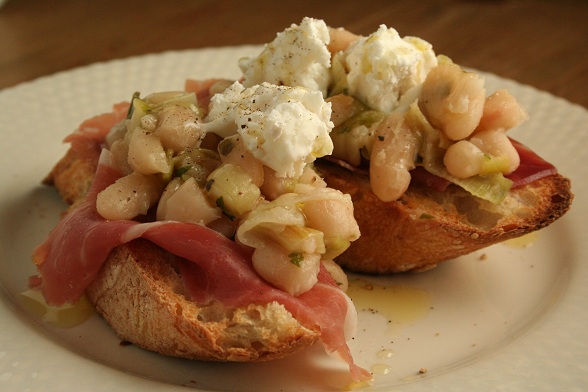
Isn’t the Internet brilliant? Not only can you check the weather (which I do at least 10 times a day as soon as the clocks change) and buy shoes but you can talk to people online about a whole host of subjects. While I’m not sure how I ever lived without it, I am sure that if it wasn’t for the Internet then today’s dinner would have been a whole lot easier.
This was a pretty straightforward dish to put together: cook the beans, soften the onions, mix together, cook a bit more then season. Except, just as the beans were on the verge of being cooked, I got sucked into reading about the eating habits of the Amish in Pennsylvania and the whole lot were ruined. I tried to save them but the fact that the entire flat smelt like burnt hair meant they had to go in the bin and I had to start again. Another two hours of cooking time (and I hate the smell of beans cooking almost as much as I hate the smell of burnt hair) and I was ready to get on with finishing things off.
Mostly I’m glad I persevered but I think the beans lacked flavour when eaten on their own. Since we weren’t planning to eat them on their own, I suppose this doesn’t really matter. The sweet ham and the sharp, salty goats cheese soon sorted that out though and this made for a good, quick dinner. Well, it would have been quick if it weren’t for those damn Amish folk.
Cannellini Bean Bruschetta
Serves Two, generously
250g cannellini beans
2 spring onions
2 medium leeks
1 clove garlic (2 would have been better)
Salt
Olive oil
Juice of half a lemon
Mint, finely chopped
Cook the beans until they are just becoming tender. CHECK CONTINUALLY THAT THERE IS ENOUGH WATER IN THE POT. Set aside and reserve any remaining liquid.
In a separate pan, fry the spring onions, leeks and garlic until soft.
Add the leek mixture to the beans (add more water if necessary, or in fact stock) and cook until the beans are soft – ideally for about 10 minutes but this can be difficult to judge depending on how well cooked the beans were to start with.
Remove from the heat, season, dress with olive oil, lemon juice and the chopped mint.
At this point, you could just eat them but the longer you leave them the better they will be since they will continue to suck up any remaining cooking liquid, as well as the oil and lemon juice.
We chose to eat these on top of some toasted bread which is why I’ve titled the post “bruschetta” but really the beans should have been squashed first. They would work well as a side dish too, served alongside some meat or fish.
Beef Stroganoff

I arrived home this evening to the smell of onions and mushrooms cooking, which was very welcoming. The reason was that Kerri was making beef stroganoff. She had checked a few recipes but the end result was an amalgamation of them rather than any one in particular. The result was good although could have done with a little more paprika and a little more soured cream. The recipe went something like this, with estimated amounts for the soured cream and paprika:
Ingredients – serves 2 rather generously (as it turned out, we weren’t that generous with ourselves and I have leftovers for lunch tomorrow!)
500g button mushrooms, sliced
a few dried shitake or porcini mushrooms, soaked in warm water until soft and then finely sliced
250g beef fillet
splash of brandy
4 tablespoons soured cream
half teaspoon of paprika
salt
black pepper (freshly ground)
squeeze of lemon
chopped parsley
cooked rice or pasta for serving
Method
Fry the onions in a frying pan or wok in a little olive oil until soft and golden. Remove from the pan and fry the sliced mushrooms until soft, seasoning with black pepper. These steps will probably take 20 minutes or so. Slice the fillet into thin strips and season with salt and pepper. The turn up the heat, add a little more oil to the pan and stir fry the beef strips for a couple of minutes. Add the splash of brandy and very carefully flame it, then wait until the alcohol burns off.
Add the soured cream along with the mushrooms and onions and paprika. Turn the heat down and stir, letting it all combine and heat through. Test for seasoning, adding more salt and pepper if needed, and a squeeze of lemon. Stir in the chopped parsley.
Serve with rice (which is traditional) or pasta (which we did because I accidentally bought too much spaghetti last time I went shopping…)
Tortilla Casserole, aka Mexican Lasagne
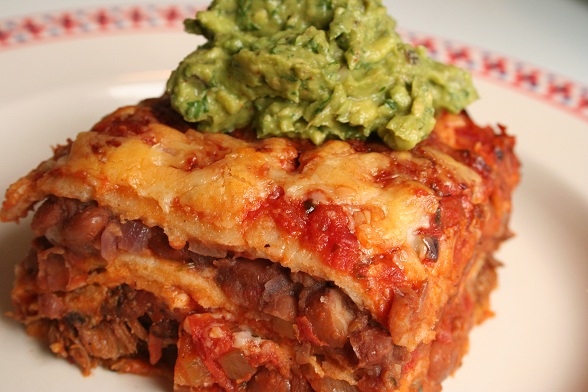
When paging through Rick Bayless’s Mexican Kitchen, we found something which we initially thought was a bit odd but strangely interesting – a Mexican version of lasagne, layered up with tortillas instead of lasagne sheets. We became determined to try it and thought that it would be a good way to use up the left over chilli-roasted pork that we had in the freezer. We took the general concept and made a recipe up around it rather than following an actual recipe.
We had bought the ingredients for making tortillas and were half thinking about making it today, weighing it up against getting out and doing some healthy outdoor pursuits. However, the weather in the morning looked rather grey, dreary and blustery so we figured that outdoor pursuits were out of the question. It did brighten up later, but by that time we were already elbow-deep in tortillas, pork and beans.
So we defrosted the pork. We also cooked some pinto beans to make typical Mexican frijoles (recipe here) and some slightly Mexicanised tomato sauce, but we were a little lazy with this one and didn’t go to great lengths to toast, soak and liquidise chillies, etc. Then we made up some home made tortillas.
When these were all done, we layered it up with a layer of tortillas as a base, followed by the pork, some of the tomato sauce and a sprinkling of grated cheese, then another layer of tortillas and then the beans and some more tomato sauce. Topped off with a final layer of tortillas and some more sauce and a generous sprinkling of grated cheese. Baked in the oven for 30 minutes and it came out smelling really good.
The pork was really good, but we knew that already because we had had it before and the beans were good too, but then we knew that they would be beause that recipe makes nice beans. So it was tasty, but not necessarily any more tasty than if we had just used the pork and the beans and wrapped them up in tortillas as usual and saved ourselves a lot of work. One thing that you don’t get when doing that though it the toasted cheesy crust on top, which was really good. It seems that this sort of dish does have potential though – maybe next time we should follow a recipe properly rather than just making it up as we go along.
PS We added a dash of guacamole on top of it since we love guacamole so much…
Watercress and Wild Garlic Soup and Rack of Lamb

I went to Borough Market on Friday, primarily to replenish some Mexican ingredients we’ve run out of but also to find something for Sunday’s dinner. While I was there, I also spotted some wild garlic which I’ve never seen before. I wasn’t sure what to do with it but at some point it struck us that it would make a good soup with the watercress languishing in the bottom of the fridge. It did make a good soup but the flavour was more delicate than we would have liked. I had considered also using some of the fresh garlic I bought at the same time but decided against it on the basis that the leaves of the wild garlic tasted reasonably strong.

One of the other things I bought was a rack of lamb. This is one of our favourite things to eat and it’s been a while since we last cooked one. We kept this very simple and served it with some sauteed potatoes and some asparagus. The lamb was good but not as big on flavour as the lamb we had from Allens. The asparagus was perfect though, much better than the early season stuff we’ve been eating recently.
Springbok Fillet and Jersey Royals

Kerri went to visit Borough Market on Friday to buy a few things and she asked if I could think of anything else that I would like her to get while she was there. I racked my brains for something interesting that was hard to find elsewhere and eventually thought of springbok, which Gamston Wood sell – they mostly sell ostrich from their farm, but they also sell various other “exotic” meats.
Springbok are members of the antelope family that live in southern Africa; their distinctive curved horns and attractively striped pelt make them very recognisable and they are the emblem of the South African national rugby team. They are also very tasty.
We went for simplicity here – simply seasoned the two steaks with salt and pepper, rubbed them with a little oil and dropped them onto a hot griddle pan. After a couple of minutes per side we popped them into the oven for a little longer as they were quite thick. This seemed like a very restauranty type of procedure, but we weren’t that used to it and ended up cooking the steaks a little more than we had planned, but that didn’t seem to matter much – after resting they were still tender and delicious.
Very delicious in fact. The taste was similar to a very deeply flavoured cut of beef, with a lightly gamey or livery note to it that complemented the meatiness rather than overpowering it. They were very lean though, more so than a beef fillet, so quite different to the beef steaks that we have had lately which have mostly been aged ribeye with lovely yellowish marbling. Kerri commented that regardless of this, she thought they were the best steaks of any sort that she has tasted for ages and I had to agree.
We had made a quick redcurrant and red wine sauce with a good grind of black pepper in it and added a little splash onto the steaks here and there, and it did match very well, but they didn’t need much to go with them really so we didn’t use that much of the sauce in the end.
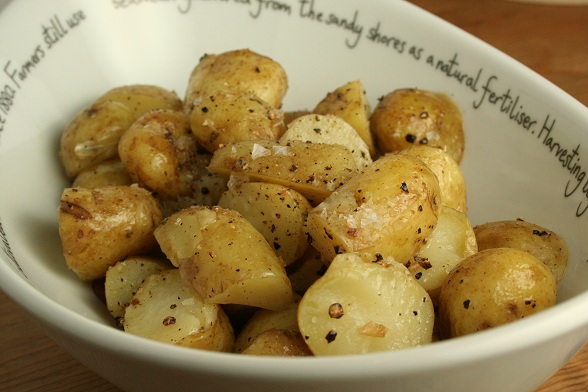
With the steaks we also had another simply prepared but delicious ingredient – our first Jersey Royal potatoes of the season. They were wonderful too, served with just some salt and pepper and butter. A lovely combination of nutty and creamy and of course very potatoey and slightly earthy, they were just what we had been looking forward to. And served in a newly purchased special Jersey Royal bowl that Kerri had picked up at Borough Market too.
With the springbok it seemed right to drink a good South African red wine, and we had just the thing waiting on the wine rack – a Fairview “Solitude” shiraz from 2001 that has been biding its time for several years waiting for the opportunity to be enjoyed. It turned out to be just what I had hoped – smooth, full elegant fruit with well integrated oak and spicy notes, its relatively high alcohol going unnoticed as it was so well balanced by fruit, tannin and just the right dose of acidity.
So a really good meal all round – hopefully we haven’t used up all of our culinary luck for the weekend as we have a few more things planned and would prefer them to turn out well too!
Sort-Of Nicoise Salad
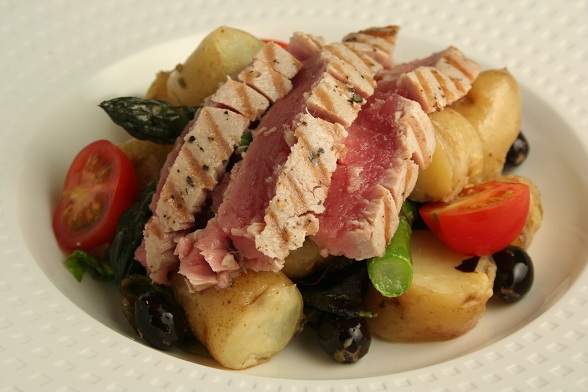
Eeek, doesn’t that look dryer than a dry thing? It really wasn’t though but perhaps that’s because I added lots of extra dressing when I sat down to eat.
So, I wanted to eat asparagus tonight because, you know, it’s in season and we love it and it doesn’t hang around for long. Then I remembered we had potatoes in the fridge that needed using up so I thought I’d put the two together. I was going to add some smoked trout but then I suddenly remembered tuna. I hate the tinned stuff but love the fresh kind, we just don’t eat it because it’s so unfriendly to the environment. I thought about reverting to the trout but there was no way that was going to cut it when the tuna was looming so large so, I ignored the little monster sitting on my solider and scurried to Waitrose to pick up said fish.
We’ve done something similar to this before but without the olives. Stephen’s a big fan of the nicoise but I’m not so keen, largely due to the eggs. I keep on trying to love them but I don’t think it’s going to happen so I just left them out. He didn’t seem to mind, I added some tomatoes which is another thing we fight over and that seemed to please him.
So, tuna, new potatoes, asparagus instead of green beans, olives, tomatoes, lettuce and a Dijon vinagrette. No anchovies because they’re also on the banned list and my conscience couldn’t cope with two unfriendly fishes in one night. Similar to a nicoise salad but not really. Just as good though, or better really if you don’t like eggs. Chicken would work here too (free-range, obviously), if you’re not as environmentally irresponsible as I was being this evening.
