Carrot Soup
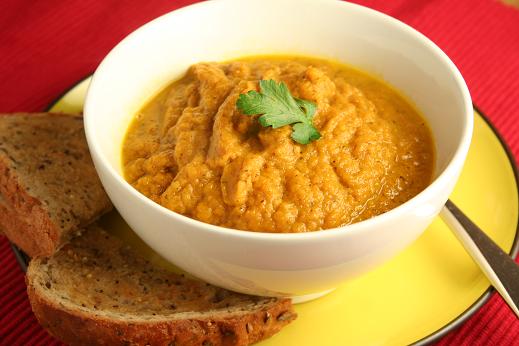
One of my favourite light lunches is a bowl of soup with a slice of buttered toast. When I was a kid, I used to eat gallons of soup whenever my mum made it; I think she despaired of it a bit.
As we had carrots in our vegetable box but didn’t have any plans for them over the next few days, we made them into carrot and coriander soup. We didn’t follow any recipe, just fried some crushed coriander seeds, then sweated a finely chopped onion before adding chopped carrots, chopped coriander leaves and stalks and vegetable stock, cooking until the carrots were soft and then pureeing it with a stick blender before seasoning with salt and pepper.
If we made it again, I’d put the coriander stalks in near the beginning as we did this time, but keep the leaves (or at least some of the leaves) until near the end to give a fresh coriander flavour to it.


Leek Risotto
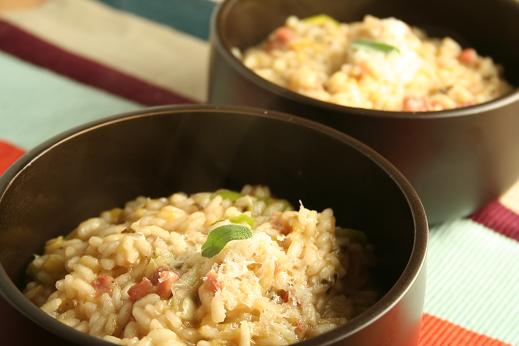
Having received leeks in our vegetable box yesterday, we decided on leek risotto this evening. We added some pancetta and sage too, not just leeks. We added some leeks in the beginning to cook down and then saved some to add near the end to give a fresher leek flavour too, which worked very well. The recipe went something like this:
Ingredients… serves 2 generously:
2 large leeks, chopped
100g pancetta, cubed, or lardons
1 stick celery, finely chopped (not essential, but we had one so added it)
6 sage leaves, finely sliced
2 cloves garlic, crushed or finely sliced
1-2 tbsps vegetable oil for frying
1 glass white wine or white vermouth
250g risotto rice
1l chicken stock (preferably home made, but bought is of course fine if you don’t have any)
good handful grated parmesan (much better to grate your own from a block than to use pre-grated)
Heat up the oil and when it is hot, add the celery. A minute or so later, add the pancetta and fry for a few minutes. Then add about two thirds of the leeks and the garlic. When the leeks have softened, add the rice and turn up the heat. The rice should fry and go a bit translucent now, but if it starts to burn then turn it down. After a short while, add the wine or vermouth (or a mixture of both as we did) and stir while the alcohol burns off.
Turn the heat back down and when the wine has been absorbed, start adding stock a ladle at a time, stirring until it has been absorbed until it has been absorbed and then adding some more. We used some home made chicken stock for this and it does make quite a difference (all the bones from those roast chickens we’ve been eating have not gone to waste). All this stirring brings out the stickiness from the rice. If you run out of stock before the rice is cooked, then just start adding water. When the rice is cooked but still has just a little bite left to it, it is done.
However, a few minutes before it is finally done (judging this takes a bit of experience though), add the rest of the chopped leeks. Try to separate the chopped leeks into separate rings before adding, as they’ll cook through more quickly. Keep stirring of course. Then when it is done, stir in the grated parmesan until it is absorbed and check for seasoning.
Kerri commented that this was probably the best risotto that she remembers us having made. We’ve had a couple of really good ones lately; it might be the nice home made chicken stock that we’ve been using for them.
Vegetable Box
No picture for this post, just a quick note. A couple of years ago we subscribed to a vegetable box from Able & Cole, but stopped it when we moved and never got around to re-subscribing. It was interesting (and sometimes challenging!) to come up with tasty recipes each week to use our mostly seasonal fruit and vegetables from the box.
We have been sent another box this week to review, a “mixed organic” box which includes: onions, potatoes, parsnips, leeks, cabbage, apples, bananas and clementines. This worked out rather well, as we are having a pre-Christmas dinner this weekend and the potatoes, parsnips and cabbage were already on our menu for that, so the delivery will do perfectly. Onions are essential for many dishes, and we do love leeks so will no doubt find something good to do with them. And of course fruit is always good for a healthy and tasty snack and I do tend to take loads of it to work.
I commented that it just happened to match what we were planning quite well. Of course, when I thought about it, the box is mostly seasonal and Christmas cooking is mostly seasonal too, so it should match up to some degree because of that. Nice when that happens without planning it; it makes you think that you must be doing something right somehow.
Quesadillas and Guacamole
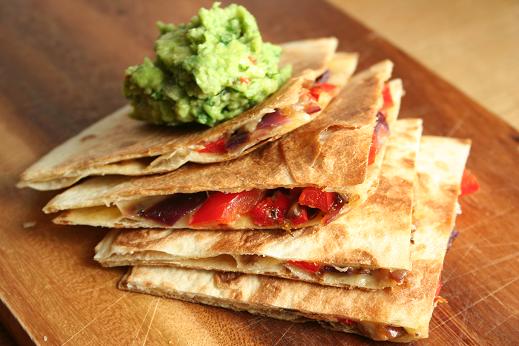
Kerri had suggested these a while back and we ended up having them this evening. She looked at a few recipes but decided to make our own quesadilla-like recipe.
We marinated some sliced red peppers, sliced red onions and chopped garlic with some lime juice, chopped coriander and ground cumin. Then we fried this mixture for a while as if we were making tortillas, the piled it onto flour tortillas and sprinkled with grated cheese (just used cheddar, didn’t have any more authentic Mexican style cheese available) before topping with another tortilla.
We dry-fried these on one side, then the other, on a low heat, to get the cheese to melt. With a blob of guacamole, they were rather good as a quick supper. They would of course be good with chicken in too, but the vegetable versions weren’t bad either.
Mushroom Ragu
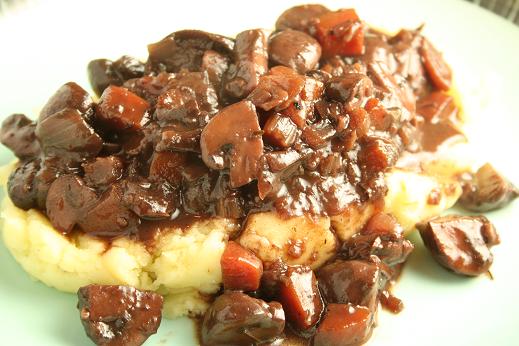
I’ve had this recipe in my “to cook” file for a while, I found it online with with the promise that it’s vegetarian yet hearty enough to satisfy a meat eater. We’re always on the lookout for meat-free dishes and this sounded promising, I have to admit to being skeptical about the satisfaction part though.
The method is very similar to that of a regular casserole, with the mushrooms providing the meatiness both in the cooking process and in the eating. It took a little longer to cook than the recipe said but it was very easy to make and filled the kitchen with an earthy aroma. It’s heavy on the wine and you can certainly taste that in the final dish but it was rich and full of flavour.
Did it pass the satisfaction test? Well, the addition of bacon crossed my mind more than once though and Stephen commented that it would make a good pie-filling if combined with beef so I guess not. I don’t know if I’d make it again but it certainly wasn’t a complete failure (apart from in the photography category).
– 3 tbsp olive oil
– 2 medium onions, peeled and roughly chopped
– 1 large or 2 medium carrots, diced
– 1 stick of celery, diced
– 400g mushrooms, cut into bite-sized pieces
– 2 cloves garlic, peeled and chopped
– 2 bay leaves
– a small palmful of oregano or thyme leaves
– a small handful of dried mushrooms
– 1 glass of Madeira (Noilly Prat also works fine)
– a little plain flour
– 500-750ml vegetable stock
– 2 glasses red wine
Warm the oil in a heavy casserole over a moderate-to-low heat. Stir in the onions, carrots and celery and leave to brown lightly, stirring from time to time.
Add the garlic and herbs into the pan, then the fresh and dried mushrooms (including soaking liquid). Cover partially with a lid and leave to cook, stirring from time to time until the vegetables are soft, sticky and fragrant. This will take a good half hour.
Turn up the heat, add the Madeira and let it almost evaporate. Then sprinkle over a light dusting of flour, barely a level teaspoon, then stir it in, letting it cook for a minute before pouring in the stock and wine. Season with salt and pepper.
Bring to the boil, then turn down the heat and simmer gently for half an hour. The mushrooms must be well covered with the liquid, so add more if necessary.
After 30 mins or so you will have a deep, glossy brown stew. Taste it, and add a little sugar, lemon juice or red wine vinegar as required. Remove the bay leaves and serve.
Pot Roasted Pheasant
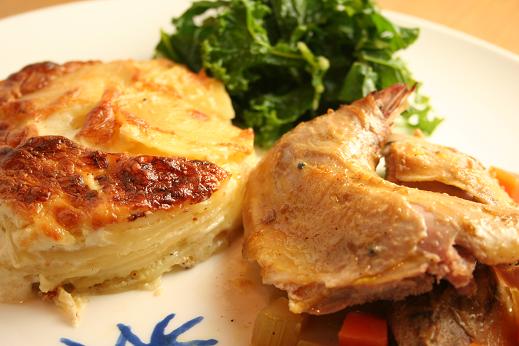
This is another recipe from Nigel Slater’s Kitchen Diaries which unfortunately didn’t work out as well as the previous quail dish.
The pheasant is browned in oil and removed from the dish, then some vegetables (celery, garlic, carrots and sage) are added along with the vermouth. The pheasant is returned to the pan and the whole thing cooks in the oven for around 40 minutes.
Pheasant is known for being a little dry, Nigel however reassured us that pot-toasting the bird would keep it moist and juicy. It didn’t. While it had a decent gamey flavour, which was complimented by the vegetables and vermouth, the breasts were dry and chewy.
It wasn’t a complete disaster though because we had plenty of dauphinoise potatoes to fill us up, served with kale and yet more Brussel’s sprouts. The creamy texture of the potato was perfectly balanced by the earthy kale and the slightly bitter sprouts.
Mince Pies

Yesterday we spent the day decorating the house and the tree. It seemed fitting to have some mince pies while we did so and luckily we had some mincemeat in the fridge that we’d made a week or so ago, to our usual recipe.
We didn’t quite get the sizes right, our cutters were either too big or too small for the tins we had but we got there in the end. The mincemeat was less sweet than year, I think because I remembered the cranberries this time. Next time, I think we’ll use sweet pastry to compensate.
Hot and Sticky Roast Quail with Thai Style Brussels Sprout Noodles
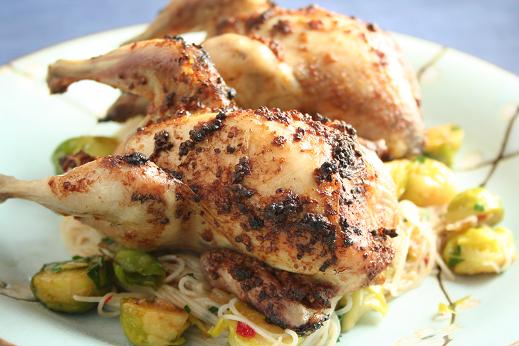
Paging through Nigel Slater’s “the kitchen diaries” book, Kerri found this quail recipe, which sounded rather appealing. It involved basting quails in mustard, soy sauce, lemon juice, cayenne pepper and rather a lot of garlic and then roasting them. The result was very tasty, with some heat from the mustard and the cayenne and well balanced by the other flavours. It does bring out the caveman instincts, having to pull the little birds apart with your fingers in order to eat them efficiently.
Having done our recent shopping order online, we have of course ended up with large bags of things that we don’t usually need large bags of. One of these things is brussels sprouts. Both of us really love them, so it’s not too much of a disaster, but we do need to think of interesting things to do with them. When I suggested noodles with pak choy to go with the quail, we soon changed that idea to noodles with brussels sprouts and came up with a recipe.
We steamed the sprouts until just done, then stir fried half an onion (finely chopped), a whole red chilli (also finely chopped) and a clove of garlic (crushed) before adding the halved sprouts. While this was going on, we prepared some rice noodles and then put those into the wok with everything else, adding a dash of sesame oil and a splash of soy sauce. It worked out rather well for something that we’d made up on the spot and we’ll certainly try it (or something similar) again soon.
Nigel Slater’s quail recipe uses mustard, but I think this could easily be replaced with chilli and a dash of sugar or something similar to make it more Thai styled, which would bring the quails and the noodles a bit closer in a culinary sense. As it was, they worked very well together as far as taste is concerned, but the slight mismatch in culinary styles bothered me: we weren’t aiming for fusion or Mexithairranean chain-pub food after all. Although using the brussels sprouts in the noodles caused something of a mismatch anyway, so maybe I should stop worrying about it; it was very tasty after all and that is what matters the most.
Pancetta, Butternut and Chestnut Risotto

We bought some chestnuts last week without really knowing what to do with them so I spent a little time looking for recipes online. I found a Jamie Oliver risotto recipe that I liked the sound of but it sounded pretty complicated so we decided to take the basic elements and do our own version.
I started by frying off some pancetta until the fat had rendered and then removing it from the pan. At the same time, I roasted off some butternut in the oven until in some oil and pepper. The chestnuts were roasted yesterday so they were simply peeled and chopped.
In the same pan the pancetta had cooked in, we followed a basic risotto recipe and then added in the pancetta, butternut and chestnuts at the end.
It was a really good dish; the smokiness of the pancetta was complemented by the sweetness of the butternut and the chestnuts, although not crunchy, provided a good contrast in texture to the creamy risotto.
Braised Oxtail

I’m not sure if I’ve eaten oxtail before (apart from the famous Heinz soup) and neither of us have ever cooked it, so when I spotted some at the butcher last week I thought I should rectify that.
We did some research and came across Nigel Slater’s recipe which we used today. Of course, we missed the part that said we were supposed to cook it the day before we ate it so just skipped that and left it to cool for a couple of hours instead.
It was a good dish, rich in taste and velvety in texture. It did prove a little tricky to eat mind you but I’m sure that’s something we could rectify with practice.
