Harissa Chicken with Roasted Vegetable Couscous

We didn’t really put a lot of thought into tonight’s dinner, after Saturday’s pie extravaganza we were left with two chicken portions which we’d earmarked for this evening. We vaguely thought about stir-fry but we’ve eaten so much of it lately that it didn’t really appeal. Stephen mentioned harissa last night and a vague plan to roast the chicken in harissa and serve it with roasted vegetables began to formulate.
I didn’t really fancy it when it came to cooking it, last night’s rabbit was so delicious that nothing was going to live up to it. I couldn’t come up with anything else though so stuck to the plan.
It was good, not hugely exciting or imaginative but tasty enough. More vegetables were required, as was more harissa but overall not a bad mid-week dinner.


Pappardelle with Rabbit

Yesterday we cooked rabbit casserole, and part of Kerri’s great rabbit-related master plan was to make left over casserole into pasta sauce today.
We reduced the leftover casserole down until the liquid was about a third of the original amount. We shredded the meat, then returned it to the reduced liquid and added about 150ml of cream. For the pasta, we chose pappardelle, which seemed just the right sort of pasta to go with the rabbit. Just before serving, we added a small bunch worth of chopped parsley to the sauce before mixing the pasta into it and topping with grated parmesan.
From a visual point of view, it looked really good, with the sheen of creamy sauce coating the thick pappardelle strips, the autumnal orange of the carrot and brown of the shredded rabbit morsels contrasting with the fresh green of the parsley.
From a taste point of view, it was brilliant. Yesterday’s casserole was good, but reducing it and adding cream and parsley transformed it into something other-worldly. I commented to Kerri that I couldn’t think of anything that would make it better. Then I experimented by adding few drops of white truffle oil, which both lifted and deepened the flavour and added to the autumnal theme.
Hmm I’ve been going on about it quite a bit and I haven’t even had any wine tonight; it must have been as good as I’ve been making out. And to think that we used about one quarter or one third of a rabbit to make it and the rabbit only cost £2 to start with. Old-fashioned credit crunch cooking. Well it would be if you left out the truffle oil I suppose.
Rabbit Casserole

We’ve only cooked rabbit once before because we find it so difficult to track down in the shops; last time we managed to find a tame rabbit in Selfridges Food Hall and it’s probably the most expensive piece of meat we’ve ever cooked. Imagine my delight when my mum told me she’d found someone locally who was going to deliver two rabbits to her on Saturday morning for the princely sum of £2!
We opted to casserole the jointed rabbit and then use the leftovers to make a pasta sauce. On the advice of the rabbit man, we started off by soaking the rabbit overnight in vinegar – this apparently improves both the colour and texture. After rinsing off the vinegar this morning we got to work on the casserole:
One rabbit, jointed
Flour (for seasoning)
1 onion, finely chopped
1 celery stick, finely chopped
One carrot, cubed
3 cloves garlic, crushed
1 glass white wine
1 litre chicken stock
6 stalks thyme
2 bay leaves
Salt and pepper
Coat the rabbit pieces in seasoned flour and brown then remove from the pan.
Sautee the onion, celery, carrot and garlic until soft, then remove from the pan.
Deglaze the pan with the wine, then return the rabbit and vegetables.
Add chicken stock, thyme, bay and seasoning and bring to the boil. Reduce the heat and then simmer for an hour.
The flavour of the meat was wonderful: rich and earthy and perfectly balanced by the sweetness of the onion and carrot. We served the casserole with mashed potatoes and buttery cabbage. There was plenty of meat for a generous serving each with some leftover for tomorrow.
Chicken and Leek Pie

Stephen and I went to visit my mum this weekend and decided to make pie for dinner. As my nieces were also coming to visit, we thought we’d make them a pie of their own and put their names on the top.
There were seven of us in total so we bought two chickens and Stephen jointed them. We ended up using four breasts, two thighs and two legs. We’ve saved the other portions for dinner later in the week and used all the carcasses and bones to make stock.
We started by coating the chicken in seasoned flour and browning it in batches. We then sweated off an onion and a couple of cloves of garlic before adding three large leeks and cooking until soft.
Next we added some wine and stock, put the chicken back into the pot and finished with loads of thyme, a bay leaf and some seasoning. We cooked this down for about 45 minutes before topping it with the puff pastry and baking in the oven for another 45 minutes.
Carbonara

Please excuse the rubbish picture; Stephen is out this evening and I haven’t quite got to grips with this whole lighting thing. Also, I was hungry and this didn’t strike me as the kind of dish that should sit around for too long while I faffed about with f-stops and appertures.
I didn’t have anything planned for dinner this evening and, as is usual in these situations, I found myself wandering around the supermarket wondering what to put with pasta. Pancetta seemed like a good partner so I put that into the basket and then briefly considered mozarella. There wasn’t any of that though so I grabbed some cream instead thinking I would research some recipe ideas when I got home. On the way I started thinking about a conversation I had with a friend at lunchtime where I confessed to my dislike of eggs. He was shocked and I explained that I could cope with them as long as they weren’t the main ingredient and that I was trying to like them.
Somewhere along this thought process the idea of carbonara developed. It seemed like the perfect solution to my pasta, pancetta and cream dilemma and checked the learning-to-like-eggs box too. So that’s what I did and guess what, I thought it tasted brilliant! I forgot the parmesan at first and it was even better when I shaved some on to the spaghetti. The egg wasn’t discernible in flavour but seemed to coat the strands in a thick, glossy sauce. An instant favourite and one that’s likely to pop up again very soon.
Risotto with Chorizo and Onion Squash

We had some friends over for Thai food on Saturday night (the pictures were terrible hence the lack of post) and served some steamed onion squash with our green curry. It wasn’t a particularly big squash but, as always seems to be the way, there was loads left over so we decided to roast it and use it in a risotto.
Stephen had talked about using sage too but I forgot to buy some so quickly defrosted some chorizo and used that instead. It worked really well, butternut squash and chorizo is a risotto combination I really like but the onion squash is a lot less sweet than the butternut and seemed to balance perfectly with the chorizo.
Lamb Chops with Special Tabouleh

We’ve started cheating with our photographs. We’ve bought one of these. It’s magical. It makes it seem like daylight when it’s clearly night time. Now we just have to become good at photography to make good use of it.
Anyway, back to the food, which is what this is all about. We cooked lamb chops marinated in garlic, lemon, parsley and some grated onion. We also made “special” tabouleh which contained bulgur wheat, spring onions, cucumber, olive oil, lemon juice, and the special additions… cherry tomatoes roasted in harissa and mushrooms roasted with crunchy salt.
The lamb chops were really tasty, a bit pink in the middle and also a little black on the outside because the marinade burnt a bit. Served with the special tabouleh, which was very good, and some khobez bread which we bought a few days ago and had unfortunately dried out a bit.
Steak with Horseradish Mashed Potatoes

Firstly let me say that this steak tasted better than it looks in the picture. The picture looks a bit like a really old post card or one of those nasty, faded pictures of food that some cafes and restaurants ill-advisedly put in their window. And it does look rather like a badly cooked steak from a cheap chain restaurant with fake, painted-on griddle marks. Which is isn’t.
Kerri had been craving steak for a couple of days which is unusual for her, she likes steak but doesn’t often end up actually craving it. Friday seemed like a good steak day, so armed with a nice piece of ribeye and a griddle pan, we got to work. We also grilled some mushrooms, which were the opposite of the steak – they looked good but we hadn’t seasoned them enough and they didn’t have much flavour.
We often put mustard in our mash and today we decided to experiment by using horseradish instead of mustard. The experiment worked out nicely and the horseradish went really well with the steak. As a sauce, we used some left-over cooking liquid from when we made steak and kidney pie and added loads of ground black pepper to it to make it into a really rich pepper sauce. This worked out very well too – steak with peppery steak and kidney sauce sounds a bit strange, but it tasted good, which is what matters.
Spaghetti with Cabbage, Chilli and Anchovies

We’ve cooked spaghetti with bacon and cabbage before, so when we were wondering what to do with the cabbage in our fridge, we decided to try a variation on the theme. In order to keep it relatively healthy, we went for chilli and anchovies rather than bacon.
It wasn’t as successful as the version with bacon in it. Very few bacon-related dishes are as good without the bacon. I grated loads of cheese onto mine and rather enjoyed it because of that 🙂
Chicken Stir Fry
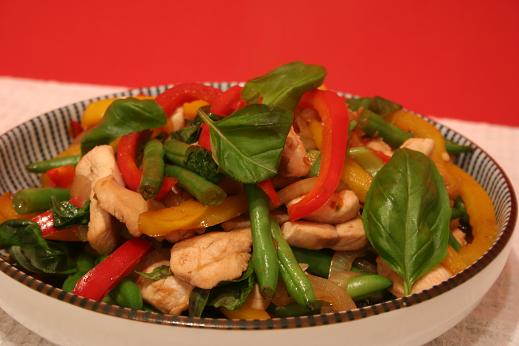
I know. I toyed with not posting it because it’s appeared so many times before but that’s not what Dinner Diary is all about. So, apologetically, I give you chicken stir-fry.
It contained all the usual ingredients and was cooked in pretty much the same way we usually cook it. We hereby promise to cook something exciting soon.
