Christmas Lunch 2009

With just three of us for Christmas lunch, it seemed silly to eat something as large as a turkey so we opted for chicken instead. Thinking it would be easy to find, we didn’t order one which meant Stephen scouring the supermarket shelves on Christmas Eve. He eventually tracked this down in Waitrose which meant we didn’t have to eat fishfingers for lunch.

Having watched a variety of celebrity chefs discussing the merits of different fats in their Christmas shows, we opted for goose fat to roast the potatoes in. We used this last year and didn’t detect a discernible difference, this year’s potatoes though were probably the best we’ve ever cooked: creamy, fluffy insides with thick, crunchy coats that were perfect for soaking up gravy.
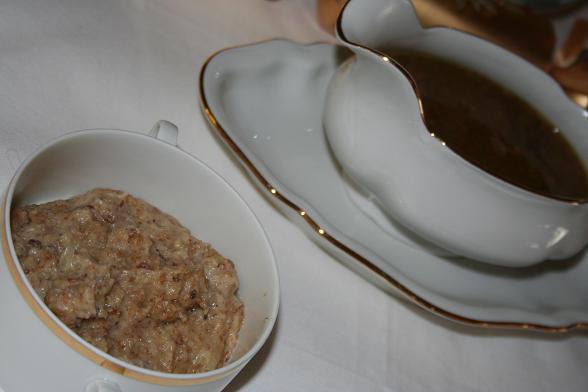
Since our chicken was giblet-free, we used some chicken legs as a base for the gravy. Roasted in the oven with a selection of vegetables, this made for a brilliantly rich and deep gravy. Bread sauce made with brown bread instead of white looked a little odd but had a great flavour.

And lastly, the vegetables. Cauliflower which was supposed to be covered in a cheese sauce and baked but got forgotten about until it was too late. Carrots for colour on the plate, Brussels sprouts sauteed with shallots and bacon and savoy cabbage with shallot. This would have made a perfectly acceptable meal in itself such was the variety of flavour but instead provided a fine accompaniment to the meat and potatoes.
There was Christmas pudding later on but we forgot to photograph that.  The pudding was left over from last year and was even better this time.


Fish

A quick and easy assembly-job for Christmas Eve: dressed crab, crayfish tails and smoked salmon served with horseradish creme-fraiche and some toasted bread. A gentle start to the inevitable onslaught of food the next few days will bring. And the first in a series of very yellow-looking photographs.
Cumberland Sausage
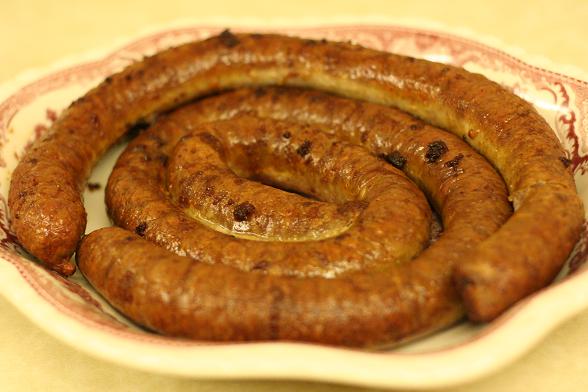
We’ve had this in the freezer since our visit to Cumbria at the end of the summer. Every time we considered eating it, we realised it was just too big for the two of us so we took it to my mum’s and ate it with her instead.
This wasn’t as soft and melty as the previous example, probably due to us cooking it too quickly but we still enjoyed it. Even with three of us, there was still enough left for Stephen to have for breakfast the next morning.
Drunken Beans with Coriander and Bacon

Normally, when I don’t have a plan for dinner, I start with the meat or fish and work from there. Tonight’s dinner however was conceived entirely around the avocados. Planning ahead for last weekend’s Mexican meal, I bought the only four avocados I could find which were rock hard. I put them into a paper bag with an over-ripe banana and hoped they would soften in time to turn into guacamole. They didn’t and Stephen was duly sent off to find some ripe ones. I promptly forgot about the originals until now, almost two weeks later. I was expecting to have to throw them away but they were mostly OK, a sure sign of just how far you need to plan ahead if you want ripe avocados.
Anyway, I turned those into more guacamole and flicked through Rick Bayless’s Mexican Kitchen for a bean-based dinner. Although we haven’t done any cooking this weekend, we’ve eaten well and were both in the mood for something lighter than the mostly meat-based dishes we’ve enjoyed recently. This dish had the added benefit of not needing much attention leaving me free to finish the Christmas wrapping.
The original recipe called for pinto beans but I substituted kidney beans. It also suggested using a combination of pork shoulder and bacon, I just used bacon.
Drunken Beans with Coriander and Bacon
Serves Three (two for a main course with one portion of leftovers for lunch)
11/4 cups beans
8 slices streaky bacon, chopped
1 white onion, diced
2 green chillies, deseeded and chopped
Salt
11/2 tablespoons tequila
1/4 cup coriander, chopped
Rinse the beans and add to a saucepan with five cups of water. Remove any beans that float to the top, add half the bacon and bring to the boil. Reduce the heat so the water gently simmers, partially cover with a lid and cook for two hours, or until the beans are tender. You’ll need to keep on topping up the water (or just add more to begin with).
Fry the remaining bacon until crispy, remove from the pan and set aside (I made a mistake here and added them straight to the beans). Fry the onion and chilli until the onions are a deep, golden brown – about 10 minutes. Add to the beans, season with salt and cook for 20-30 minutes.
If there is a lot of water remaining, boil over a medium-high heat until some of it has dissipated. Squash or blend some of the beans until you have a texture you’re happy with.
Stir in the tequila and coriander and top with the reserved bacon (unless you accidentally added it earlier on).
I reduced this down quite a lot so we could eat it with tortilla wraps, it would have worked just as well as a soup though. The end result was very smoky which was perfect for a cold evening like tonight, the tequila and coriander cut through that well and the guacamole helped to lift all the flavours too.
Cheese
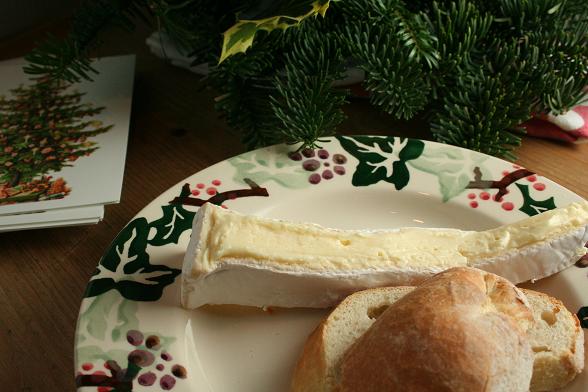
Stephen was out at his Christmas party this evening so while he traipsed around wet and windy West London on a treasure hunt, I wrote the Christmas cards while drinking wine and eating bread and cheese.
This isn’t my most favourite of all the jobs that need to be done before Christmas but the wine and cheese eased the pain. And I didn’t have to spend the evening in a silly hat either, I win!
Dehli-Style Lamb with Potatoes
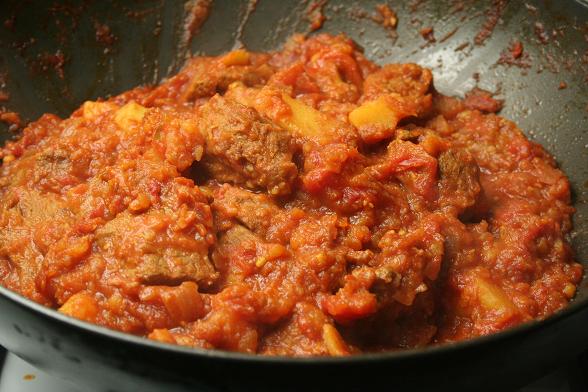
Another day, another dinner. With nothing planned, I stared at the cookery books hoping for inspiration. I had a slight craving for Thai food but all the recipes that appealed required ingredients that we didn’t have and I didn’t fancy trekking across town in the snow to track them down.
Madhur Jaffrey’s ‘Indian Cooking’ has a mix of easy and more involved recipes so I reached for that and paged through until I happened across this. We haven’t had lamb for a while and although it meant a trip to the butcher, it was close enough to not worry about getting too cold and wet.
The original recipe was for six people, I halved the quantity of meat but left the spice quantities the same as the halved amounts didn’t seem enough for the amount of meat. I added half the amount of water as was originally stated in the recipe but this was far too much and the dish was still very watery when the hour cooking time was almost up. I had to boil it hard without the lid for about 20 minutes to reduce and thicken the sauce which resulted in slighter tougher meat than I would have liked. The overall flavour was good though with just the right amount of heat and fragrance to suit our palates.
Dehli-Style Lamb with Potatoes
Serves Two (generously)
Vegetable oil
1 onion, finely chopped
1 green chilli, finely chopped
3 cloves garlic, finely chopped
1/2 kg lamb shoulder, diced
1 tin tomatoes
1 tbs ground cumin
1 tsp ground coriander
1/2 tsp ground turmeric
1 tsp cayenne pepper
1 tsp salt
225g potatoes, diced
450ml water (I would suggest 225ml or just enough to cover)
Heat the oil and then add the onions and cook until translucent, add the chilli and garlic and cook for a further minute.
Add the meat and cook for five minutes, turning frequently. Next add the spices and fry with the meat for a minute or so. Add the tomatoes and cook on a high heat for 10-15 minutes.
Now add the potatoes and water, cover leaving the lid slightly ajar and cook on a medium to low heat for about 1 hour or until the meat is tender and the sauce is thick.
Lentil and Bacon Soup
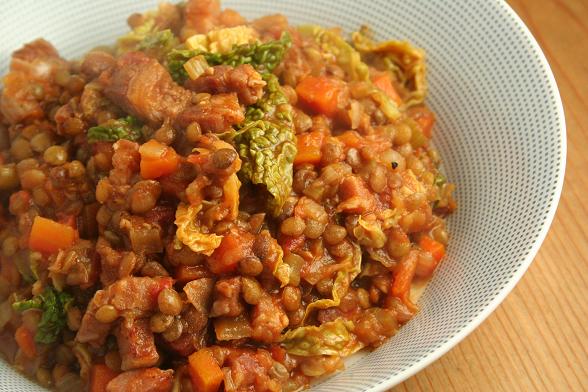
Like most people at this time of year, Stephen and I have been pretty busy and continue to be so until well into the new year. With not a lot of time to devote to thinking about food, inspiration deserts us and planning meals becomes more of a chore than a pleasure.
Today’s dinner was mostly put together from things we already had with just a little fresh cabbage thrown in at the end. Not particularly exciting and certainly not inventive but it warmed us up and left us feeling full.
This was a Delia recipe which I followed almost exactly, just adjusting the quantities slightly. I don’t have much luck with soup so thought it safest to stick to a recipe. While it was good just as it was, a little chilli would have worked too.
Mexican Feast

Last night, we had some friends over for a pre-Christmas get-together. We had originally planned to do traditional buffet-style food but a lack of time meant we opted for a throw-it-in-the-oven-and-leave-it-to-cook kind of dish instead. Since we’ve been cooking a lot of Mexican food lately, we took the opportunity to cook something more elaborate from Rick Bayless’ Mexican Kitchen book. There was a little bit of work to do initially (which saw Stephen dashing to Notting Hill mid-afternoon to pick up some special chillies) but once it was in the oven, we were free to get on with other things.
We started with two types of tortilla chips (one was a really good chilli flavour made by Poco Loco which can sometimes be found in corner shops but are quite hard to track down) and some guacamole. The planned chilli popcorn was shelved since one of our friends bought some of her brilliant spring-rolls. Not traditionally Mexican but very welcome nonetheless. Stephen also experimented with a Christmas Cumberland Cocktail which involved Prosecco and cranberries. We had planned to make margaritas too but the vast selection of wine meant we were distracted and forgot.

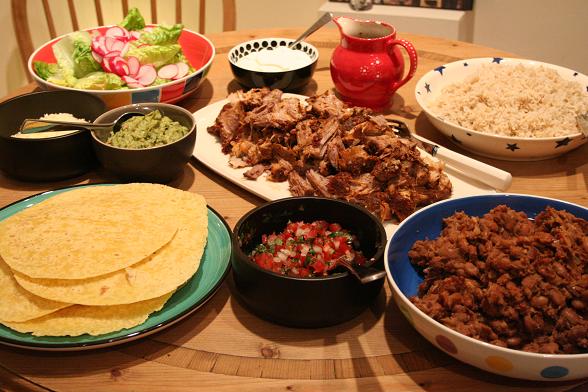
We then moved on to the pork shoulder which we served with some beans, rice, salad and radishes (as per Rick’s suggestion), the cooking liquid, more guacamole, some salsa, cheese and corn tortillas to wrap everything up in.
The pork was tender and fell apart easily when removed from the oven but didn’t seem to have taken on much of the chilli flavour, with just a background warmth instead of the punch I expected. It was well received though and there wasn’t a lot left which is always a good sign. There was plenty of rice though which we sent home with one of our friends to turn into fried-rice.
We finished with Nigella’s Margarita ice-cream which I made the previous day, along with a non-alcoholic version with oranges and limes taking the place of the tequila and Cointreau. This is similar to the bitter orange ice-cream we used to make a lot and is brilliant if you don’t have an ice-cream maker since it doesn’t require any churning. This wasn’t quite as successful as the orange version, the texture was different which may have been to do with the alcohol. It didn’t seem to matter too much by this point in the evening as we were really more interested in the wine that was left, as you can probably tell from the terrible picture below.

Chile Seasoned Pot-Roasted Pork
Serves Six
2 medium dried ancho chillies, stemmed and deseeded
4 medium dried guajillo chilles, stemmed and deseeded
2 bay leaves
2 tablespoons cider vinegar
1/2 small white onion, roughly chopped
2 garlic cloves, chopped
1/4 teaspoon allspice
1 tsp mixed dried herbs
Pinch cloves
11/2 tbsps vegetable oil
1/2 tsp salt
2kg pork shoulder
Lettuce, to serve
Radishes, to serve
Rehydrate the chillies by steeping in boiling water for 30 minutes. Drain, reserving 2/3 cup of water, transfer chillies and reserved liquid to a blender.
Crush bay leaves in a mortar and pestle then add to the blender with the vinegar, onion, garlic, mixed herbs, cloves and allspice. Process to a smooth paste and then push through a fine sieve into a bowl.
Heat the vegetable oil in a heavy-bottomed pan, add the spice paste and fry for five minutes until dark in colour.
Heat the oven to 160 degrees, cut the pork into pieces that are roughly 3 inches thick and make 1 inch incisions all over the meat. Lay the meat on top of the paste and ensure that it is all well coated. Pour 1.2 cup of water around the meat and put the dish into the oven.
Baste the meat every 30 minutes. After 2.5 hours the meat should be tender and falling apart. If the liquid dries out at any point during the cooking time then top up with water.
Allow the meat to rest for 30 minutes before serving. We attempted to turn the fat into crackling but it didn’t work all that well. What did work was removing the fat from the cooking liquid and reducing it down to create a thick sauce to serve with the meat.
Lemon Chicken with Coriander
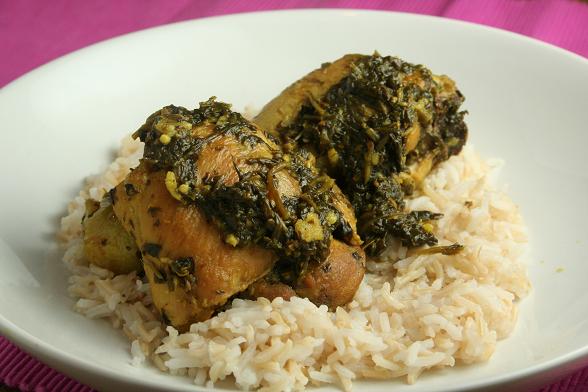
Talking about cooking last night’s fish dish with Indian spices led me to Madhur Jaffrey’s ‘Indian Cooking’ when looking for something to cook tonight. This dish seemed reasonably light (we’re trying not to over-indulge too much during the week as we have a lot of food-heavy weekends coming up) and quick, making it a good option after a busy day.
It was indeed quick to cook but I still haven’t got used to the writing style which meant I lost my way a little when trying to follow the method. I should have weighed and measured everything before I started too but I was trying to save time, as usual. Consequently, my coriander isn’t as finely chopped as it should be and some stalks found their way in to the final dish but it didn’t matter too much. For a relatively light dish, this had plenty of flavour with a medium heat.
As we’ve found with everything we’ve cooked so far from this book, none of our dishes have borne any resemblance to the pictures shown in the book. I’m not claiming we’re excellent cooks or fabulous photographers but, if a picture is shown, there is usually a similarity in our finished dish. This looks particularly unappetising so I can understand why the food stylist may have wanted to take some liberties but I find it somewhat sneaky when there’s no resemblance at all.
Lemon Chicken with Coriander
Serves Two
1 inch ginger
2 tablespoons plus 75ml water
Vegetable oil
2 chicken legs and 2 chicken thighs
3 cloves garlic, crushed
100g fresh coriander, chopped
1 small green chilli, finely chopped
1/8 teaspoon cayenne pepper
1 teaspoon ground cumin
1/2 teaspoon ground coriander
1/4 teaspoon turmeric
1/2 teaspoon salt
1 tablespoon lemon juice
Blend the ginger with two tablespoons water.
Brown the chicken, remove and set aside.
In the same pan the chicken was cooked in, fry the garlic until it just starts to brown. Pour in the ginger water and fry for one minute.
Add the coriander, chilli, cayenne pepper, cumin, ground coriander, turmeric and salt. Stir and cook for one minute.
Return the chicken to the pan, add 75ml of water and the lemon juice, stir and bring to the boil. Cover and cook for 15 minutes.
Turn the chicken and cook for a further 10-15 minutes until tender.
Spanish Seafood Stew
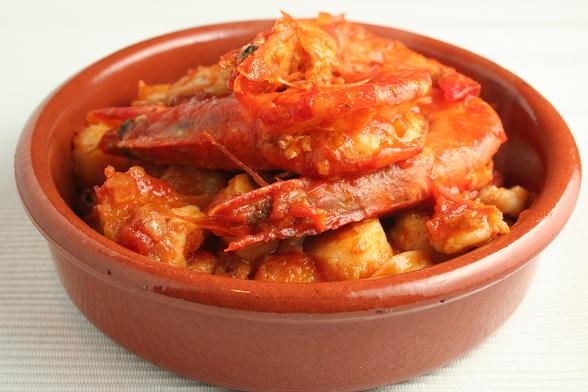
This wasn’t a great success but has potential so I’m typing it up here for future experiments. Less tomatoes and more fish would be a start, parsley to finish would have made a difference too. Stephen also mentioned that an Indian version would work well.
Spanish Seafood Stew
Serves Two
1 tbsp plain flour
1 tsp salt
Assorted seafood (we used squid, scallops and prawns)
Olive oil
1 small onion, diced
1 garlic clove, crushed
1 tbsp brandy
1/2 red chilli, chopped
Tomatoes (we used half a tin but 1 large fresh would be better)
1 bay leaf
1/2 tsp sweet paprika
Few saffron strands
100ml white wine
100ml vegetable stock (use fish stock next time)
Coat the scallops and squid in seasoned flour and fry until just cooked through. Remove from the frying pan and reserve.
Add the onion and cook until just translucent. Add the chilli and garlic and cook for one minute further.
Pour on the brandy and light, once the alcohol has burned out, add the tomatoes, bay leaf, paprika, saffron and cook for five minutes.
Pour in the wine and fish stock and simmer for a further five minutes. Add the reserved seafood, cover the pan and cook for three minutes.
Season, add lemon juice (and parsley) and serve with crusty bread.
Original recipe from Jenny Chandler’s ‘The Real Taste of Spain’.
