Miso-Marinated Cod
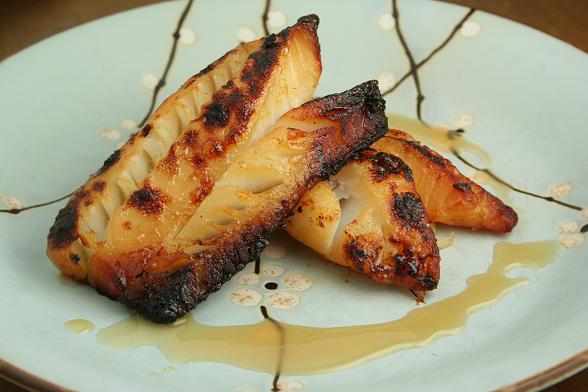
On Saturday kitchen this weekend the subject of miso-marinated black cod arose; that famous / infamous dish given iconic status by establishments such as Nobu. In a rare moment of sanity, Paul Rankin managed to string a few sentences together and provide some useful information – it was not normal cod, it was often from Alaska, was also called sablefish and a sustainably sourced version was available in Marks & Spencer. Which made us want to cook it. But we failed to find it in the small M&S near to us, so we ended up with line-caught standard cod instead.
We followed this recipe and marinated it for two days. The result was rather sweet, probably my fault for not brushing off enough of the marinade before grilling it, which is also the reason for the black bits. Not an overwhelming success.
After having cooked it, I had a vague sense of deja vu, but can’t find anything about it on Dinner Diary. Kerri just managed to find though – I had failed to find it because it was bream that we used last time. Much the same though.


Chorizo and Lentil Lasagne
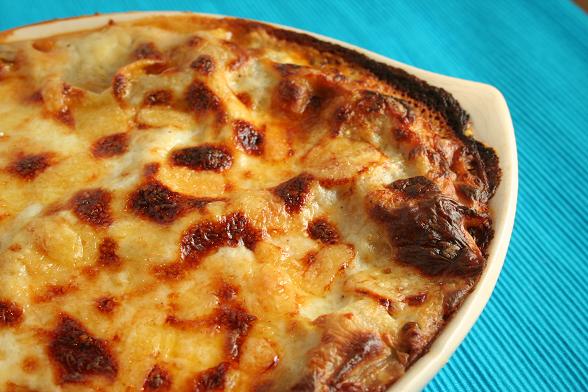
We had planned to be out for lunch today but the wet and windy weather meant we opted to stay inside instead. Without anything vaguely resembling a Sunday lunch, we rummaged through the freezer and found some lentil ragu. That, combined with a quick white sauce and some lasagne sheets, made for a pretty decent emergency lunch.
Indian Cooking – Rogan Josh, Chana Dal, Spiced Cauliflower and Naan Bread
We recently bought Madhur Jaffrey’s Indian Cookery as we felt that we needed a decent Indian cookbook and reference rather than just searching for recipes online if we fancied cooking Indian dishes. The book has turned out to be just what we were after, with a section on the various spices and other ingredients that are used and a section on commonly used techniques. Even though many of the spices overlap with those used in Thai cooking which we have done a lot of, it is interesting to see the slightly different angles on their emphasis and combinations in cooking in different regions and cultures. Importantly, it also has a section on how to put together a balanced menu.
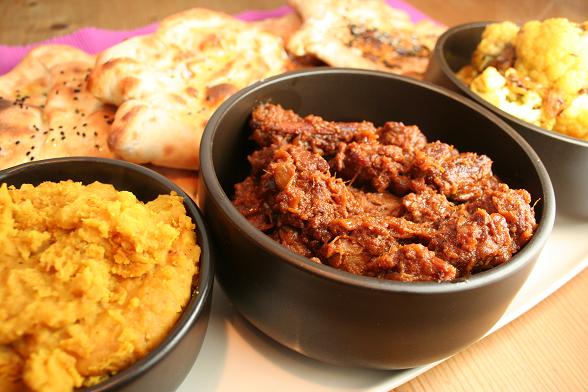
Having never cooked rogan josh before, we started with that, a dish which gets it’s name from the rich, red appearance. The menu section told us that there would usually be a lentil or bean side dish as well as a vegetable dish. We opted for naan bread too, in order to give our new oven another workout.
Although there was a lot of preparation to be done and careful timing to ensure everything was ready at once, this all came together very well and was brilliant. The lamb was tender and aromatic with a decent hit of spice that was cooled by the dal and the cauliflower. The bread was essential to mop everything up and ensure nothing was wasted. This was one of the best things we’ve eaten in a long time.
Rogan Josh
Serves Two
1 inch cube fresh ginger, peeled and coarsely chopped
4 cloves garlic, peeled
2 tablespoons plus 225ml water
5 tablespoons vegetable oil
450g diced lamb leg
5 cardoman pods
2 bay leaves
3 cloves
5 peppercorns
1/2 inch cinnamon stick
1 onion, peeled and finely chopped
1/2 teaspoon ground coriander
1 teaspoon ground cumin
2 teaspoons paprika
1/2 teaspoon cayenne pepper
1 teaspoon salt
3 tablespoons natural yoghurt
1/8 teaspoon garam masala
Black pepper
Put the ginger, garlic and 4 tablespoons water a blender or mortar and pestle and blend into a paste.
Heat the oil in a pan over a medium-high heat and brown the meat, remove and set aside.
Put the cardamom pods, bay leaves, cloves, peppercorns and cinnamon into the same hot oil, stir and wait until the cloves swell and the bay leaves begin to take on colour (a few seconds).
Put in the onions and fry until medium brown. Put in the ginger and garlic paste and fry for 30 seconds. Then add the coriander, cumin, paprika, cayenne pepper and salt. Stir and fry for another 30 seconds.
Add the meat and fry for another 30 seconds. Now put in one tablespoon of the yoghurt and fry for about 30 seconds until incorporated. Add the remaining youghurt a tablespoon at a time. Stir and fry for 3-4 minutes.
Now add 150ml water, bring to the boil, cover, turn the heat to low and simmer for one hour, stirring every ten minutes.
Remove the lid, turn the heat up to medium and boil away some of the liquid. Spoon off any excess fat, sprinkle with garam masala and black pepper and serve.
Chana Dal
Serves Two
115g yellow split peas
1 pint water
1/4 teaspoon turmeric
2 thin slices unpeeled ginger
1/2 teaspoon salt
1.5 tablespoons vegetable oil
1/4 teaspoon cumin seeds
1 clove garlic, peeled and chopped
1/4 teaspoon red chilli powder
Put the spolit peas into a pan with the water. Bring to the boil and remove any scum. Add the turmeric and ginger, cover and simmer gently for 1.5 hours, stirring frequently during the last 30 minutes to prevent sticking.
Add the salt and the garam masala, stir and remove the ginger slices.
Fry the cumin seeds in hot oil and a couple of seconds later, add the garlic. Fry until the garlic is lightly browned. Put the chilli powder into the pan and immediately pour the contents onto the split peas. Stir and serve.
Spiced Cauliflower
Serves Two
275g cailiflower
1.5 tablespoons vegetable oil
Pinch of asafetida
1/4 teaspoon cumin seeds
1 onion, sliced into half-moons
1/2 hot green chilli, finely chopped
1/2 teaspoon ground cumin
1/4 teaspoon ground coriander
1/8 teaspoon ground turmeric
1/4 teaspoon cayenne pepper
1/8 teaspoon salt
60ml water
1 teaspoon lemon juice
Break the cauliflower into florets.
Put the oil into a frying pan over a medium heat and add the asafetida. A second later, add the cumin seeds. After ten seconds, add the onions and cook for two minutes.
Now add the cauliflower and the chilli, turn the heat down to medium and mix so that the cauliflower is well coated. Cook for a further minutes, add the lemon juice and water and bring to a simmer.
Cover, turn heat to low and cook for 5-7 minutes or until the cauliflower is tender.
Naan Bread
Serves Two
75ml hand hot milk
1 teaspoon caster sugar
1 teaspoon yeast
75g plain flour
1/4 teaspoon salt
1/2 teaspoon baking powder
1 tablespoon vegetable oil
75ml natural yoghurt
1/2 large egg, lightly beaten
Put the milk in a bowl. Add 1/2 teaspoon of the sugar and the yeast, mix and set aside for 15-20 minutes or until the mixture is frothy.
Sift the flower, salt and baking powder into a large bowl. Add the remaining sugar, the yeast mixture, 1 tablespoon vegetable oil and the yoghurt and egg. Mix and form a ball of dough.
Empty the dough onto a clean work surface and knead for about 10 minutes until smooth and satiny. Form into a ball, place into an oiled bowl and leave in a warm place for one hour.
Pre-heat the oven to the highest temperature, put a pizza stone (or baking tray) in to heat and pre-heat the grill.
Punch down the dough and knead it again. Divide into balls, stretch into naan shapes and place on the pizza stone. Bake for 3 minutes.
(Our dough didn’t really rise but still made very good bread. We also found we needed to use a lot more flour than the recipe stated).
Lancashire Hot Pot
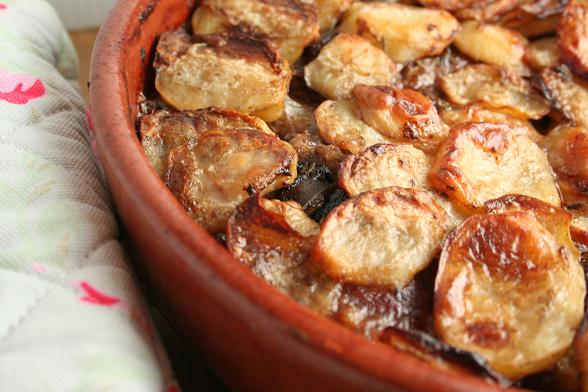
We used to watch Coronation Street when I was growing up. If you watched it too then I’m sure you’ll remember Betty’s hotpot, the only dish they ever seemed to serve in the Rover’s Return. It was always very grey looking and not at all appetising which might have something to do with why I’ve never eaten it, or cooked it.
Stuck for something to cook for dinner tonight, I browsed through a few old magazines and saw it mentioned several times. For want of a better suggestion, I decided to put Betty’s dish out of my mind and started doing some research.
Most recipes I found were similar but I eventually went with Hugh Fearnley-Whittingstall’s version since he included Worcestershire sauce, anchovies and herbs. While I appreciate this probably isn’t the way the dish was originally prepared, it was more appealing than just lamb, onions and potatoes.
I didn’t use anchovies in the end since I didn’t have any but I did use the Worcestershire sauce and some thyme. I also used stock which some recipes didn’t include, favouring just water.
It was a good, simple dish but, in my opinion, it really needed those extra ingredients. The meat itself had a decent amount of flavour and the kidneys helped provide depth but I can’t imagine it would have been anywhere near as tasty without the stock, Worcestershire sauce and herbs.
Lancashire Hot Pot
Serves Two
Olive oil, for frying
1 large onion, sliced
Lamb neck fillet, bone-in (I’m not sure what weight we used but there were six pieces roughly two inches thick)
2 lambs kidneys
Flour, for dusting
Salt and pepper
375g potatoes, sliced
Bay leaf
2 sprigs thyme
Tablespoon Worcestershire sauce
250ml lamb stock
Start by frying the onion in some olive oil until translucent. Remove from the pan and set aside.
Coat the lamb and the kidneys in the seasoned flour and start by browning the lamb. Remove from the pan and set aside while you cook the kidneys.
Arrange half of the potatoes, the cooked onions and the bay leaf on the bottom of a casserole dish and season with salt and pepper. Put the lamb and the kidneys on top, add the thyme and the Worcestershire sauce and season again. Arrange the rest of the potatoes on top of the lamb and pour over the stock. Put the lid on the casserole dish and place in the oven at 200 degrees.
After 20 minutes, turn the oven down to 140 degrees. If there is an excess of liquid at this point, remove it and reserve. Cook for one hour.
Remove the lid, turn the oven up to 200 degrees and cook for a further 30 minutes.
Mexican Rice
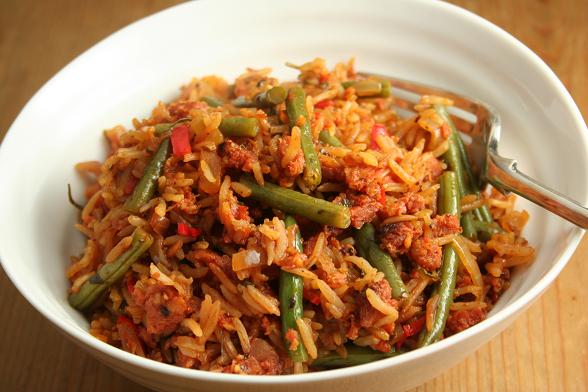
We are continuing to cook Mexican dishes from the Rick Bayless book that we bought recently. This one looked like a fairly quick and easy dish to cook. It turns out that it’s quick and easy if you happen to have some salsa already made, because making that is the longest part of it.
The recipe is fairly simple – skin some chorizo and then fry it in a saucepan, crumbling it up with a spoon as it fries. When it is done (about 10 minutes), remove it from the pan and pour out some oil if there is too much left. Then add rice and stir that for a while, frying it risotto style. After that, add a cup of salsa which we have a recipe for here. At this point the kitchen filled up with wonderful Mexican-restaurant aromas.
Cook that, stirring regularly, for 5 to 10 minutes until the salsa has cooked down a bit. Then add stock and a dash of salt, put the lid on and let it simmer until the rice is almost cooked. Then add the chorizo back in, along with vegetables – the recipe said to use courgettes (or zucchini since it’s an American book…) but we used green beans as that is what we had available. Let it cook a few minutes longer, then turn off the heat and let it sit with the lid on for another 5 minutes. Then eat!
Bombay-Style Chicken with Red Lentils
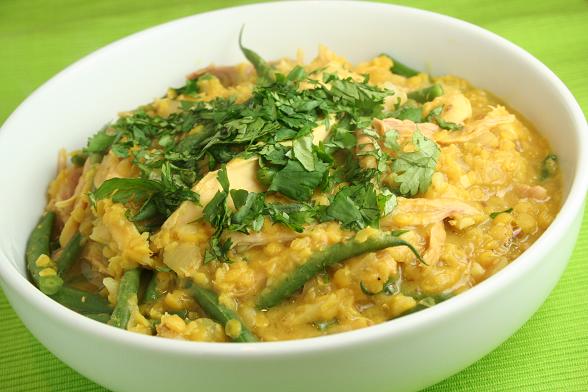
We had a roast chicken for lunch yesterday and even though we have large appetites, we never manage a whole chicken so there are always leftovers to contend with. We’ve had some success using cooked chicken in the past so looked to Madhur Jaffrey for inspiration.
The recipe we found called for uncooked chicken but it worked well despite that. There wasn’t a huge amount of heat to this dish but it was reasonably earthy with a good, rounded flavour. If we make it again, I would increase the spicing though and add some chicken stock to make up for the fact that we had previously-cooked chicken.
Bombay-Style Chicken with Red Split Lentils
Serves Two
125g red lentils
1 white onion, chopped
1 green chilli, finely chopped
1 teaspoon ground cumin
1/4 teaspoon turmeric
1/2 teaspoon ginger, finely chopped
750ml water
Chicken
1 teaspoon salt
1 tablespoon vegetable oil
1/2 teaspoon cumin seeds
2 cloves garlic, finely chopped
1/4 teaspoon cayenne pepper
1 tablespoon lemon juice
1/4 teaspoon sugar
1/4 teaspoon garam masala
Green beans
Coriander, chopped
Combine the lentils, onion, chilli, cumin, turmeric and half of the ginger with the water. Bring to the boil, reduce the heat and simmer with the lid ajar for 45 minutes.
Add the chicken and the salt, bring back to the boil, reduce heat and simmer for 15 minutes (or 45 if using uncooked chicken).
Put the oil into a frying pan and add the cumin seeds. When they start to crackle, add the garlic and the rest of the ginger and fry until the garlic begins to colour. Add the cayenne and immediately transfer the contents of the frying pan into the pot with the lentils and chicken. Also add the lemon juice, sugar and garam masala and any vegetables you may be using.
Cook on a medium to low heat for five minutes, transfer to a serving dish, garnish with the chopped coriander and serve.
We served this with some Brussels sprouts that we’d sauteed in cumin seed, onion seed and chilli but it really needed some naan bread to soak up the juices.
Pizza and Garlic Bread in our New Oven!

Last week our oven broke, which led to us using Kerri’s mum’s oven, which broke in a different way, which led to disastrous results. This week we had a new oven installed. The most interesting thing about it was that it goes up to 270C! This meant that we had to try pizza in it, because our old oven with its rather rubbish temperatures just wasn’t hot enough to make reasonable pizza.
To save time, last night we made our usual pizza dough, and then after it had done its fifteen minutes rising, we put it into the fridge overnight. This evening we looked in the fridge and the two neat balls of dough had risen further while resting in the fridge and had joined together. We were worried we had ruined the dough, but we made two new balls out of it and put them in a warm place for a while where they plumped up again.
Of course the next thing to do was to turn the oven up to 270 and wait for it to heat up. While we did this, we made our tomato sauce out of San Marzano tomatoes as per the link for the pizza dough above. We also had some Laverstoke Park Farm British buffalo mozzarella (yes!), a few really spicy olives, some leftover rosemary-scented ham and some roasted red peppers. All this went on; the peppers and olives in an orderly fashion followed by the ham and mozzarella in a rather random fashion. Which was fine since the pizza had turned out into a rather mis-shapen square anyway.
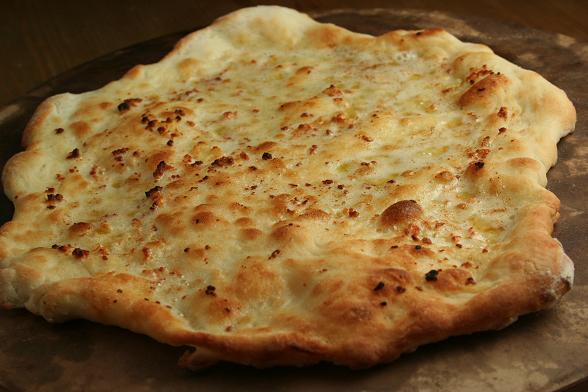
We also made some garlic bread, since the dough recipe makes enough for two pizzas. Both were really really good. Nice and thin and crispy with really crunchy crusts. We put it down to a combination of getting the dough right and having it rise till it was nice and light, combined with the higher temperature of our new oven. It’s still not as high as a proper pizza oven, but it did a good job and we only had to cook them for a few minutes each until the cheese was bubbling and the edges were browning.
I experimented with different flavoured Halen M̫n salt on the garlic bread Рthe celery salt went particularly well, giving it both herbal and spicy notes.
Food Blogging just gets Tougher and Tougher
I spent Friday at the Masterchef Live (previously the BBC Good Food Show) event at Olympia, courtesy of the blogpaper. Arriving early gave us a good opportunity to wander around while it was quiet and check out what was on offer. With a full timetable of Invention Tests and Masterclasses throughout the day, it was necessary to plan our visit with military precision.

We started in the Cookery Experience area watching a ‘Cook-Off’ which was introduced by Olly Smith and hosted by Top-Chef-and-Restaurateur-John-Torode and Ingredients-Expert-Greg-Wallace. Previous winners, James Nathan (who now works for Rick Stein) and Thomasina Miers (owner of Wahaca) were given 20 minutes to create a dish from mystery bags which included prawns, pork chops and chocolate. James was crowned the eventual winner for his chilli prawns as John and Greggy (as he’s affectionately called by John) bemoaned the lack of heat in most dishes they were expected to judge.
I wasn’t expecting to enjoy this as much as I did; having watched a lot of Masterchef lately, I was beginning to tire of the hackneyed phrases and cliches but John and Gregg were much more natural than they come across on camera. Olly Smith was of course as brilliantly extravagant and boisterous as he always is.
After this, we did a little wandering around the 200 producer stands on the top floor before dropping into one of the Masterchef Theatres for a cookery demonstration. I’ve not been to a food event like this for a while and I’ve previously been a little disappointed with some of the exhibitors as the same ones seem to turn up all the time but this seemed to draw a much more diverse crowd showing plenty of things I’d not seen before.
I picked up some Palestinian olive oil, having read about it earlier in the year. It had a distinctive grassy and slightly bitter taste to it and was much more developed in flavour than the Mediterranean oil I’m used to. I also tasted some really good Croatian oil that isn’t yet available in the UK but I’ll be looking out for it when it does arrive.
Rice bran oil was another thing that found it’s way into my shopping bag. Billed as a healthier alternative to vegetable oil, at £1 for 250ml it seemed worth a shot. I’m yet to try it yet and am already beginning to suspect that it’s going to be another one of those ingredients that looks interesting but languishes at the back of the cupboard until the use by date has expired. Which is why I left behind the black garlic.
Alongside oil, cheese was probably the most represented food at the event. I could have spent a fortune but limited myself to some Laverstoke Park Farm mozarella. Stephen and I have had it before and loved it and it was perfect on our Friday night pizza.
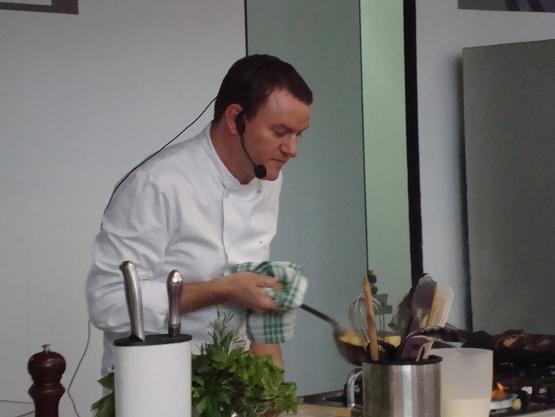
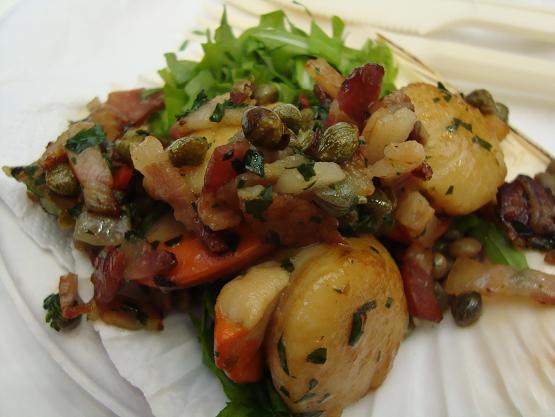
Although we had already sampled a fair amount of food, we ate lunch in the Restaurant Experience area which, much like at Taste of London, features several pop-up versions of well-known restaurants. Having seen Theo Randall cook a leg of lamb earlier in the day, I headed towards his Intercontinental stand and opted for the Cape Sante: scallop, pancetta and lentils with capers, parsley and chilli. It wasn’t a huge portion but it was very good, the classic combination of fish and pork was given an earthy, wintery feel with the addition of the puy lentils and the chilli.
The afternoon was spent tasting yet more food and I also spent some time wine tasting. There wasn’t anything particularly remarkable in this area but the Crabbies Ginger Beer was very good though and would be lovely on a hot day.
Seven hours after I’d arrived, my sore feet and arms told me it was time to take my oil and cheese home. I can’t say that this event Changed My Life but it was good to see lots of interesting, new producers in one place and be able to taste their products before buying them. I’d have a cupboard full of black garlic otherwise.
Full set of pictures can be seen here.
Four Bean Chilli
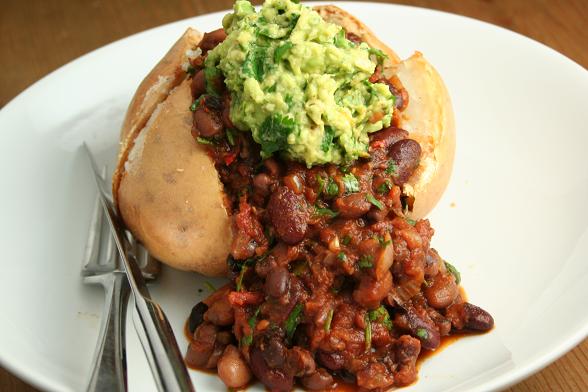
I won’t go into too much detail about this as we’ve cooked it several times before, albeit with varying varieties of bean (it’s a great way of using up small amounts of beans that are hanging around in the cupboard, just make sure they are of a similar size).
What I did do differently this time is cook the dried beans without having soaked them first, as per Rick Bayless’ comments in his book “Mexican Kitchen”. Although opinion varies on this, he maintains that there is no scientific evidence to prove that soaked beans aid digestion, they just cook quicker. The only way to cope with the digestive issues is to eat more beans. We eat them a lot so I figured we would try it this way and see what happens. I prefer dried beans to tinned because I find they keep their firmness and don’t break down but I’m not always organised enough to remember to soak them overnight.
This seems to vary slightly each time I make it but the main recipe stays the same. We have a new oven so I realised that the garlic and chilli didn’t need 30 minutes at 190 but just 15 minutes, I guess our thermostat must have been off previously. I also used two tins of tomatoes. Aside from that, the only other thing I did differently was omit the cumin, simply because I didn’t have any.
Bean Chilli
Serves Four (if served with rice or baked potatoes)
4 tbsp olive oil
2 large red chillies, roasted, deseeded and pulped
4 garlic cloves, roasted and then pulped
2 tsp ground cumin – not this time but I would usually use it
1 tsp ground coriander seed
1 tsp chipotle chilli powder
1 tsp ground cinnamon
1 tsp smoked paprika
Glass red wine
1 large onion, finely chopped
500ml beef stock
2 tins chopped tomatoes (800g)
2 tbsp tomato purée
Salt and pepper
Bay leaf
500g mixed, dried beans
1 tsp cocoa powder
Handful chopped coriander
Roast the chillies and garlic in the oven for about 15 minutes, on 190 degrees, before removing from the oven leaving to cool down. Remove the seeds from the chilli and squash together with the garlic.
Boil the dried beans for 1 hour 15 minutes (or until just tender) and then rinse well.
Grind the coriander seed and cumin together in a mortar and pestle and transfer to a bowl, mix with the chilli powder, cinnamon and paprika.
Soften the onions in a frying pan with some salt, add the garlic and chilli pulp to the softened onions with the tomato puree and let it cook together for a couple of minutes. Into this mixture, add the powdered spices and cook for a further couple of minutes. Deglaze with some madeira and allow the alcohol to cook out.
Next, add the stock, tomatoes and the bay leaf and season. Allow to cook for about half an hour before adding the beans, bring to the boil, reduce the heat and simmer for an hour and a half.
Remove from the heat and refrigerate overnight. Add the cocoa powder and reheat. Garnish with chopped coriander and serve.
As ever, I didn’t cook this last night so left it to cool for four hours before reheating.
The lack of cumin seemed to make quite a difference to the overall flavour, it wasn’t quite as deep and round as it normally is. Nor was it as hot as usual but chilli strength can vary so this is always a bit of an unknown.
Mexican Prawns with Tomato Salsa and Avocado
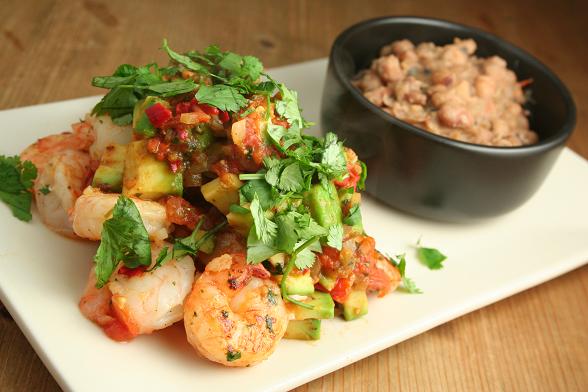
This recipe comes from our new Mexican book, Rick Bayless’s Mexican Kitchen. We haven’t read through it in a lot of detail just yet but this recipe caught Stephen’s eye so we decided to cook it tonight. It’s straightforward but the beans we opted to serve with it require a little more attention which I wasn’t really paying at the time. I added too much water at the beginning and didn’t realise until it was too late. I didn’t have time to reduce the liquid down so I drained it away and probably drained away most of the flavour too. Some extra salt, a squeeze of lime juice and some chopped coriander rescued it pretty well though.
The prawns were good but even though I’ve eaten warm avocado a couple of times I still find it a little challenging. In hindsight, this would have been better with some flavoured rice and some crunchy tortilla but it wasn’t a disastrous combination.
Tomato Salsa
Serves Four
2 medium-small ripe tomatoes, cored and finely chopped
3-5 chillies, finely chopped
3 large garlic cloves, finely chopped
1 small white onion, finely chopped and rinsed
11/4 teaspoons salt
1 packet coriander, finely chopped
Mix together the tomatoes, chilli and garlic. Add the onion and salt. Stir in the coriander. This benefits from being made ahead and kept in the fridge.
Prawns
Serves Four
24 prawns, peeled and de-veined
2 tablespoons lime juice
1/2 teaspoon salt
1/4 teaspoon black pepper
2 small avocadoes
6 tablespoons coriander, chopped
Olive oil, for frying
Cover prawns with one tablespoon of the lime juice, salt and pepper and leave to marinate for 30 minutes. Pat dry with kitchen towel.
Dice the avocado.
Heat oil in a frying pan over a medium heat and lay the prawns in one layer. When half done (about 2.5-3 minutes), turn the prawns, add the salsa and remaining tablespoon of lime juice to the pan. When the prawns are cooked, remove from the pan and set aside but leave as much of the salsa in the pan as you can.
Add the avocado to the salsa and cook for 1.5-2 minutes.
Arrange the prawns on a serving plate, cover with salsa and sprinkle with coriander. Serve!
