Thai Green Papaya Salad, Mackerel Braised with Green Papaya, and Pork and Green Bean Red Curry
The title is a bit of a mouthful, but it needs to be to cover everything that we ate. We have been on a bit of a Thai theme for a few weeks now and it culminated in dinner with friends last night. One of the big points about Thai menus is that they should contain a number of dishes that complement each other and can be served together, so we deliberated over this for quite a while and eventually came up with these three dishes. Curiously enough, we have never cooked with green papaya or with dried prawns before, and each dish contained at least one of these ingredients.
We started with some prawn crackers of course, while we finished off the cooking…

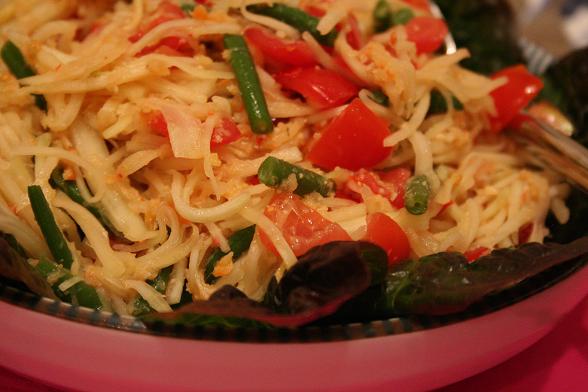
The green papaya salad had as its base a lot of green papaya obviously. Tasting it plain, it doesn’t taste like very much. There is a just-detectable taste of papaya, but it seems closer to a firm but bland cucumber in character. When mixed with other flavours though, it does combine very well and absorb a lot of flavour, transforming it. We shredded ours using the julienne sized setting on our mandolin and it did look rather like noodles when all mixed together.
To make the dressing, we made a paste from dried shrimp (which we boiled quickly first as the instructions on the packet said to cook them), garlic, peanuts and chillis. To this paste we added lime juice, palm sugar, fish sauce and tamarind water, mixed it all up well and then dressed the shredded green papaya with it. We added some chopped cherry tomatoes and blanched green beans to it to add some colour and then served it on lettuce leaves. The flavours all worked together to give a well balanced salad with a slightly crunch to it and the exotic edge of involving two ingredients that we haven’t used before.
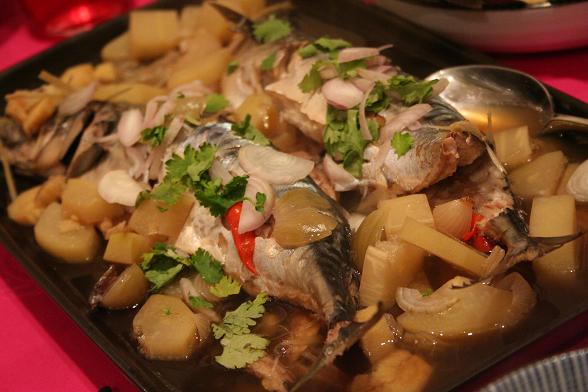
The braised mackerel was a very interesting dish, and different to most other Thai food we have cooked. The recipe is from Thai Food which we use often and the author points out that Thai people would boil this until the flavours were correct, but that tends to make the fish tough, so he prefers to braise it gentle over a couple of hours. So we braised it.
Ingredients
1 small to medium mackerel whole or filletted (we actually used two medium to large whole mackerel without increasing any other quantities in the recipe and it worked out well)
lime juice
salt
3-5 long red or green chillis (we didn’t have long ones, so just used two birds eye chillis)
10 slices galangal
2 stalks lemongrass
5 thick slices ginger
2 coriander roots, scraped
5 red shallots, peeled
5 garlic cloves, peeled
5 pods fresh tamarind or 4 tablespoons tamarind pulp
1 very small green papaya
2-3 cups stock or water (usually chicken stock in Thai cooking, but I imagine that fish stock would go well in this dish)
4 tablespoons palm sugar
2 tablespoons dark soy sauce
2 tablespoons fish sauce
1 tablespoons coarsely ground white peppercorns
Garnish:
3 red shallots, finely sliced
1 tablespoon coriander leaves
pinch of ground white pepper
First gut and/or fillet the mackerel if it has not already been done. Wash the fish very well and rub it with the lime juice and salt, then rinse again and pat dry. This removes any loose bits which would cloud the stock.
Bruise the chillies, galangal, lemongrass, ginger, coriander roots, shallots and garlic in a mortar and pestle and set aside. Peel the green papaya and cut into 1-inch square pieces. Bring the stock to the boil in a flameproof casserole, then add tamarind, palm sugar, soy sauce, fish sauce and white pepper. When this is dissolved, add all the bruised aromatics and the papaya and simmer for several minutes. Add the mackerel and some water to cover it, then bring it back to the boil, cover it and put it into the oven for two hours at just 80 degrees Centigrade. This will ensure that it does not quite boil and will gently braise the fish. If you don’t have a flameproof casserole, prepare the stock in a saucepan and then pour it into a casserole with the fish when you are ready to put it into the oven.
When it is ready, serve in a bowl or deep platter sprinkled with the shallot and coriander garnish and with some of the cooking liquid poured around it. The white pepper gives it a pungency and the aromatics penetrate the fish very well over the long cooking time, giving it a lot of flavour. The green papaya also soaks up loads of flavour and is a treat just on its own. The broth itself is very well flavoured too and can be eaten as a soup. In fact I am planning to add some noodles to the left over broth and have it for lunch soon. All in all a winning dish. Apologies for the rubbish photograph though…
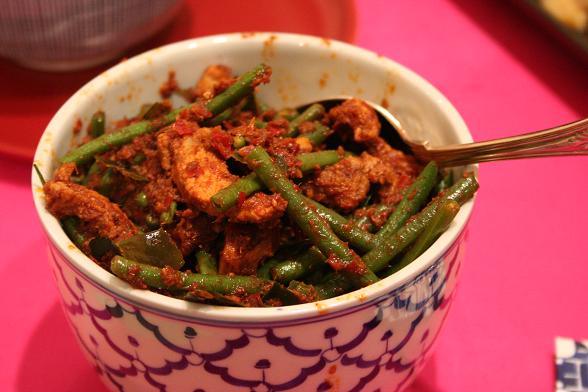
The pork and green bean dish is one that we have cooked before and we loved it then and loved it this time too. The paste contained 15 dried red chillis, which gave it a fair amount of heat. We didn’t use the dried prawns in the paste last time though and from that post it didn’t look like we substituted with anything either. The prawns were a real pain to crush into a paste; I should have chopped them first instead of just throwing them into the mortar and pestle whole.
The three dishes were all quite different in style and complemented each other well, especially seeing as they had some ingredients in common. We served them with some jasmine rice and some steamed pak choi.


Lamb Cutlets
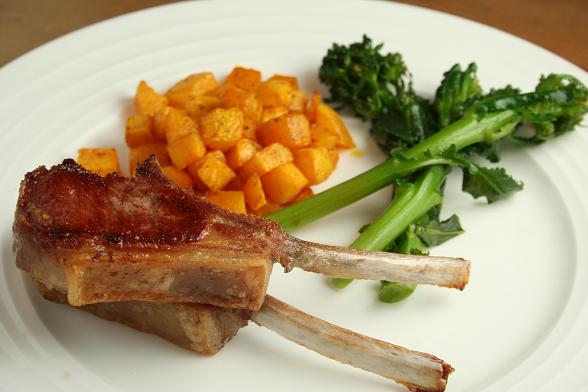
Lamb chops, steamed broccoli and some roasted butternut squash. The lamb was good, crunchy on the outside and perfectly pink in the middle. The butternut was roasted for quite a while but stayed quite soft and the spices we roasted it in (left over from last week’s oxtail) didn’t work very well. The broccoli was steamed and past it’s best but needed using up. Not very interesting, not very cohesive and not enough of it. This is what happens when you’re hungry, tired and haven’t planned your dinner properly.
Rabbit Ragu with Pappardelle
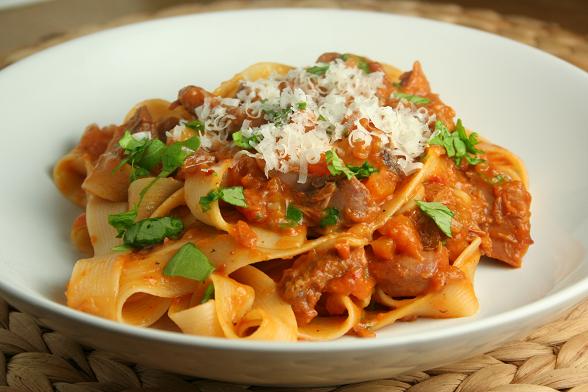
As Stephen mentioned yesterday, we planned this dish when we knew we would be in receipt of a rabbit which meant we could start the preparation while cooking yesterday’s dinner. After removing the meat we needed for the curry, we were left with the bones and the legs; the bones went into the stock pot and we decided to add the legs too so that the meat would be cooked and ready for tonight. Once the leg meat was tender, we removed them from the stock, shredded the meat and threw the bones back into the pot to continue cooking.
We made a simple ragu by frying onion, celery, garlic and carrot which we deglazed with a glass of white wine before adding the rabbit stock, some tomatoes, tomato paste, herbs, salt and pepper and some milk. In went the rabbit and there it sat for about three hours until the whole lot had reduced and thickened.
After about an hour, I tasted it and it was too sweet. I’d forgotten that we had sundried tomato puree which is a lot sweeter than ordinary and I’m not sure the carrot helped either. I added some Worcestershire sauce and a little more salt which helped to balance it but it wasn’t perfect.
We didn’t have any parsley so chopped up some rocket instead which worked quite well, not so much that it over-powered the flavour of the rabbit but just enough to lift the dish. Just before serving we added a drizzle of truffle oil which added another flavour level and further addressed the sweetness issue.
It was good and we both enjoyed it but not as much as the ragu we made last year which didn’t involve tomatoes (and was one of our favourites of 2008). There’s another rabbit waiting for us in my mum’s freezer though so we can hopefully re-visit that dish soon.
Thai Rabbit Curry
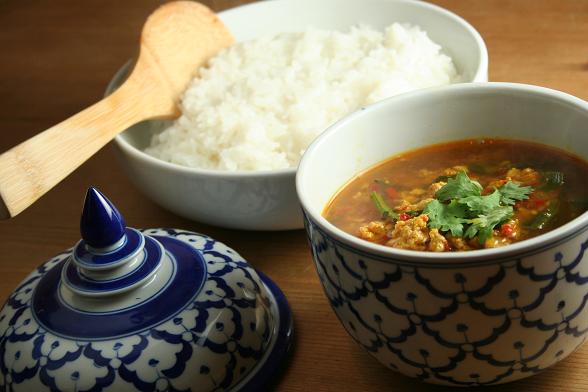
Last year when we visited Kerri’s mum one weekend, she had bought a rabbit for us really cheaply. When she recently asked if we wanted another one, we of course said that no, we wanted two. So we picked them up this past weekend. As we have a tiny freezer, we left one there and brought the other home to eat this week.
Based on past experience, we figured that we should be able to get two dishes out of one rabbit. We had a good idea about what we were going to cook for one of them, but were struggling to think of what to do for the other. While I was paging through Thai Food looking for something to cook over the weekend, I happened across a rabbit curry recipe which seemed like an excellent idea.
Coincidentally, last night we had watched a Masterchef The Professionals episode on iPlayer and the contestants had been set the task of jointing a rabbit. I don’t think any of them managed to do exactly what Monica the mouthy sous chef had asked, but then they didn’t actually show any footage of her explaining what she wanted, so it was a bit confusing. Bad editing. Or maybe they left that bit out on purpose so that they could fit in a bit more shouting. I think most of them managed a passable attempt at removing the legs, which I managed too, and then they removed the fillets from the body which I don’t think is what she wanted because she had said that she wanted five pieces rather than six. Anyway, I went with the fillet removal because it seemed like it would be easier to mince the meat afterwards, which is what our recipe required. We don’t have a mincer, so I chopped it very finely with a knife, which took quite a while and didn’t mince it as fine as a mincer would have, but it was good enough.
This is a curry in which the paste is dissolved simply in boiling stock rather than being fried first. It is a simpler and less refined method than the fried curries, but is versatile and still produces a satisfying dish. They are popular in the northern region of Thailand. This particular curry can be adapted to include almost any meat or fish and any green or leafy vegetable, preferably one that is slightly bitter. As the main recipe included rabbit and we had rabbit, that is what we did.
For the paste:
6-12 dried long red chillies, deseeded, soaked and drained
pinch of salt
2 tablespoons chopped lemongrass
1 tablespoon scraped and chopped coriander root
1 teaspoon chopped red turmeric
2 tablespoons chopped krachai
2 tablespoons chopped red shallots
1 tablespoon chopped garlic
1 teaspoon shrimp paste
Make the paste in the usual way by pounding all the ingredients together in a mortar and pestle (or use a blender…). Start with the hardest, driest ingredient and a little salt, pound it until it is broken down, then add the next hardest ingredient, etc, ending with the softest one. This can be a long process and you’ll see by the little red bits of chilli floating in our soup that I didn’t quite get ours as fine as I should have.
Then for the curry:
3 cups stock (the recipe says it should ideally be made from the rabbit bones, but we didn’t have time to do that and used some home made chicken stock instead)
pinch of white sugar
2 tablespoons fish sauce (the recipe suggests using fermented fish sauce (nahm pla raa) if you can find it, which is more pungent than the regular fish sauce (nahm pla) but we couldn’t find any)
1 bunch Chinese broccoli, cut into 1cm lengths
1 cup minced rabbit meat
Bring the stock to the boil, then season with the sugar and most of the fish sauce. Dissolve 3 tablespoons of the paste into the stock. Add the broccoli and let it boil for several minutes until the colour begins to fade – the slight bitterness will improve the curry. (Obviously if using spinach or other leafy vegetable here instead then don’t cook as long) Add the meat, stirring to prevent it clumping and cook until it has just changed colour. Taste and season with the rest of the fish sauce if necessary, then leave it to stand for five minutes before serving.
It was really tasty, with the shrimp paste giving a lovely earthy flavour to it which mingled well with the heat from the chillis and the aromatics from the other ingredients in the paste. And all that flavour without any coconut milk, which means it probably had half the calories of yesterday’s dinner. I think we cooked our meat for longer than the recipe intended as it was slightly tough, but it was still easy to eat as it was in small pieces and gave an interesting texture to the dish.
Thai Prawn Soup Again
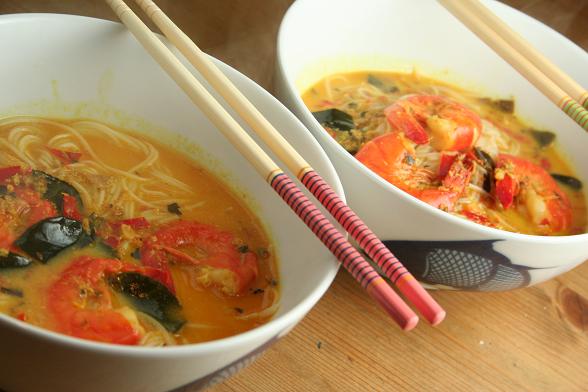
We were planning on cooking moules mariniere tonight, but neither of the shops that we visited had mussels, so we scrapped that idea. Then we thought we would do some sort of spaghetti with prawns, so we bought some prawns. When it came to discussing exactly what sort of “spaghetti with prawns” we would have, we strayed from that plan too and decided to have a Thai style soup with rice noodles, similar to Nigel Slater’s one that we cooked recently.
However, we didn’t have all the ingredients that we used last time so just made it up as we went along. We didn’t have lemongrass, but gave it a lift with a squeeze of lime juice and some lime leaves. Also, we played around with the method and did it more like we usually do our green curry – cook the thick part of the coconut milk until it splits, fry the paste in that, season it with fish sauce, and then add the rest of the coconut milk and simmer. It turned out rather well; next time we fancy something similar we will probably just make it up completely rather than follow a recipe at all.
A Tale of Two Roasts
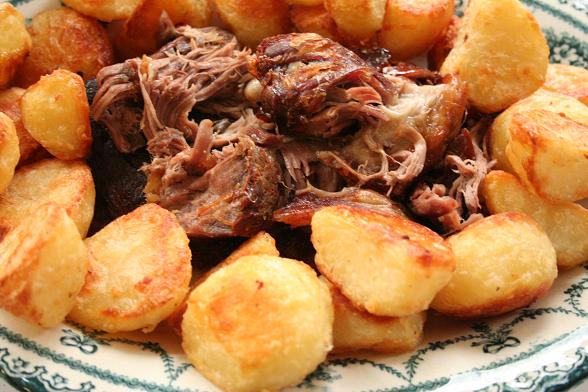
We spent the weekend at my mum’s in Kent and, knowing that we had a busy day ahead, decided on slow roast shoulder of lamb for Sunday’s lunch. One of the great things about this dish is that it cooks on a low heat for a long time which gives you plenty of time to get on with other things.
We eat this a lot and usually serve it with the caper and mint sauce, this time we decided to make a simple gravy from the cooking juices and serve it with roast potatoes. We did stud the lamb with some whole anchovies this time but should have cut them up as, even though the meat cooked for three hours, the anchovies stayed rather large.
One of the not so great things about this dish is that the whole house inevitably ends up smelling like lamb which can be painful when you have to wait so long before you can actually eat it. By the time the food arrives at the table you generally end up eating far too much and can’t move very well by the time you’ve finished. We got over this in the traditional Sunday fashion though, by laying on the sofa watching James Bond until it was time to head home, via a friend’s house for a cup of tea.
We thought our friend’s were out when we arrived as there was no answer at their door. The reason there was no answer is because J had found an old CD and was busy listening to the Pet Shop Boys at high volume while he prepared their dinner of roast beef. Unable to just stand back and drink our tea while there was action happening in the kitchen, Stephen and I quickly armed ourselves with various knives and peelers and leant a hand. It was at this point that J said we should stay for dinner. Still completely full of lamb and not wanting to intrude, we declined and continued to do so until J suggested he and Stephen went for a traditional Sunday-night pint at the local. Then he produced a selection of very interesting wine and told us they had plenty of food for a mini-roast for the two of us. A quick call to my mum to tell her we would be back later and off they went to the pub while the other J and I stayed behind to keep an eye on the dinner.
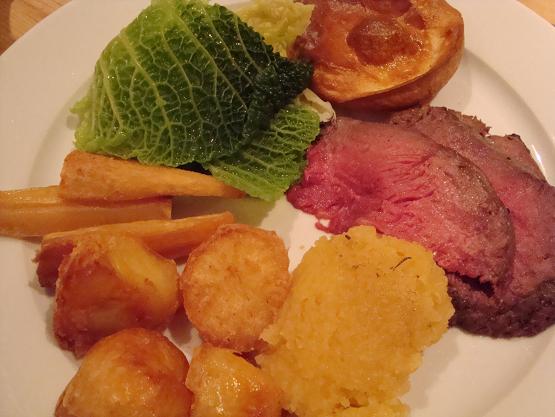
So, about four hours after we’d eaten roast lamb for lunch, we sat down to a (mini) roast beef dinner*. None of us could think of a time we’d eaten two roasts in one day and, as lovely as they both were, I don’t think we’ll be doing it again any time soon. We did all think a whole day of roast dinners, starting with breakfast, was a good idea though so who knows, we could make it to three next time.
*The picture above is not the mini-roast Stephen and I ate, our portion was much more restrained.
Sausage Pasta
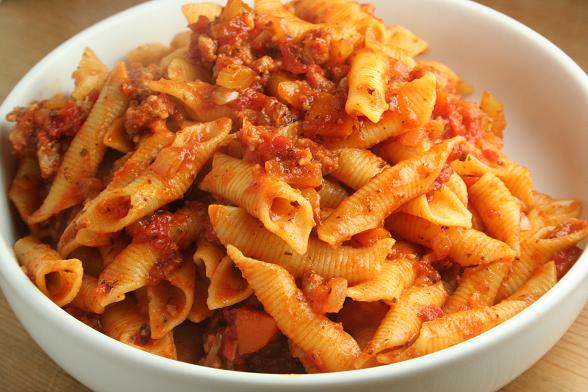
Neither of us felt very inspired when it came to Friday night’s dinner and there wasn’t much to work with in the cupboards or fridge either.
Having found some sausages in the freezer we excitedly considered sausages and mashed potatoes or toad in the hole but we didn’t have any eggs or potatoes, it was late and we were hungry. What we did have was spaghetti so we ended up with sausage pasta which wasn’t particularly pleasant but was our own fault really for being so disorganised and lazy.
I could type up the method we followed but I wouldn’t want anyone to accidentally eat this when they could be eating toad in the hole instead so I’ll leave it.
Thai Muslim Oxtail Soup
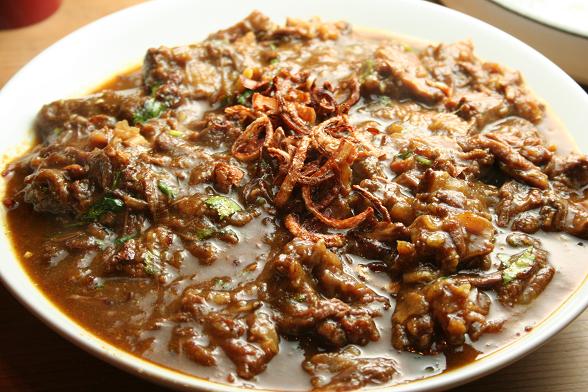
Kerri was out having lunch with a friend today and I volunteered to find something for dinner. After all the soup that we have been eating lately, Kerri said that she wanted something quite hearty and not soup-related for dinner today. I set to work looking through the excellent Thai Food by David Thompson, which has loads of little bookmarks sticking out of it to remind us of dishes that we thought sounded good. One of these was the Muslim oxtail soup. Only once I had planned everything for it did I realise that oops, it was soup again. Regardless, I was sure that it would be hearty and would try to make it thicker, into more of a stew than a soup.
I bought an oxtail at Sainsbury’s; they sold all the pieces of one whole tail tied up together with string, which I thought was an interesting way of doing it. And there was one that was just a little larger than the amount that we needed, which was convenient. As it needs four hours to cook and quite a lot of preparation beforehand, I set about the task well ahead of time.
This recipe is from the south of Thailand, where many dishes are heavy influenced by the proximity to Malaysia. After the recent discussion on how common turmeric was in Thai food, I can confirm that this one definitely includes it because I managed to turn a lot of the kitchen yellow with it. The dish is made using a curry powder rather than the pounded paste that is used in so many Thai dishes. I made half of this recipe and it served three of us quite well, with a little left over. The quantity of curry powder seemed to be double what the recipe actually needed.
1 tablespoon black peppercorns
3 tablespoons coriander seeds
3 tablespoons cumin seeds
1 tablespoon cloves
1 tablespoon fennel seeds (I thought we had these but we didn’t, so I used a small piece of star anise instead)
20 Thai cardamom pods (I just used green cardamom)
15 long pepper – optional (I didn’t use these)
3 tablespoons chilli powder
2.5 tablespoons ground ginger (or 5 if you are using your own home-dried ginger)
3.5 tablespoons ground turmeric (or 7 if you are using your own home-dried turmeric)
Briefly dry fry the whole spices, then grind and combine with the powders. Sieve the mixture to get rid of any husks or bits that weren’t ground small enough. This powder was lovely and aromatic, and as I said above, we only used half of it, so we have kept the left over powder and will try to find another use for it.
3 kg oxtail, cut into pieces
5 white or brown onions, chopped
5 cups ginger water (details on this below)
pinch of salt
a few chillies (bird’s eye if you can get them), to taste
pinch of ground white pepper
1 tablespoon chopped coriander leaves
3 tablespoons deep-fried shallots
lime wedges (I completely forgot about these actually… just realised now!)
Start by blanching the oxtail twice from a cold water start, rinsing it in between and replacing the water. This cleans the meat and reduces the cooking time, which is good because it is still rather long. While you are doing this, make the ginger water too. Chop up and bruise some ginger, then add it to some water with a little sugar and bring to the boil, then simmer for several minutes. These two steps and making the curry powder do lead to quite a long prep time for this recipe.
When that is all done, add the onions and the blanched and rinsed oxtail to a large pot. Add 4 heaped tablespoons of the curry powder, the ginger water and salt. Add some more water to cover the oxtail, bring to the boil and simmer for 3 to 4 hours. Skim occasionally, and I found that I had to top up the water every now and then to ensure that the oxtail remained covered.
This bit is optional, but it is what made this richer and heartier: Remove the cooked oxtail from the liquid and let it cool, then pick the meat off the bones. The recipe said that the onions should have been completely dissolved by this point, but they weren’t so I sieved the stock and then pushed the onions through the sieve, then mixed it all back up together with the picked-off oxtail meat.
Season with the chillies, pepper, coriander and deep-fried shallots, and serve with lime wedges on the side. Of course, we didn’t have the lime wedges because I forgot. I imagine that a squeeze of lime juice would have balanced out the rich flavour well. It was indeed rich and hearty and was more like a stew than a soup. And Kerri really enjoyed it, which was the main thing!
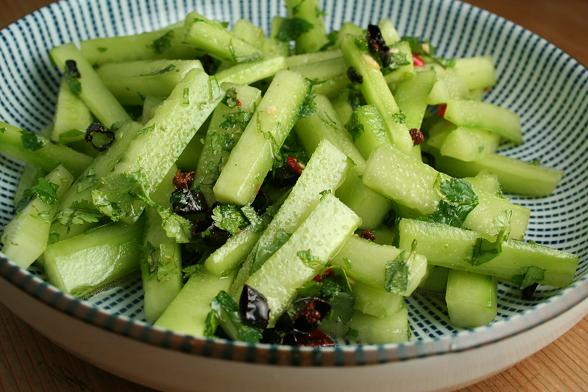
It seems a little boring in comparison, but we had a simple cucumber salad to start, which was simply dressed with coriander leaves, fried dried chilli, Schezuan peppercorns, salt, sugar and rice vinegar. Having had the pomelo salad recently, we decided always to try to have some sort of simple, refreshing salad when we have time to prepare it.
With the “soup” we drank a New Zealand Gewurtztramminer which was off-dry and lovely and fruity and aromatic and went with it very well.
Sweetcorn Chowder
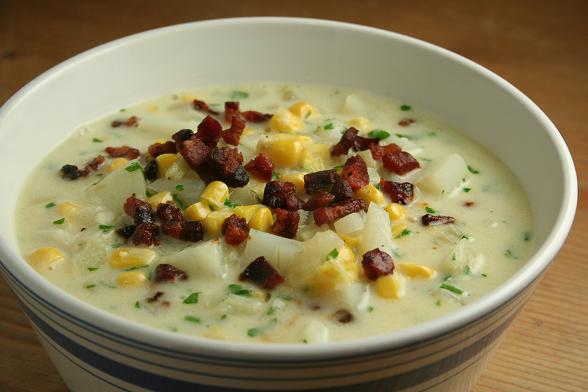
As a child I used to love the sweetcorn chowder that my mum cooked and when she made it, I usually ate it until I was too full to move. Kerri and I have been in soup-making mode lately and the topic of sweetcorn soup came up, so I was keen to try sweetcorn chowder. Whenever I think of chowder I am reminded of a Simpsons episode (part of the brilliant Season 5) where Mayor Quimby’s son takes exception to the way a French waiter pronounces “chowder” and an argument ensues. Which of course means that I almost always pronounce it in the “French” way now, just to be silly.
I always think of chowder as containing potato, which many of them do but it isn’t mandatory – some are thickened with crushed crackers or biscuits. We stuck with potato though. Traditionally, bacon or pork fat is fried in the pot first in order to release fat to enrich the soup but we fried ours separately and then removed it from the fat and added it in at the end in the name of reducing calories.
My mum did actually write down her recipe for me, but we didn’t follow it very closely on this occasion as we found a Gordon Ramsay recipe that looked interesting, so combined the two and made use of what we had at hand. Gordon Ramsay’s recipe actually included crab which we didn’t have. Just after I had added the ginger and cinnamon, we figured that the reason that they were in there was to go with the crab. Too late by then of course, but they did work well and gave the soup and gentle spicy warmth.
Milk is often used in chowder, but we had some crème fraîche that we needed to use up, so we added that along with some weak chicken stock instead. My mum’s version uses creamed corn, which melts in to the soup and gives everything the flavour of corn, whereas we used fresh corn kernels which had a nice texture to them, but their taste didn’t blend into the rest of the soup. Next time we’ll blend / purée at least half of the corn and leave the rest of it whole as a balance between the two styles. We didn’t have any leeks, but they would have been good in this.
Our recipe:
2 tbsp olive oil
2 small onions, finely chopped
1 large garlic clove, crushed or finely chopped
2 celery stalks, chopped
2 large potatoes, about 600g, diced
½ tsp celery salt
½ tsp dry English mustard
Pinch of ground cinnamon
Pinch of ground ginger
1 bay leaf
2 sprigs of thyme
Salt and pepper
700ml chicken stock
250ml crème fraîche
200g sweetcorn kernels
Parsley, chopped
Pancetta or small slices of bacon
Sauté onions for 4-5 minutes until they begin to soften and become translucent. Add the garlic and celery, stir well and cook for another 3-4 minutes.
Add the potato, celery salt, mustard, cinnamon, ginger, the bay leaf and the thyme leaves and season with salt and pepper. Stir and cook for 3-4 minutes, then pour in the chicken stock and crème fraiche. Bring the mixture to a simmer and cook for about 15 minutes until the potatoes are tender.
While the liquid is simmering, fry the pancetta and set aside.
Add the sweetcorn and simmer for 2-3 minutes until the corn is tender. Taste and adjust seasoning if necessary. Stir in parsley and serve topped with pancetta.
Bibendum “Grape Expectations” Wine Tasting
We have been to a few of the tastings organised by Dan from Bibendum and they have all been really good. At most of them, I have attempted to make notes and then given up at some point. This time though, I was determined to persevere and mostly succeeded. The previous tastings have been around a particular country theme, e.g. there was Italy and then there was Australia. This one was about grape varieties, and comparisons between different wines made from the same or similar grape varieties from around the world. This is the sort of tasting that makes you really think about the wine itself, rather than regional wines simply being a vehicle for someone to ramble on romantically about some particular corner of the world.

I wrote most of this post up about a week ago and have since been thinking about how to edit it down a bit, being as it was just a big list of tasting notes with a little commentary in between. I failed in that. Mostly because seeing as I had taken the trouble to write the notes in the first place and then to type them up, I couldn’t bear to delete any of it. So apologies if it’s all a bit long-winded.
There were quite a few people there and we chatted for a while before the very entertaining Willie started introducing the wines that were laid out for tasting on three different tables. A gesture from Dan quarter of the way through let him know that he was going a tad slowly, so he sped up his explanations for the rest of them. After that, people slowly morphed into groups and wandered towards tables. Kerri and I both found ourselves at the white wine table first, which suited us fine as it meant we could go through the wines in the generally accepted tasting order. Each table was split into two halves, each of which would be a variety or type of wine and each half would contain three wines. Dan had put these together from what he could easily source from Bibendum’s impressively wide wine range.
The white table was split into chardonnay and Rhône varietals. The first wine was an Italian chardonnay and pinot grigio blend rather than a straight chardonnay. This was Alois Lageder Biodynamic Chardonnay Pinot Grigio 2008 from Dolimiti, Italy. I have put down “pale gold” for the colour of most of these wines; not sure if that is genuine or if the lighting made me put that or if I was just a bit blinkered. Medium intensity wine with a biscuity aroma reminiscent of some Alsace pinot gris wines (clearly the pinot grigio side of this wine does not fall into the normal neutral / boring Italian version), with white flowers and light peach and a medium length finish.
Next up was St Romain Clos sous la Chateau Domaine des Forges 2006 from Burgundy in France. This had significant vanilla, toast and oak flavours to it; more so than most white Burgundies. Probably something to do with it coming from the same town in which one of the world’s largest oak barrel producers is based. Also peach, citrus and mineral notes. A potential favourite amongst the whites for me.
The last of the chardonnay section was Howard Park Chardonnay 2007, Great Southern, Western Australia. Australian chardonnay has had something of a bad rep for being over-oaked, over-sweet, flabby and not very interesting. But this one was different. Coming from Western Australia, which is one of the cooler wine regions in Australia, the grapes have a lot more character than those that go into the notorious Australian Chardonnays of the mass producers. Winemakers from Western Australia often point out that they only make 5% of the wine in Australia, but win most of the awards. This wine had ripe fruit, with peach standing out, which was balanced by good acidity and a light toasty note with some mineral characteristics too. A lovely wine, showing off Australia’s quality white wine potential very well.
The second half of the white table was entitled “Rhone White Varietals”, which was a collection of varietal wines (i.e. made from only one grape variety) from across the world that were based on varieties that were originally grown in either the northern or southern Rhone regions in France.
The first was from McLaren Vale in South Australia. We talked about Western Australia being a quality wine region rather than a bulk region and McLaren Vale is similar, and particularly known for Shiraz. This wine was 100% Roussanne, which is grown in the Rhone but can be a difficult grape to grow, being low cropping and prone to disease. Because of this, Rhone producers usually grow just a small amount of it and usually blend it with the more reliable Marsanne. In these blends, Marsanne gives the body and Roussanne provides an aromatic fruitiness. This being 100% Roussanne was aromatic and fruity indeed, very ripe from being grown in sunny McLaren Vale and tasted of cooked or tinned apricots with orange blossom and honeysuckle notes. It had a medium to full body and a slightly oily texture.
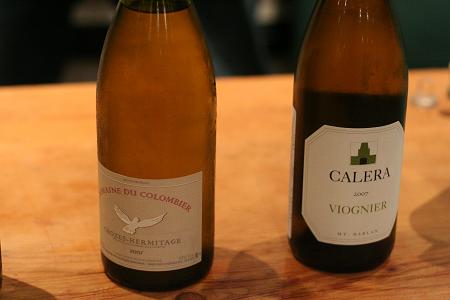
Next up was our new friend Marsanne, which was produced in its spiritual home, the Rhone itself, specifically in Crozes-Hermitage which is the younger sibling of the well known Hermitage. It had a low acidity and also had some honeysuckle notes, along with a light spice reminiscent of aniseed. It had a very oily texture which gave it a full body.
The last on the list was a Viognier which is grown around the world now but used to be mostly confined to Condrieu in the northern Rhone. In fact it almost died out as a commercial grape variety and there were very few acres of them left due to difficulty in growing it. However, over time people recognised its potential… as well as the money they could get for a bottle of it… and started planting it more widely. This particular example is from California and I found it well balanced, which I wasn’t expecting – both California and Viognier are known for high alcohol content which particularly in combination could lead to a rather unbalanced wine. Apricots again, this time dried rather than tinned, and more honeysuckle notes along with spice. Fullish in body again. A favourite of the table with some people in our group.
All the groups did manage to finish their first table visits at roughly the same time, so we moved onto the next. We were presented with three roses and three pinot noirs. In fact there were four pinot noirs because the last of the roses was made from it too. First up was a pale pink rose made from 50% grenache, 35% syrah (shiraz to some people) and 15% mourvedre and produced in Lirac in the southern Rhone. It didn’t seem to have greath depth of flavour and not many people felt it would be one of their favourites. It did have light strawberry and redcurrant notes with a creamy texture and some light space on the finish.
The next rose was a slight step up in flavour concentration and was made entirely from grenache, in this case in the guise of “garnacha” from just across the border in Calatayud, Spain. It was a medium pink colour, with strawberry, floral and orange notes and an interestingly nutty savoury finish.
The last of the three roses was a pinot noir from Adelaide Hills in South Australia, again a higher quality region of Australia which gives well balanced wines. This was off-dry rather than completely dry and tasted of red cherries and strawberry, with light leather aroma and noticable acidity. My favourite of the roses.
The first of the reds was the top contender for my favourite of the evening. It was a red Burgundy from Volnay, which is made as all quality red Burgundy is, from 100% pinot noir. It was a medium garnet colour, with cherry and meaty flavours, along with some light vegetal or forest floor notes and a cinnamon and clove spice. There were noticable tannins but they were not astringent and gave the wine a firm backbone to hold the other flavours together.
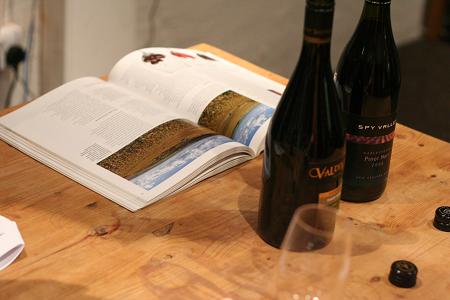
From there we moved onto a Chilean pinot noir, which was a ruby colour and also had a nose of cherry and spice, but the fruit had a jammy quality rather than being refined as in the Burgundy. It also tasted quite strongly of vanilla and had a tarry note, giving the impression it had had a little too much cheap oak contact.
The next pinot noir was from New Zealand, and in particular from Marlborough, which is better known for its sauvignon blanc. This one was ruby with a purple tint, with a cherry flavour and floral lavender notes. It seemed that it should have promise bit came across as a bit one-dimensional to me, it probably needs a couple of years to develop.
On to the final table, which was all reds and was split into Cabernet Sauvignon and Shiraz / Syrah, two of the best known red grapes from around the world. The first cabernet that we tasted was a 2004 from Mendoza in Argentina, produced by Catena who recently won the Decanter magazine’s Winemaker of the Year award. It was a garnet colour, showing its 5 years of age, with intense blackcurrant, dark plum, cedar and toast flavours. Medium acidity and a medium to full body. From the description that I wrote down, it sounds like it should have been good, but I didn’t give it that good a score, so it must not have impressed at the time.
Next up was a wine from the spiritual home of cabernet sauvignon – Bordeaux. This wine was from 2005 and hailed from Pauillac, a sub-region of Bordeaux which is well known for being the home of some of the biggest names in Bordeaux. Bordeaux wines are usually a blend of cabernet sauvignon with merlot and cabernet franc, with a couple of other grapes added in small amounts. Again, it had a medium garnet colour, with quite a deep core and on the nose there were notes of cedar, cigar box, plums and licorice. It was medium bodied, with medium to high ripe tannins and medium-high acidity too. Would be brilliant with roast beef.
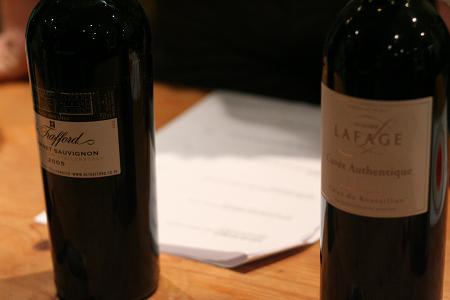
The last of the cabernet trio was my second favourite of the evening, De Trafford 100% cabernet from Stellenbosch in South Africa, again from 2005. A deep garnet with a pronounced nose and flavour of blackcurrants, blackberries, cedar, violets, earth and eucalyptus. It had a full body with a lot of ripe tannin and medium acidity.
On to the first of the shiraz selection, which was 100% shiraz from California, 2008. It was a medium ruby colour with garnet tint and notes of flint, spice, licorice and smoke going well with the black cherry fruit and violet floral aroma. Quite a complex wine for one of this price from California.
The next was a blend from Cotes du Roussillon in the south of France. It contained 40% syrah along with 40% grenache and 20% carignan. It had slightly confected cherry fruit with white pepper spice. Notes were getting a bit sparse at this point!
The last was from Hunter Valley in Australia, from 2005. It was a bland of 92% shiraz with 8% tannat. It had lots of black cherry fruit, with a little plum fruit too, ripe bit not jammy.
After all the tasting, people filled up with a little of their favourites and continued to chat for a while until it was time to go. I tried to get another taste of the Volnay but it had disappeared by the time I got there, so I settled for some of the De Trafford cabernet instead.
A really interesting and informative evening, so many thanks to Dan for organising it and to the other Bibendum staff who presented the wines. We paid a (not so) quick visit to the pub afterwards of course and it was really interesting chatting to them all about the wines and of course wine and life in general.