And the Winner Is…
…Caroline! Congratulations, you win the bottle of Gordon’s gin and the glasses!
We ended up deferring to the PR company behind Gordon’s gin in the end as we couldn’t find a decent random generator online. I’ll be in touch.
Thank you to everyone who entered, this is the first competition we’ve ever run and we were both very excited by the amount of responses.


Lamb Chops, Roast Potatoes and Braised Broad Beans
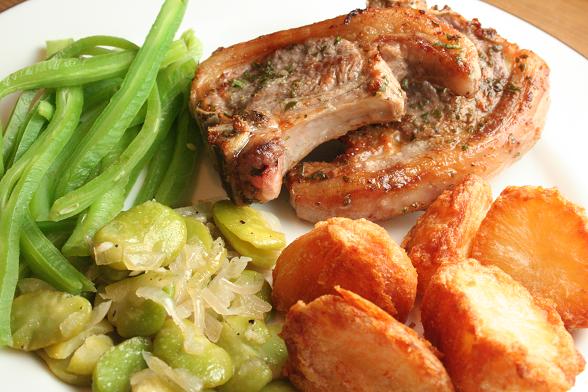
Stephen very kindly cooked dinner on Saturday night since I was feeling a bit sorry for myself. In return, I offered to cook him dinner this evening. He chose lamb chops with braised green beans. I stuffed up by buying runner beans (because I love them and they won’t be around for too much longer) when I should have known he meant French beans, because he loves those. I also bought broad beans because, like the runner beans, they’re about to go out of season.
As I started to cook, I sliced the top off my thumb off on the stupid, overly-complicated bean slicer and, although I bravely soldiered on, it quickly became clear that Stephen was going to have to step in and help if we were going to eat before midnight. So, not only did I not cook him the dinner he wanted, I also had to get him to help. Rubbish.
I’m glad he did help though because, between the two of us, we ended up with a really good dinner. The lamb chops were coated in rosemary and garlic and then fried, the potatoes roasted, the broad beans braised and the runner beans simply steamed. Stephen made a really good gravy from the meat juices left in the frying pan too which we weren’t planning on originally but brought the whole dish together.
Braised Broad Beans
Bag of broad beans
3 shallots, finely sliced
1 clove garlic
1/2 small glass white wine
Salt and pepper
Lemon juice
Start by boiling the broad beans for about two minutes. Drain, rinse in cold water and remove inner shell.
Sautee shallots and garlic for about 10 minutes or until soft.
Add the broad beans, season and deglaze with the wine. Allow the alcohol to cook out, reduce and simmer for about 10 minutes. Check for seasoning, add a squeeze of lemon juice and serve.
Spaghetti with Leftover Salsa Verde
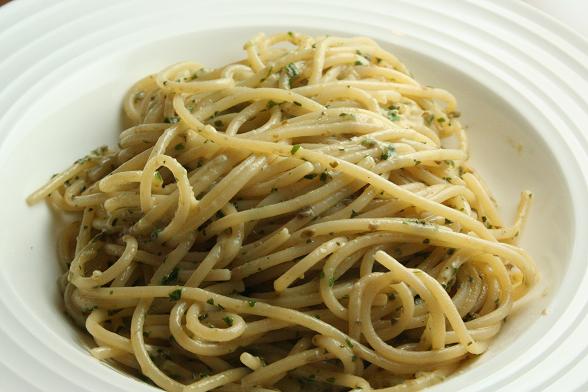
Stephen went out last night and, as it was so early, we didn’t have time for dinner. He decided on a quick dish of spaghetti with grated cheese, one of his favourite comfort foods. Just as the pasta was ready, I remembered there was some leftover salsa verde in the fridge so he threw that in too. It worked well, sort of like a fishy pesto.
L’Artisan du Chocolate Space Collection

Look at him! He’s so cute that he’s been in my possession for three days now and I still haven’t been able to bring myself to eat him. Actually, Stephen wouldn’t let me eat him anyway, such as his love for all things space-related. He used to collect space Lego, did you know that?
This is the latest offering from L’Artisan du Chocolate and is available in shops from today. As well as the cute spaceman, there are also some brilliant chocolate gingers which you can see at the bottom of the picture. I wasn’t so attached to those and managed to force myself to try them, the ginger hit works well with the bitter chocolate and the ginger fibres provide a pleasing mouth-feel. They come packaged in a really cool cardboard spaceship.
Chicken Tikka Masala
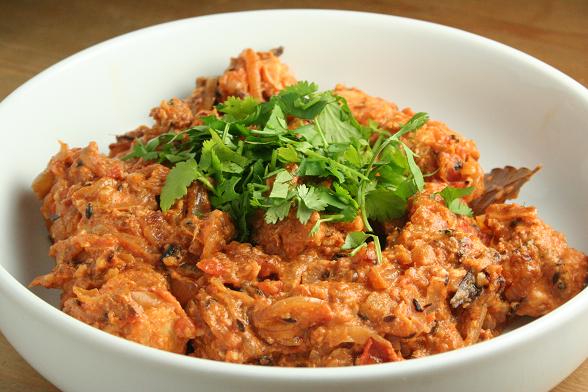
Saturday night was the Last Night of the Proms and even though we never watch it, we decided to cook something typically British in honour of this long standing celebration. Chicken Tikka Masala (served with pilaf rice, in this instance) is widely reported as being Britain’s favourite dish and, since I’ve never had it before, it seemed like a good choice.
We did some planning in advance so that we could marinate the chicken overnight, we’d obviously exhausted our organisational skills though because we forgot the last step in the recipe: adding some additional garam masala just before the end of the cooking time for the rice. While we both enjoyed this, neither of us felt it had properly amalgamated in the pan which was probably due to our forgetfulness.
Recipes courtesy of Mamta’s Kitchen.
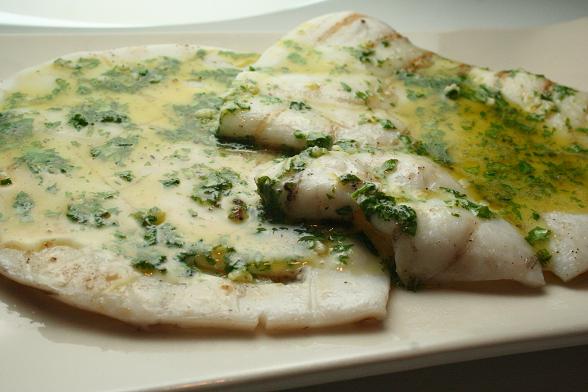
Squid, Salsa Verde Mackerel and Boulangere Potatoes
After a few days of decent but relatively dull food, we decided that we should celebrate the start of the weekend with something more interesting. Autumn looks like it’s on the way so we thought we would use the barbecue while we still could.
Stephen picked up some squid on the way home that we had been planning to slice and marinate before cooking. Somewhere along the way we decided just to grill them as steaks and serve with some garlic butter. They were really good, perfectly cooked and not at all rubbery with just the right amount of extra flavour from the garlic butter.
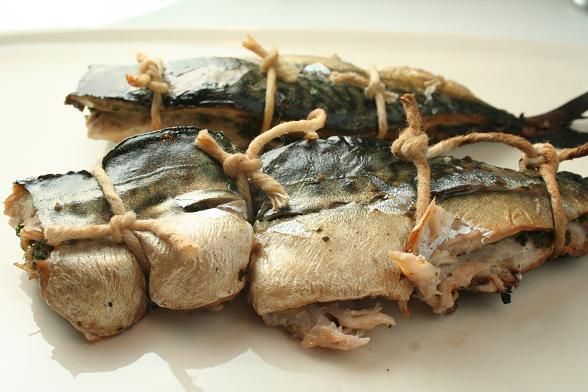
Having watched Hugh Fearnley Whittingstall on television earlier in the week, we were both keen to try his stuffed mackerel. We hadn’t been watching the boning of the fish very closely but Stephen did an excellent job of removing the bones and stuffing with the salsa verde I’d made earlier in the day. They look pretty rustic (I must learn how to string properly) but they tasted brilliant and went particularly well with the boulangere potatoes. I was pleased with how these turned out as my previous attempts haven’t been very successful. The key was obviously to cook them at a much lower temperature for longer.
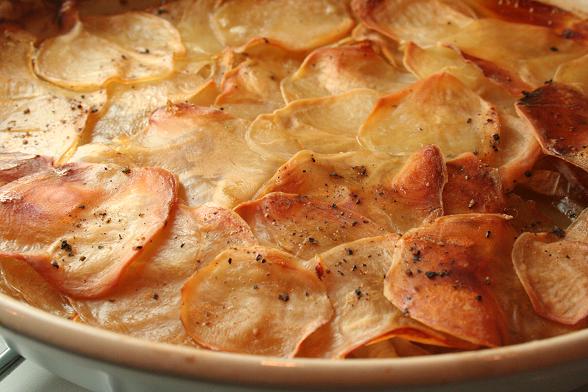
Boulangere Potatoes
3 large potatoes
2 medium onions
Butter
500ml stock
Salt and pepper
Slice the potatoes as thinly as you can, we used a mandolin but a sharp knife will work too.
Slice the onions into half-moon shapes.
Layer the potatoes and onions into a buttered dish, seasoning each layer. Pour on the stock so that everything is well covered.
Cover with buttered foil and bake at 150 degrees for 3.5 hours. Remove the foil for the last 15 minutes so that the top browns.
Happy Friday!

To celebrate Fridays with Gordon, we’ve just received a bottle of Gordon’s gin and a set of glasses. It would be rude not to partake so Stephen mixed us a gin and tonic to celebrate the start of the weekend.
If you would like to receive the same*, then just leave us a comment telling us about your favourite way to spend the weekend. We’ll select a winner at random on Tuesday night, giving enough time to get the prize to you by next Friday.
*You need to be over 18 to enter.

Fancy a Little Break to Lille?

The lovely people at Eurostar have kindly offered us a pair of tickets to give away so that you can go on your own Little Break to Lille, just like Stephen and I did earlier in the month.
All you need to do is leave us a comment (before the end of September) telling us about the best or worst food experience that you have had while travelling.
Five entrants will then be selected by Eurostar and we’ll select a winner at random from those five. The winner can travel on any day until the end of November, just so long as you can make your own way to St Pancras.
This competition is now closed.
Dolcellata and Walnut Sauce
Food blogging isn’t all about the glamour. When you spend most evenings in the kitchen, you inevitably create quite a lot of mess and, even if you are as anal as I am about tidying up as you go along and cleaning everything up once dinner is finished, you still need to do the occasional deep-clean. Well, you don’t have to of course but I come from a household where the radiator covers are removed from the walls each week and cleaned behind so it’s kind of ingrained.
Today was the day so, armed with my Marigolds and all manner of cleaning products, I scrubbed our kitchen from top to bottom. It took ages and there was a fair amount of moaning as I went along but I was glad to have done it; when I finally sat down and looked at the results of my hard work I realised I didn’t have anything planned for dinner though. Not only was I exhausted but I really didn’t want to make everything dirty again.
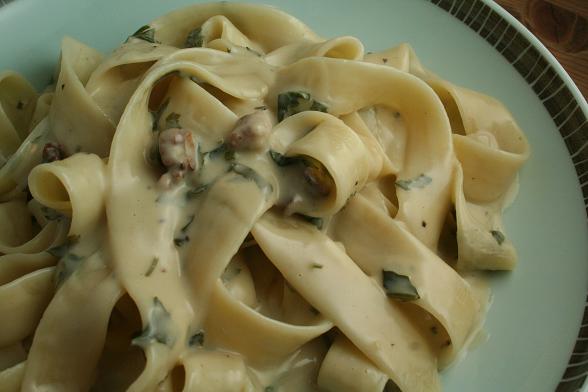
Luckily, I remembered the cartons of Charlie Bigham’s Dolcellata and Walnut Sauce that were included in our goodie bags on Monday. Boiling some pasta and heating some sauce seemed easy relatively mess-free so that’s what we had. Except I wish we hadn’t. The sauce was bland and lacking any real flavour at all, it would have made a reasonable bechamel sauce but was useless as a sauce it’s own right. I quickly retrieved the leftover chilli from the freezer and had those instead which is what I should have done in the first place. That would have only been one pot to wash too.
Three Bean Chilli
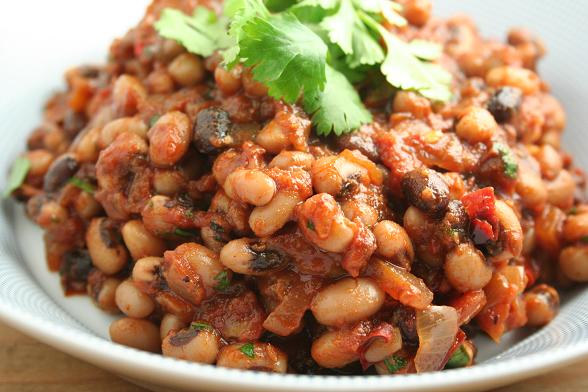
Last time we cooked this, I based it on our original chilli recipe but reduced the seasoning to account for the lack of meat. We both felt it could take more heat though so this time, I upped the seasoning. I also used madeira instead of red wine because that’s what I had. The recipe isn’t that different to last time but I’ve reproduced it here to reflect the increase in seasoning.
4 tbsp olive oil
3 red chillies, roasted, deseeded and pulped
4 garlic cloves, roasted and then pulped
2 tsp ground cumin
1 tsp ground coriander
1 tsp chipotle chilli powder
1 tsp ground cinnamon
1 tsp smoked paprika
Glass Madeira (or red wine)
1 large red onion, finely chopped
600ml beef stock
400g tin chopped tomatoes
2 tbsp tomato purée
Salt and pepper
Bay leaf
500g mixed beans
1 tsp cocoa powder
Roast the chillies and garlic in the oven for about 30 minutes, on 190 degrees, before removing from the oven leaving to cool down. Remove the seeds from the chilli and squash together with the garlic.
Boil the (soaked overnight) beans for 20 minutes and then rinse well.
Grind the coriander and cumin together in a mortar and pestle and transfer to a bowl, mix with the chilli powder, cinnamon and paprika.
Soften the onions with some salt, add the garlic and chilli pulp to the softened onions with the tomato puree and let it cook together for a couple of minutes. Into this mixture, add the powdered spices and cook for a further couple of minutes. Deglaze with some madeira and allow the alcohol to cook out.
Next, add the stock, tomatoes and the bay leaf and season. Allow to cook for about half an hour before adding the beans, bring to the boil, reduce the heat and simmer for an hour and a half.
Remove from the heat and refrigerate overnight. When reheating, add the cocoa powder just before serving.
I didn’t get round to cooking this last night so left it to cool for four hours before reheating. I also added some lime juice and some chopped coriander as the madeira led to a sweeter dish than we were intending. This balanced the sweetness well but also added a light, fragrant note which we both enjoyed and will do again.
