Baked Potatoes and Chilli

I know, baked potatoes again but we do have a big bag to get through and I’ve never had chilli with baked potatoes before. And it’s cold out and I’ve had a horrible day so this seemed like the very best kind of comfort food.
I made the chilli yesterday during my mammoth day of cooking. As usual, I forgot to soak the beans beforehand so reverted to the method we used with the butterbeans: boil for 20 minutes, soak for an hour and then boil again for another 20 minutes. It didn’t work so well this time and resulted in very hard kidney beans, I didn’t find this out until after I’d added them to the sauce though so tried to rescue it tonight by cooking and simmering again. It worked in part but they were still a little tough. Better tough than squidgy though.
The other issue was that I just couldn’t seem to get any heat into the sauce, I think I probably used four times the amount of chilli powder than our normal recipe called for and still it wasn’t hot enough. I think it’s time to invest in some new chilli powder. Other than that it was tasty.


Chicken Casserole
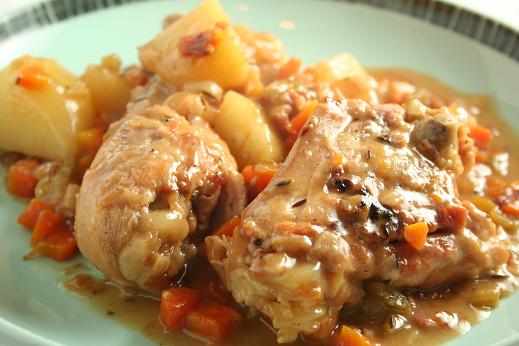
I was home from work today so decided to use the time wisely and do some batch cooking. We bought a whole chicken yesterday which Stephen jointed last night, saving the carcass for stock. I made an early start on the stock so that I could use it in today’s casserole and when it was ready started putting it together.
We spent a fair amount of time perfecting our casserole recipes last year so I was confident this would turn out it well and largely it did. It was slightly syrupy though and I haven’t really been able to figure out why, there was also a fair amount of sweetness which I think came from the carrot. Perfectly edible though.
Baked Potatoes

Stephen and I were away this weekend and arrived home last night. We’ve eaten a fair amount over the past few days so decided on something simple and relatively plain: baked potatoes with pancetta, cheese and mustard. We scooped out the filling and combined it with the grated cheese, mustard and crispy pancetta then piled it all back into the skins and topped it with butter and pepper. Great comfort food and perfect for a wintery evening.
Parmesan Parsnips

I love parsnips and apart from the risotto we made recently, we haven’t had any for ages. We bought these last week with no particular idea about what we were going to do with them and they’ve been in the fridge ever since. I decided to steam them and then roast them in the oven in some olive oil and a generous grating of parmesan cheese. They were delicious, the parsnips themselves were particularly sweet and contrasted well with the pungent cheese.
In case you were wondering, we didn’t just eat parsnips! The steak and kidney pie we made last month was huge and we didn’t get through it all so decided to freeze the filling. Not wanting to make another pie, we decided to re-heat it and have it with some mashed potatoes. It was tasty but by no means attractive so we’ve spared you the photograph 🙂
Individual Cauliflower Cheese!

This week has so far been all about using up leftover things from the weekend. We’d originally intended to make cauliflower cheese with bacon but I was worried that we’d be hungry later on so decided to forgo the bacon for chicken instead. We roasted some chicken thighs with some onion, garlic and thyme but as the cauliflower cheese was the main attraction we’ve left those out of the photograph.
To make the cauliflower cheese, we steamed the cauliflower until it was almost cooked through and left it to “dry” out while making the white sauce. We used Delia’s all-in-one recipe which is really easy and never fails. Just add milk, butter and flour to the pan on a medium heat and whisk continually until it’s thickened. Turn the heat down as low as it will go and cook the flour out for six minutes. Grate in plenty of cheese, season and mix, then pour over the cauliflower. At this point I would normally add some mustard but I forgot.
The very best thing about this was that we both got lots of crunchy, cheesey bits from around the edge of the dish. Would have been great with bacon though.
Spaghetti Puttanesca (Almost)

After our lamb shanks last night, we ended up with some left over ingredients: half a tin of anchovies and half a tin of tomatoes. Kerri pointed out that that was the beginnings of puttanesca sauce which we have cooked many times before and love, so we stuck with that idea.
Compared to our usual puttanesca recipe, the tomato ratio was quite low and we didn’t have any basil, but Kerri put in some extra chilli, which made it all good. Even the slightly plasticky bottled olives didn’t seem too bad. Very tasty.
Lamb Shanks with Sauteed Potatoes
After yesterday’s kitchen nightmare, we were determined to do better today. And we did, which is good but isn’t actually saying very much.
We did start off with a slight worry though when we re-read the recipe and found that it said to cook for 12 hours. Twelve hours is a long time. And also a very impractical time if you plan to eat at any reasonable hour of the day. We read the recipe at 12, planning to eat at about 3:30 or so. Had we followed the recipe to the letter, we’d have needed to have it in the oven at 3:30am. Madness. We figured that three hours in the oven should be enough. Also, it included butter beans which we hadn’t soaked, so we just skipped those.
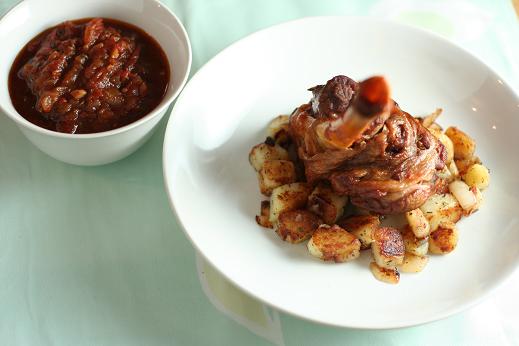
As for the rest of it, we pretty much followed the recipe. We stuffed the garlic, rosemary and anchovies into slits in the lamb shanks, then browned them in a frying pan. While I did that, Kerri softened some onion and garlic in a casserole dish before adding red wine, stock, tinned tomatoes, fresh tomatoes, rosemary and thyme. The shanks went into the casserole with all of this and then into the oven for a sensible three hours. As the shanks were only half-covered by the liquid, we turned them a couple of times.
When they were almost done, we cooked some sauteed potatoes and then steamed some cabbage. The cooking liquid had thickened up and became a lovely rich sauce that would have been brilliant with the beans in it and a piece of bread to mop it up. As it was though, we served it in a dish rather than putting it directly onto the plate as we didn’t think it would go that well with the potatoes.
Despite its drastically reduced cooking time, the lamb was still soft and falling off the bone, as well as bursting with flavour. The sauce was brilliant spooned onto pieces of lamb and the potatoes were really good too. Good recovery after yesterday, phew!
Scallops with Cauliflower Purée and Truffle Oil and Partridges with Rosti and Mushrooms

The title makes this meal sound rather like something from a good brasserie menu. However, this would have been a brasserie with Basil Fawlty at the helm as it turned out. Let’s start with the scallops. Both because we had them as a starter and also for reasons which will become clear later.
We thought that cauliflower purée would go well with scallops, so started with this. We followed this recipe, which worked to some degree but our Magimix Mini (aka Tragimix) gave up half way through as it usually does, so it wasn’t really puréed enough. Thinking about it now, we should have tried using our stick blender on it at that point, or strained it to get it finer, but we didn’t. It tasted okay though, but could have done with more seasoning (again, hindsight).
The scallops themselves we seared quickly in a hot pan and then served on top of a blob of the purée, drizzled with a dash of white truffle oil. The truffle oil and the seared scallops went well together, as did the cauliflower purée but the purée didn’t have as much flavour as we’d have liked. And of course it wasn’t properly puréed either. We had planned to top the scallops with some crispy deep-fried onion strings, but forgot about these until the last minute and then in my rush to get them done on time, turned up the heat too far and burned them, so we left them out.
Anyway, that was the successful part of the meal.
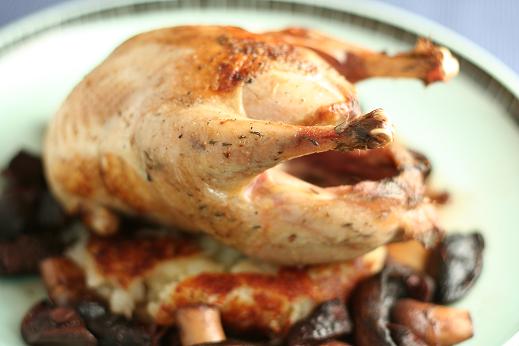
For the partridge, I paged various cookbooks and when I found a picture of a roast partridge with mushrooms in Gary Rhodes’s New British Classics, I decided on that without really paying much attention to the recipe. Or to anything else as it turns out; I spent more time writing wine tasting notes and generally being spaced out than doing much to assist poor Kerri with the cooking.
Because of our previous success with rösti, we planned to make them to go with the partridge too. However, we overcooked the potato while parboiling it and it became more of a mashed potato cake than a rösti.
The partridges needed to be browned before being roasted. The recipe suggested doing the browning in a roasting dish and then just transferring the whole dish to the oven when it was done. Sounds simple. Except the roasting dish that we used was rather thin, with the result that the birds browned very unevenly and parts were burnt whereas others were raw. To our detriment, we didn’t really notice this at the time due to various other goings-on which included Kerri burning her fingers on a hot saucepan that I’d left lying around. We managed to hide enough burnt bits for the above photograph at least.
The mushrooms needed Madeira which we didn’t have, so we used a mixture of Sherry and red wine instead. This may have been fine, but we don’t really know because again, we didn’t pay attention and they turned out badly; forgot to add stock to the sauce and also didn’t cook the wine out enough. Not very tasty.
So the scallops were good and my rösti was good (Kerri’s strangely seemed to have raw bits in it despite the fact that the potatoes had been overcooked; might have been glassy bits rather than raw) but the rest was pretty much disastrous. Hopefully that means we’ve got all of our culinary disasters out of the way for a while though.
Muffins

Both Stephen and I were out last night and today we both had big lunches so not a lot of cooking happening. We did however make muffins this evening to take to brunch at Stephen’s sister tomorrow. Mmmm, muffiny 🙂
Indian Herby Lamb Chops and Spinach Pilaf

Although we somehow missed the television show, we recently purchased Anjum Anand’s “Indian Food Made Easy” after drooling over it in the book shop. I haven’t really eaten a lot of Indian food but Stephen is a big fan and has been encouraging me to acquaint myself with the cuisine and learn about the methods and spicing combinations. I find cooking the dishes at home really helps me to understand the flavours and seeing how the dish is put together gives me confidence when trying something new.
This was a relatively straightforward dish to cook, there are a lot of curries in the book which look and sound delicious but obviously require more preparation, marinading and cooking. We chose this because we didn’t have much time this evening and also because we have a long-standing love for lamb.
As it turned out, I was late home and Stephen did most of the cooking so the whole cooking it myself thing I referred to earlier didn’t really apply. It didn’t matter though as I really enjoyed both the flavours and the texture of the lamb; aromatic and slightly sweet combined with a background flavour of chilli and a sticky, rich sauce that generously coated the chops. The pilaf was the perfect accompaniment: slightly crunchy rice flavoured with spinach, cardamom and cumin. Pretty good for a Wednesday night.
