Pizza Fiorentina
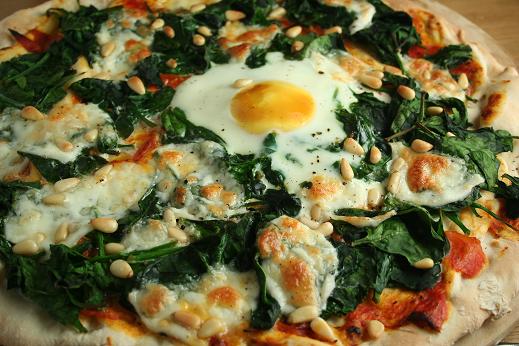
Friday night is pizza night! Not always, but sometimes. This was one of those sometimes. Often we have fantastic success with pizza, but this wasn’t one of those times.
Keeping in mind last time where the dough was very sticky, we added a bit more flour this time, but it just made the base rather doughy and it didn’t crisp up much, tasting rather flat. Given that the pizzas that we made from the sticky dough last time actually tasted rather good, maybe we just need to practice working with it rather than playing with the recipe.
Trying to do something different to usual (usual is usually salami or ham, sometimes with olives or artichokes or sundried tomatoes), we made a Fiorentina pizza with spinach, pine nuts and an egg. Nice idea, but it didn’t taste like a lot – I blame the dough. We also had a plain Margherita.
One thing that was good though was the brilliant mozzarella. We really love the one that we usually get (Fattorie Garofalo), but Kerri found a different one (La buona cremeria di Nonna Vincenza) in an Italian deli today and it was even better. Yum. Maybe even worth having a failed pizza to discover it.
We drank a rather nice Vacqueyras Blanc with this. White Vacqueyras is just one percent of the Vacqueyras production, which I why I bought it – for interest sake and the fact that I rather like Rhone whites and this should be a bit more refined than some of them. I had an idea it would go well with pizza, being fully flavoured with savoury notes and a slight smokiness, but still acidic enough to match up to tomato sauce. It didn’t work that well, but I think that was the pizza’s fault rather than the wine.


Lentil Cottage Pie
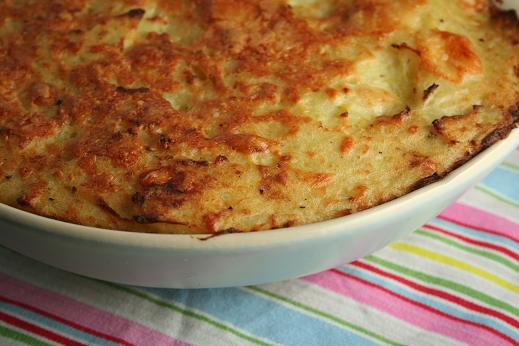
I’m really pleased with the way this turned out, especially as it was a very last minute decision. Stephen and I had decided that we would have something meat-free tonight as our meat intake has been so high lately. We didn’t have anything specific in mind but, while browsing other food blogs this afternoon, I came across Rachel’s recipe for Vegetarian Shepherd’s Pie which looked really good.
I followed the recipe almost exactly apart from adding some celery at the beginning, some rosemary a little later on and doubling the amount of tomatoes (this was by accident actually but it turned out well).
I’ve always maintained that I don’t like lentils very much because they tend towards the mushy side, that was exactly what was required for this dish though and I loved it. I think it would work really well layered with lasagne sheets and topped with bechamel too.
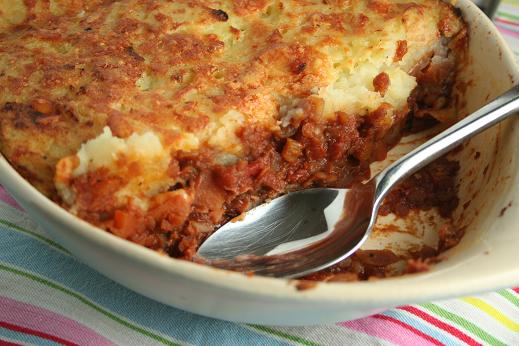
Although this is Rachel’s recipe, I’m copying it below so that I can remember the (small) changes I made when it comes to making that lasagne.
1 onion, finely chopped
2 carrots, diced
1 stick celery, diced
2 cloves garlic, crushed
100g red lentils
1 sprig rosemary, chopped
Salt and pepper
1 bay leaf
200ml red wine
1 can chopped tomatoes
500ml vegetable stock
Tablespoon tomato paste
Sautee onions, celery and carrots for around 10 minutes before adding the garlic
Stir in the lentils.
Add the rest of the ingredients and bring to the boil.
Simmer for 40 minutes.
Chorizo and Butterbean Soup
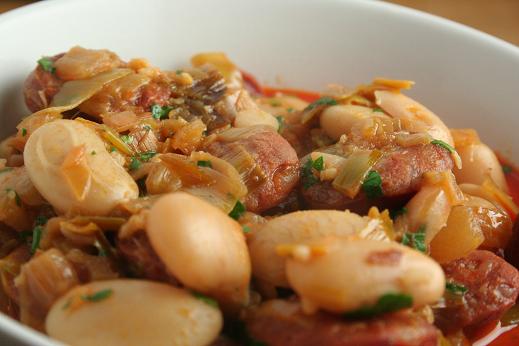
On the way home from dinner last night, we realised that we didn’t have anything planned to eat this evening. I suggested we soak some butterbeans and find something to do with them today.
It was doomed to failure from the start really, I like to plan meals in advance and don’t really work very well under pressure. I spent some time looking for a recipe that appealed today and, not really finding anything that hit the spot, settled on this Delia Smith recipe.
We didn’t have any bacon so I substituted that for chorizo. On looking through the recipe properly, it seemed a little disjointed with lots of elements being cooked separetely. I started by frying off the chorizo before removing it from the pan and then frying the rest of the ingredients while the beans cooked. Delia’s 20-30 minutes cooking time for the beans was optimistic to say the least, they took over an hour before I could combine all the other ingredients and add the milk and parsley.
I’d love to say it was worth the wait but it really wasn’t. The end result was thin and watery and, even though I’d tried to combine the ingredients in one pan, the dish just didn’t come together.
There’s loads left which I was planning to pack off with Stephen tomorrow for lunch, perhaps he won’t read this before he leaves for work in the morning.
The Cabin
We had planned to eat leftover lamb this evening but we didn’t actually have any left. Plan B saw us defrosting some chicken breasts and eating those with salad and pitta bread instead. It just didn’t feel right though; admittedly today was a mild and sunny day that gave me hope spring was on it’s way but it definitely wasn’t warm enough to be eating such summery food.
Luckily, Stephen had some good news and suggested we go out to celebrate so we began looking for a local restaurant to visit. We’re lucky enough to have some really good places nearby but, having lived here for over two years, we’ve been to many of them and were looking for somewhere different this evening.
A quick Google search led me to The Cabin which seemed to have only good reviews, an added bonus being 50% off on a Monday so this was our Plan C.
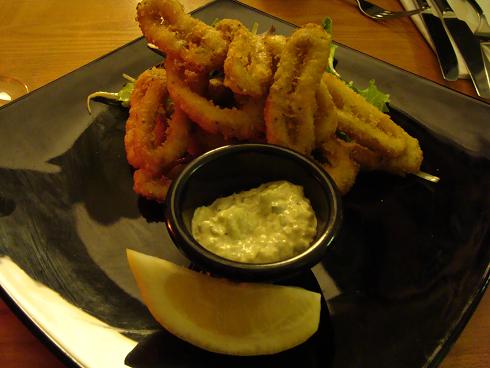
I quickly decided on the wagyu beef burger and Stephen did the same. We also couldn’t resist the calamari and opted to share that between us as a starter. We were both glad we did as it was really tasty; tender squid coated in a peppery batter served with a piquant tartar sauce, a huge serving that was more than enough for the two of us.
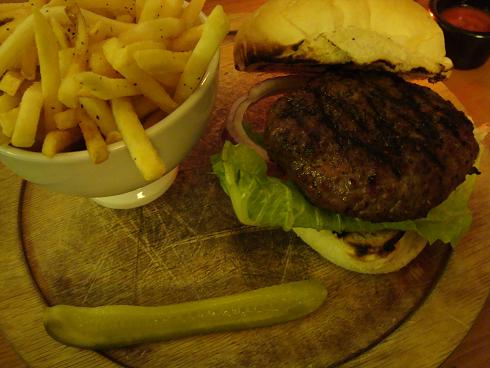
We both enjoyed our burgers too; cooked to medium on a char grill and served in huge, floury buns with crunchy, potatoey fries and a pickle on the side. I didn’t notice any discerible difference between this and a standard burger but to fully appreciate the flavour of this fine meat then a steak would have been a better choice.
The other thing I learnt is that I really need to learn how to use the new camera 🙁
Slow Roast Shoulder of Lamb
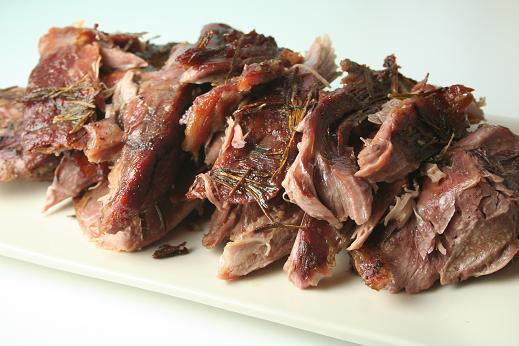
We have cooked slow roast shoulder of lamb a couple of times in the past and it always looms large in our memories as one of the tastiest meals that we can remember, especially considering that it’s so easy to prepare. Kerri’s family came to visit today and so we gladly took the opportunity to cook this again.
The recipe that we’ve followed is this one, which is based on a recipe from Jamie Oliver. There are not many ingredients and it is simple to prepare, which makes the utter deliciousness all the more brilliant. The lamb cooks for a long time and becomes very tender, falling away from the bone so much that the bones come out completely clean when you remove the meat from them.
The recipe specifies a sauce made from the roasted garlic, with chicken stock, capers, mint and red wine vinegar. We’ve loved this in the past and although it might not sound like it, it does go with food in the same way that a normal gravy would. It just has fresher notes due to the mint and a slight complex bitterness from the capers. Delicious. This time we made it with half the capers and mint that the recipe specified and it was still very good.
We served this with both mashed potato and roast potatoes because different people wanted different types. Also green beans, kale and swede. The sauce magically goes with everything.
The recipe goes like this:
Ingredients:
Lamb:
* 1 (2 kg) lamb shoulder, with the bone in
* 1 bunch fresh rosemary (a large bunch, or two small bunches)
* 1 bulb of garlic, broken into unpeeled cloves (use more if you love garlic)
* olive oil
* salt
* black pepper, freshly ground
Sauce:
* 1 tablespoon flour
* 500 ml chicken stock
* 2 tablespoons salted capers, rinsed and finely chopped
* 1 large bunch fresh mint, leaves only, very finely chopped
* 2 tablespoons red wine vinegar
Directions
* First, preheat your oven as high as it will go.
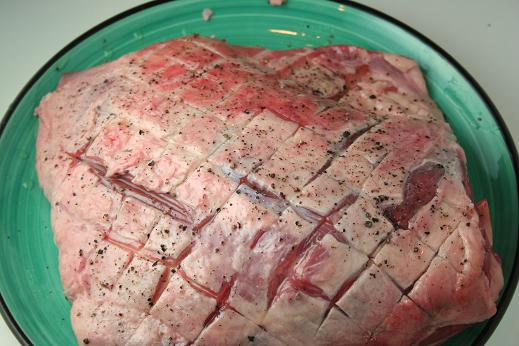
* Using a sharp knife, score the fat layer of the lamb at about 1″ (2.5cm) intervals, then do it in the opposite direction to form a diamond pattern. I did this a bit too eagerly, making the intervals too small and cutting through the fat into the meat, but it didn’t matter.
* Pour some olive oil over your lamb, rub it in with your hands and then sprinkle liberally with salt and ground black pepper, rubbing the seasoning in well with your hands too.
* Pour a little olive oil into a lidded casserole dish and lay half of the rosemary sprigs into it, then scatter half of the garlic gloves amongst the rosemary springs.
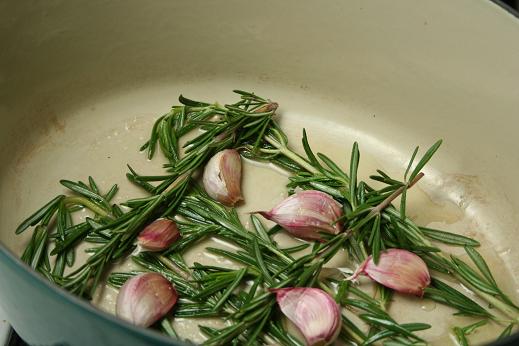
* Place the lamb into the casserole, on top of the rosemary and garlic and scatter the rest of the rosemary and garlic cloves on top of the lamb.
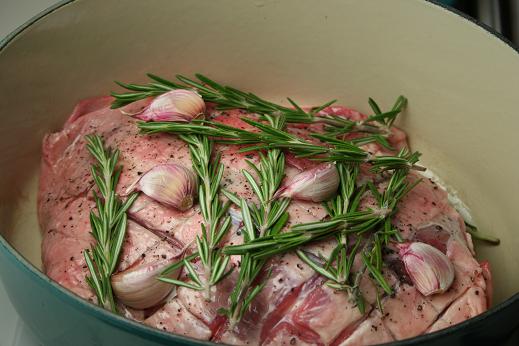
* Put the lid onto the casserole and put it into the oven on the middle shelf of your pre-heated oven before turning down to 170°C (325°F), or 160°C for a fan-assisted oven.
* Cook for four hours at this temperature. It does not need much attention, it will quite happily cook away to a deliciously soft state.
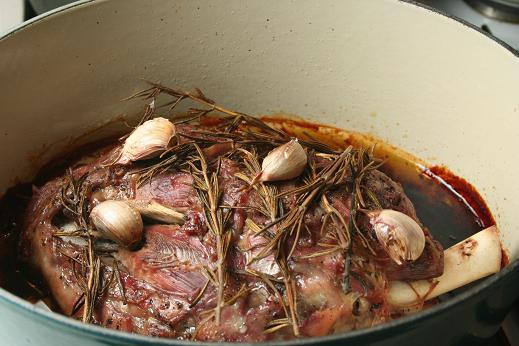
* Remove the lamb from the casserole; cover it with foil and leave to rest for a while.
* Remove and discard any sprigs of rosemary in the casserole. Don’t worry about the little leaves that have fallen off the sprigs. Remove the roasted garlic cloves to a plate and let them cool a little.
* Remove all but one tablespoon of oil from the pan. We find that a LOT of oil cooks out of the lamb, and it has a strangely green hue from the rosemary. Try to remove only the oil; retain and other juices that have cooked out of the lamb.
* Take some of the roasted garlic cloves and squeeze out the soft, nutty, garlicky insides, mash them up with a spoon and put them back into the casserole.
* Place the casserole on the hob over a medium heat and stir in 1 tablespoon of flour, then stirring constantly with a wooden spoon, gradually add the chicken stock. Boil, stirring, for about 5 minutes.
* Add the finely chopped mint, capers and red wine vinegar, stirring it all in.
* Boil gently for a few minutes, then pour into a jug for serving.
* To serve the lamb, simply pull it away from the bone with a knife and fork or two forks. It should break up very easily.
* Serve the lamb with potatoes, some green vegetables and plenty of the sauce. Delicious.
Chocolate Mousse

As Stephen mentioned, my family came to visit today and requested chocolate mousse for dessert, they were particularly interested in the Baileys mousse we made recently so we made up two of those. We also made two with Cointreau which I preferred – the combination of chocolate and orange is one of my favourites.
We added some whipped cream to the top which helped to cut through the richness of the chocolate, the chocolate sprinkles on top added a great crunch.
Scottage Pie – Haggis in a Cottage Pie
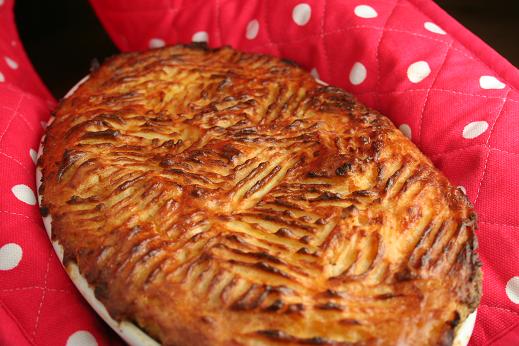
It is Burns Night tomorrow, but we are otherwise occupied, so we had to cook haggis tonight. We tried a twist on the idea though – doing it in a cottage pie style, with the haggis filling underneath and mashed tatties and neeps (i.e. potatoes and swede) on top.
We chopped up a couple of large potatoes and half a swede, then steamed them until soft and then mashed them all up together with some butter, salt and pepper. We skinned the haggis and chopped up the filling. We put this into a saucepan with a little water to soften and moisten so that we could layer it into the oven dish easily.
When these were both done, we assembled it in the dish just like a cottage pie and baked for almost an hour. It was a partial success – the haggis wasn’t as fully flavoured as it has been when we’ve had it cooked on its own. It was worth a try though. We figured that the lack of flavour was due to the lack of sticky “edge pieces” on the haggis, which needed more cooking to achieve. It would have been better to have the haggis layer in the oven on its own for at least half an hour and then put the mashed potato and swede on top afterwards.
I called it Scottage Pie, given that it’s a Scottish version of Cottage Pie. I know, not that clever, but it amused me at the time.
We haven’t had any whisky yet – will be having that shortly!
Chorizo and Beans
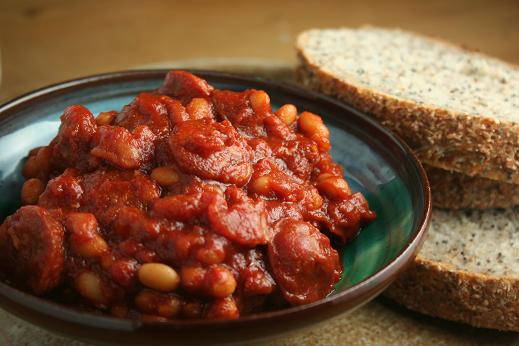
When I started cooking this I intended for it to become a soup. I didn’t follow a particular recipe but took inspiration from Jenny Chandler’s “The Food of Northern Spain” and Jonathan’s Chorizo, butterbean and passata stew. The end result was closer to Jonathan’s dish as I left it to reduce right down until it was sticky and thick.
I started by slowly sweating off some onion before adding (rather too much) parprika and some garlic. Next in went the chorizo which fried away until tender and then in went the haricot beans. At this point I added some wine (in retrospect, this wasn’t needed), stock and tomatoes and left it to cook away for about 45 minutes.
We ate it heaped onto some brilliant Gail’s bread and, despite my heavy-handed attitude with the paprika, we both loved it. It would be great with some other, lighter tapas dishes too.
Lentils with Spaghetti and Rice
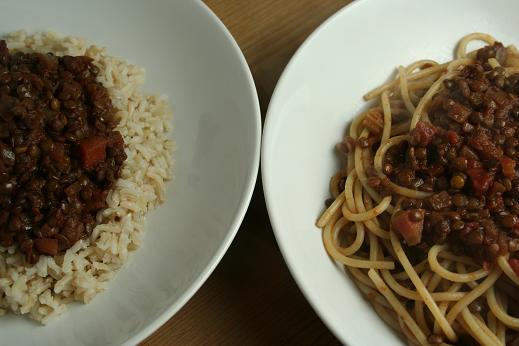
It’s not often that Stephen and I have different dinners (unless something goes wrong and he perseveres with the wrongness while I reach for the toast) but tonight he fancied rice and I fancied pasta. I probably should have had rice too since we had spaghetti last night but, as much as I like rice, I prefer pasta. It struck me while cooking this that it’s very similar to a bolognaise sauce, just without the meat, so it seemed natural to eat it with spaghetti.
We’ve cooked this before, tonight I did it slightly differently. I left out the bacon, roasted tomatoes and mushrooms, substituted half the stock for red wine, added lots of thyme and some tomato puree.
It tasted really good before serving: rich and earthy with a subtle sweetness from the tomatoes, but it became a bit lost when mixed with the rice and pasta. The original recipe was for a lentil lasagne which had the addition of bechamel which I think would really help the balance of flavours.
Puttanesca
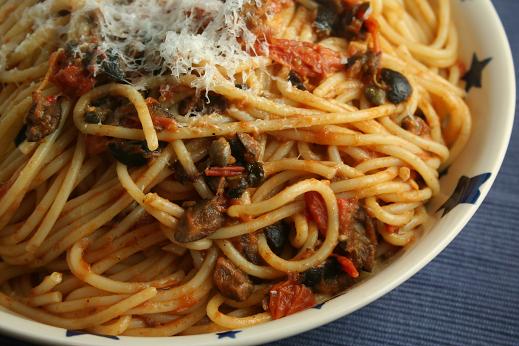
There’s not much we can say about this that we haven’t said before and we toyed with the idea of not posting it at all but, given that this is a diary of our dinners, here it is.
We both got home late this evening and didn’t have any plans for dinner. This is very quick to make, doesn’t require any precise measurements and can easily be made from the contents of the kitchen cupboard. It never disappoints either. We ate it in front of Masterchef.
