Chocolate Mousse with Coffee Baileys
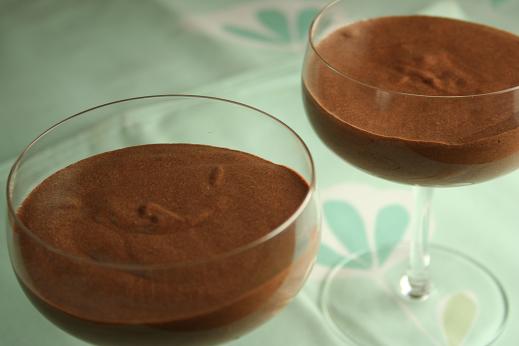
Shortly before Christmas the people at Baileys asked us if we would like to receive a bottle of their “Baileys with a hint of coffee” to use while cooking, I knew my mum would love it so accepted their kind offer. Unfortunately we forgot to take it away with us for Christmas so my mum didn’t get to taste it, sorry mum! We thought we should honour our promise though and decided to use it today in a chocolate mousse.
I’m not that fond of Baileys as a drink finding it too sweet and dessert-like but the sneaky taste I had while adding it to the melting chocolate was pretty good: smooth and creamy with a subtle hint of coffee, as you would expect, and it worked well in the mousse. We were a bit cooked out otherwise we would have added some chocolate shavings, it needed some cream too to dilute the chocolateyness.
Serves Four
125g chocolate
4 tbsps Coffee Baileys
4 eggs, separated
57g caster sugar
Melt the chocolate and Baileys together over a pan of boiling water.
Beat the four egg yolks together with the sugar until pale and creamy. Beat the warm chocolate mixture into the eggs and sugar.
In a separate bowl, whip the egg whites of three eggs until the peaky stage and then beat one third of this mixture into the chocolate. Add the remaining egg whites and fold in.
Chill for six hours.


Roast Chicken
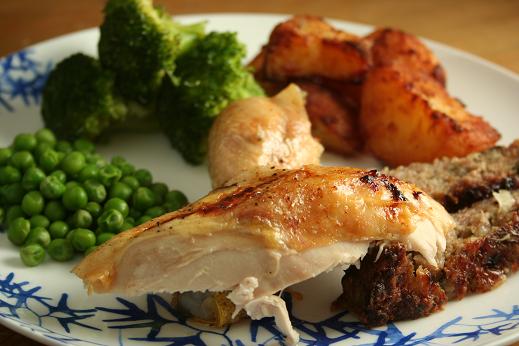
As I’ve mentioned numerous times before, this is one of our favourite dishes and seemed a fitting start to the new year. The jars of goose fat sitting in the fridge (leftover from our pre-Christmas dinner) needed some attention and I’ve been craving roast potatoes since Boxing Day.
Last New Year’s Day, we bravely attempted a three bird roast. Brave in that it’s a fairly tricky dish to master and especially so when you have matching hangovers. Luckily we’re hangover-free this year but a simple and comforting meal is always welcome.
We didn’t do anything particularly exciting aside from the anchovy butter that accompanies the broccolli, it’s inspired by our visit to the Hinds Head earlier this week and provided an interesting contrast to the plainer meat and potatoes. It wasn’t a complete success though, probably better suited to some grilled fish.
New Year’s Eve 2008
We decided to spend the evening at home with some friends last night and agreed in advance on some quick and easy food that we could all contribute to. By the time they had arrived, our best laid plans had gone completely awry and we ended up with a banquet rather than a buffet. Not that any of us were complaining 🙂
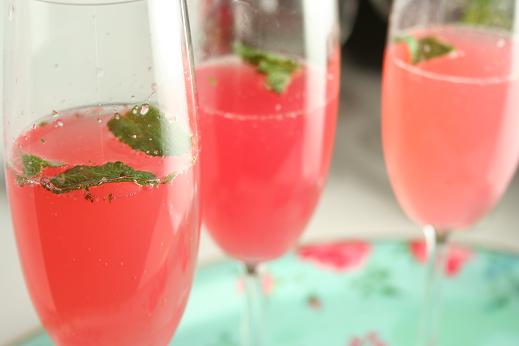
First, we started with a cocktail of our own invention. We scooped the seeds from half a pomegranate into a cocktail shaker, then added some mint leaves and some sugar and shook it with ice. This didn’t make a lot of liquid, which was okay because we only needed a little to pour into the bottom of some Champagne flutes before topping up with Cava. It could have done with a touch more sugar and pomegranate juice probably would have worked just as well as de-seeding a pomegranate ourselves, but it was a good way to start the evening.
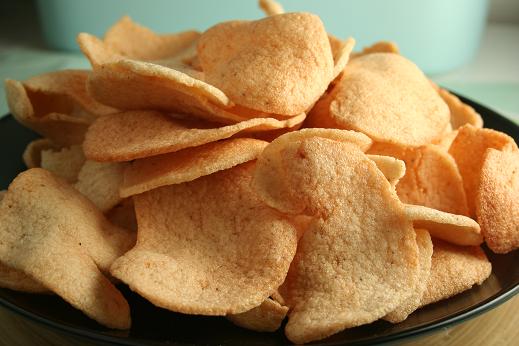
As all our dishes had a South East Asian feel to them, it was only right that we started with prawn crackers; freshly fried and deliciously crunchy with a mild chilli kick and a hint of sweetness from the sweet chilli dipping sauce. The pile you see above is less than half of the final amount and I happen to know that there is only one lonely cracker lurking in the kitchen this morning, a fine testament to just how good they were.
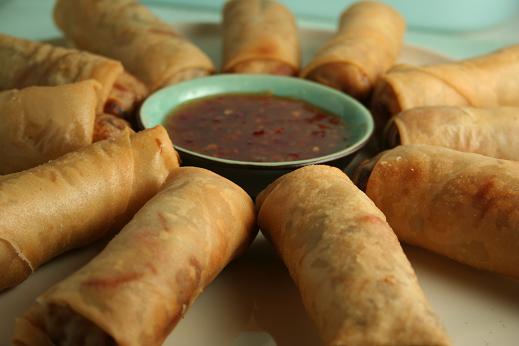
Next we moved on to some spring rolls (prepared earlier in the day by our friends), with the crisply fried wrappers providing a pleasing contrast to the filling which included, (amongst other things) noodles, mushrooms, prawns and beansprouts. These were of course were very hot when freshly cooked and I for one almost burnt my mouth a few times being too greedy.
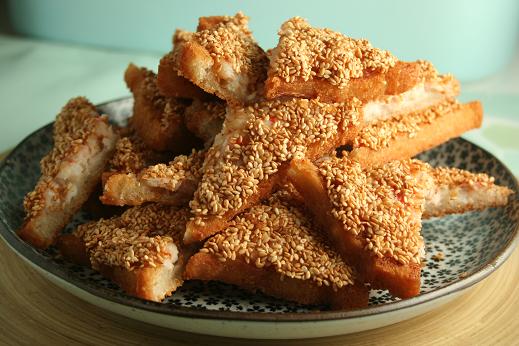
These were followed by sesame prawn toasts. This was the first time we’ve had home-made prawn toasts and they turned out brilliantly; light and crispy rather than the heavy, sludgy, oily examples that are sometimes served in restaurants.
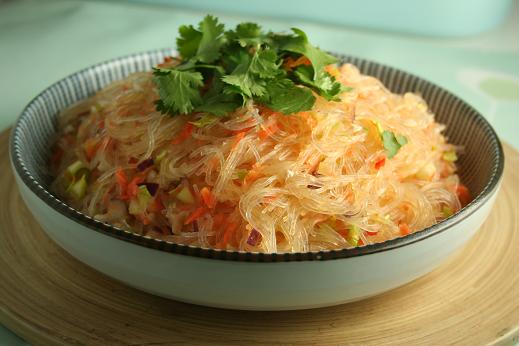
Next was a rather spicy Thai noodle salad from the Blue Elephant cookbook. There isn’t much chilli visible in that picture but it was definitely lurking in there somewhere. It was a well balanced dish though, with the sourness of lemon juice, saltiness of fish sauce and sweetness of sugar in the dressing all coming together to complete it.
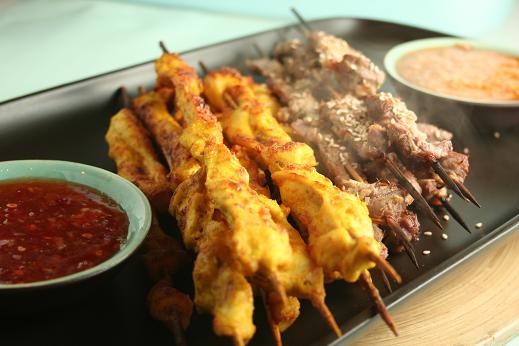
Then we had two different grilled skewers which had been marinating in their various pastes all day. Firstly chicken satays, which were also from the Blue Elephant cookbook. The marinade had quite a lot of turmeric in it which turned them very yellow but provided a deep, earthy flavour. Finally, lemongrass beef skewers, which we have cooked several times before. We served these with a peanut dipping sauce which was a success despite our haphazard approach to making the sauce which nearly saw us omit half the ingredients. We also had some sweet chilli sauce, which was just from a bottle rather than home-made but good nonetheless.
So there were no disasters and we really enjoyed everything, especially thanks to our friends for all their help in cooking and preparing some delicious food. It took a while to digest it all over a hard-fought game of Monopoly, which carried on until well after midnight, just interrupted briefly to watch new year come round on television before Kerri eventually took over the board street by street and hotel by hotel.
Farewell 2008
This was a post we meant to make last year but didn’t get round to. Part of the principle behind Dinner Diary is to post every meal even if it’s dull or we’ve made it a lot before or it doesn’t come out right. This doesn’t always make for the most interesting read but it’s great for us to have something to look back on at the end of the year. A summary post seems like a good way of keeping everything in one place so here we present the ups and downs.
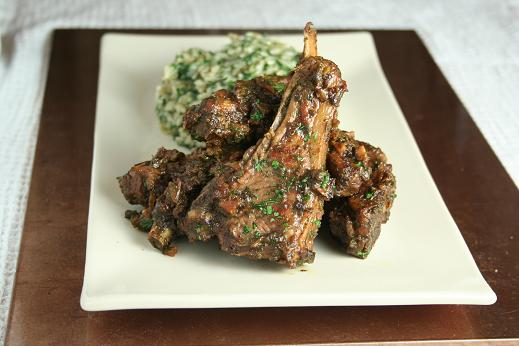
Favourite picture – the Indian herby lamb chops picture above, which was also one of the first Indian dishes that we cooked together.
Favourite dishes – rabbit papperdelle and slow roast shoulder of lamb. The rabbit papardelle was actually made up of leftovers and, as is often the way, the leftover dish was better than the original. We created this without the aid of a particular recipe and it came out perfectly the first time. We’ve not attempted it since, largely because finding rabbit isn’t that easy. Also, recreating runs the risk of spoiling the memory of something so great.
The slow roast shoulder of lamb should win the prize for tastiest dish with minimal ingredients and effort. It’s so simple to make yet tastes as if you’ve used lots of ingredients and fussed over it for hours. The long and slow cooking produces wonderfully tender meat that is crunchy on the outside and full of flavour.
Most frequent appearances – roast chicken, puttanesca and green curry. Roast chicken is probably our favourite meal. We’ve cooked it so often we can do it when we can’t be bothered/are sick/hungover/tired, it’s always delicious, it feels like a treat and provides leftovers which we both love. It’s also become a tradition to eat when we return from holiday which, although we eat it a lot, gives us something to look forward to when we get home.
Puttanesca was a new dish for us in 2008 and instantly became a favourite, it’s simple and quick to make and never fails to fill us up or make us go “mmmmm”.
Green curry is another favourite although making the paste is fairly time consuming so we don’t eat it as often as we’d like, it does mean it’s a real treat when we do though.
Biggest disaster – partridges with rosti. This was a fairly recent disaster and although there have been many things that haven’t gone to plan or could have been better this year, I can safely say this was a Complete Fail. To the point where it was completely inedible and went into the bin. In fairness, it wasn’t a dish we’d planned and we had consumed a fair amount of wine by the time we came to cook it.
Most clicked – cauliflower cheese. 1119 unique hits, by far the busiest day in the history of Dinner Diary! It did make its way on to both Tastespotting and Foodgawker which undoubtedly accounted for the spike in traffic, still surprising that something so simple could double our hit rate though.
Biggest regret – sausage casserole. Every year I say I’m going to perfect this and every year I make it once, am unhappy with the outcome and give up. Perhaps I’ll give it one last try in 2009.
Most memorable food experience – the Fat Duck restaurant. We didn’t blog the Fat Duck as we didn’t have our camera with us but it was definitely an experience that will stay with us both. Stephen had been before so knew what to expect, I’d read a fair amount about it but as it was a surprise visit I wasn’t prepared for what was to come. So much has been written about dining there that it’s hard to do the place justice without resorting to cliches so I won’t try.
Favourite ingredient – krachai. This is one of those ingredients that makes Thai restaurant food taste different from home-cooked Thai food and can be hard to put your finger on if you don’t know what it is. It’s an earthy, “wild” tasting version of ginger that we first used in jungle curry and then in a few other Thai dishes too.
Best restaurant – aside from the Fat Duck which I’ve mentioned already, we’ve visited some old favourites and made a couple of new discoveries.
Mon Plasir will always remain one of our favourites although we’ve only visited once this year and, sadly, we didn’t have time for cheese which is one of the real highlights.
Busaba Eatthai is well-known but I visited for the first time this year and ate very good Thai food for very little money. Closer to home we’ve been to the
Blue Elephant a few times which can do pretty good food (but has its ups and downs unfortunately and of course always costs the same, which is quite a bit) but is better known for its amazing interior and faultless service.
We also discovered Budsara which does consistenly good Thai food almost as cheaply as you could make at home.
Worst restaurant – we’ve been fortunate enough to not experience many bad meals this year but undoubtedly the worst food I’ve eaten was at Memories of China in Kensington. I did visit as part of a large party but the food was cold, tastleless, oily and over-priced. The restaurant was completely lacking in character and atmosphere.
Most requested – cheesecake. This isn’t actually our recipe but it’s definitely the one that’s been requested most often. It’s a versatile dish that can easily be adapted depending on what’s in season and (I’m probably jinxing it now) works perfectly every time.
Biggest achievement – pesto. We don’t eat this as often as we used to but it’s a really useful dish as it’s so quick to make and can be varied depending on what you have available. It seems like a small thing to be so proud of but our previous attempts have been completely disastarous and this is a great example of “if at first you don’t succeed…”
Funniest search terms – our blogging software comes with an inbuilt software package that allows you to analyse who is visiting your site and how they are getting there. As sad as it may seem, one of our favourite things to do is to look at the search terms people have entered into Google and have then been directed to Dinner Diary. Two recent favourites were: “food not suitable for vegetarians” and “what’s the name of that plastic thing that comes in the takeaway pizza box”.
We seemed to have waffled on for ages but it would be great to read everyone else’s experiences of 2008 too. Happy new year!
Roasted Cobnut Salad
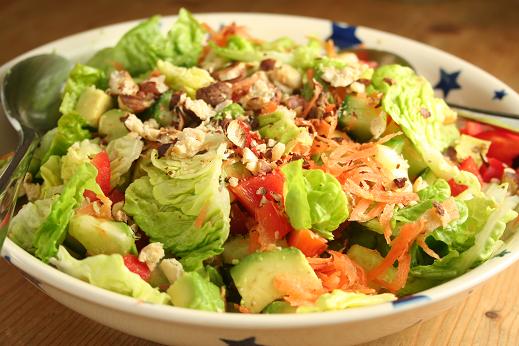
When staying in Kent with Kerri’s mum over Christmas, we picked up some cobnuts at a market in Canterbury. I’m sure that most people reading this know what cobnuts are, but for those that don’t, they are a type of hazelnut that has traditionally been grown in Kent over the past few centuries.
Last year we bought some green cobnuts and had marginal success cooking them. This year, we bought them after the season had finished, so they were dried and were almost like normal hazelnuts. As we wanted something light this evening, we just had a mixed salad and thought we’d give it some interest with some roasted cobnuts.
Actually, we dry-fried them and then I put them into a bag and bashed them with a meat tenderising mallet, then sprinkled them onto the salad. The bashing turned out well, because there were some large pieces to eat and also lots of smaller pieces that mixed well into the rest of the salad and gave it all a lovely roasty background flavour. It didn’t need an elaborate dressing; just some good olive oil and a grind each of salt and pepper.
We do have some interesting plans for the rest of the cobnuts; hopefully we’ll find time to do some of them!
The Hinds Head
Like most people, we’re a bit fed up with thinking about food. This means that we’ve eaten out most days this week as we’re both lacking in inspiration and motivation to get into the kitchen. We’re also avoiding the leftovers that we know we need to do something with but just can’t summon up the energy or enthusiasm for.
Today, Stephen suggested we drive to the Hinds Head for lunch. We visited the Fat Duck for my birthday last year and resolved to go back and eat at the pub at some point. That was almost a year ago so it was a long overdue visit. Pictures are from Stephen’s phone so are shocking, sorry!
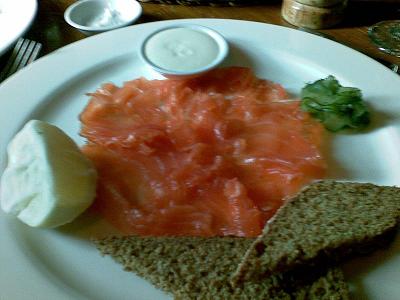
We’d left it too late to get a table in the restaurant but were happy to eat in the bar; despite the whole ‘fed up with food’ thing, we quickly decided that it would be a waste not to have both starters and main courses and had decided on what we wanted to eat within minutes of looking at the menu.
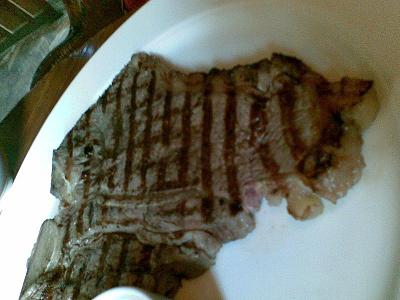
I chose the tea smoked salmon and soda bread, followed by the T-bone steak with bone marrow sauce. Since having smoked salmon last week, I seem to be hooked on it and this was a very good example. The tea smoking was subtle but definitely evident and the texture of the salmon was soft and melty. It was served with some lovely thick sour cream and pickled cucumber, the sweetness of the cucumber perfectly complementing the smoky flavour of the salmon.
I principally selected the steak so that I could sample the famous triple cooked chips which was a wise decision. As you might imagine, they were the perfect combination of crunchy on the outside and soft and fluffy in the middle. There was just the right amount of thick and thin chips too and they were perfectly (for perfectly read generously) seasoned with crunchy sea salt.
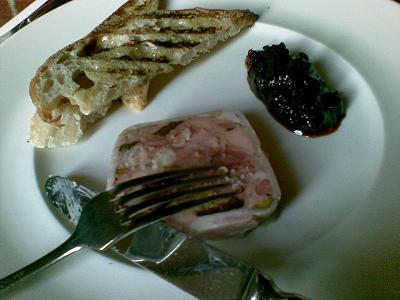
After some deliberation, Stephen opted for the bacon and pheasant terrine served with spiced pear chutney and toasted sourdough bread follwed by the shepherds pie. The terrine itself was dense and meaty and spiked with gherkins and picled walnuts which leant a pleasing sweetnesss to the dish, the chutney added another level of sweetness that was perfectly offset by the slightly charred sourdough bread.
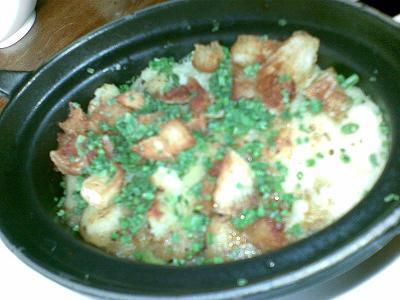
The shepherds pie was the highlight of the lunch though, served in an invidual cast-iron casserole dish and topped with crunchy potato pieces (almost like chips) giving way to a sweet and meaty mix of lamb shoulder, belly and sweet breads. Since tasting it, I’ve been trying to think of how to describe it and although it’s a cliche, I can’t put into words just how delicious it was. The meat was tender and melty, with just the right amount of gravy and potato. It was sweet but not too sweet, perfectly seasoned and intensely lamby in flavour. It’s the kind of thing I’m going to wake up thinking about in the morning and not be able to rest until I’ve eaten…which could be a problem since the menu changes daily and the Hinds Head is a 45 minute drive away.
Christmas Dinner!
For Christmas dinner, we had a family dinner with Kerri’s mum and her brother and his family, who kindly allowed us to take over their kitchen to cook it. We had turkey of course, as is obvious from the picture below. When we collected the turkey from the butcher (a free range bronze turkey from Appledore in Kent), it was in a box which also contained several sprigs of rosemary. So having stuffed the neck end with the stuffing, we popped the rosemary into the cavity along with half an onion, half a lemon and a couple of garlic cloves. Always good to leave some space for air to circulate in the cavity to bring the cooking time down. After trying to de-feather the poor bird a bit more, we took it over to Kerri’s brother’s house on Christmas Eve so that they could put it into the oven on Christmas morning.
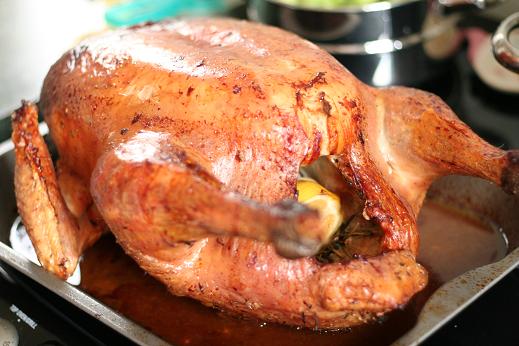
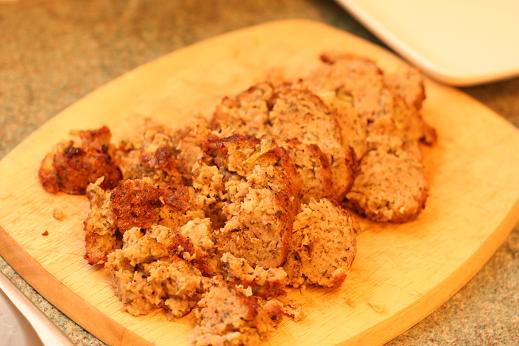
So when we arrived on Christmas morning, the turkey was already in the oven and turning a delicious golden colour. We had stuffed it the night before with some delicious and very sagey sausagemeat stuffing that Kerri’s mum had prepared. We stuffed the neck end only, as we didn’t want to add too much to the cooking time of the bird and dry it out. That was only half the stuffing though, so we cooked the rest of it separately.
With a glass of bubbly in hand, we set about preparing the rest of it: roast potatoes in goose fat (left over from our pre-Christmas dinner of roast goose), roast parsnips, brussels sprouts with pancetta, steamed carrots and peas.
Sliced stuffing:
Afterwards, we somehow miraculously still had some space for Christmas pudding, which we served with either brandy cream or brandy sauce, depending on peoples’ preferences. We didn’t cater for people whose preferences didn’t include brandy though, as there was loads of it in the pudding too.
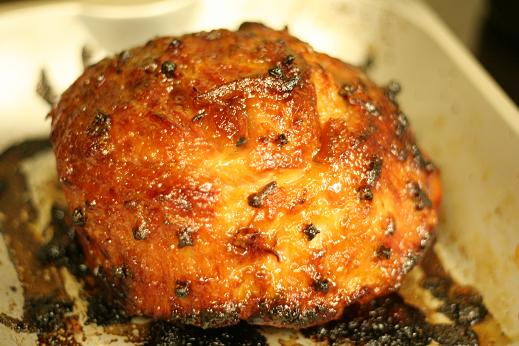
And on boxing day we had baked ham with marmalade glaze and of course turkey sandwiches. Even with a smaller turkey than usual, we of course still had loads of leftovers.
And given that we hadn’t brought a mince pie tray along with us, we made one large mince pie lattice instead:
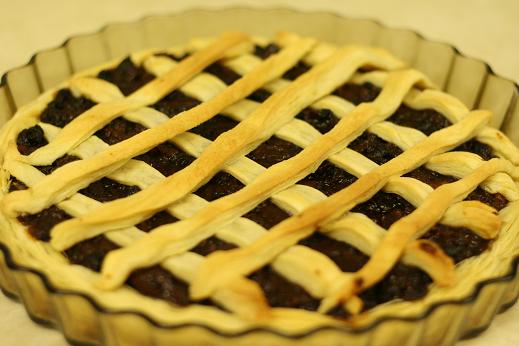
We do have loads of mincemeat left that didn’t get turned into pies and I am trying to think of ways to use it up. There’s no reason that it necessarily needs to only be eaten at Christmas, given that it’s so tasty.
Vacherin
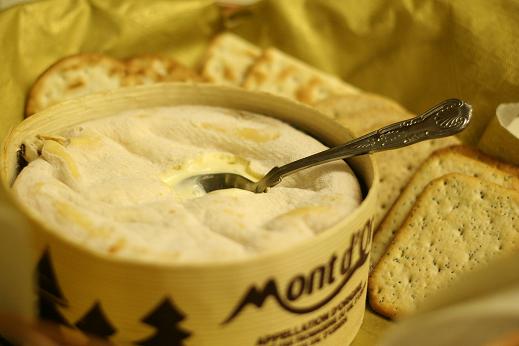
For Christmas Eve, we had some nibbles, including a rather delicious Vacherin Mont d’Or. For those of you who don’t know (and can’t be bothered to click the link :-)), Vacherin is a seasonal French (or Swiss) cheese that, when ripe, has a deliciously gooey centre and a smooth, creamy, but rich and complex taste. It can be baked in the oven for a while if you like, but we’ve never done that.
My first experience of it was at an organised lunch where, instead of the usual sort of cheese course, we had a huge Vacherin that we passed around the table and spooned onto our plates. I fell in love with it then and look forward to it every year.
We do of course have a fair amount left over and its pungency is noticeable whenever anyone opens the fridge. It’s too good to waste though, even though we’re rather full after various Christmas and Christmas-related dinners, and we’ll either eat it as it is or cook something with it.
Goose Pie
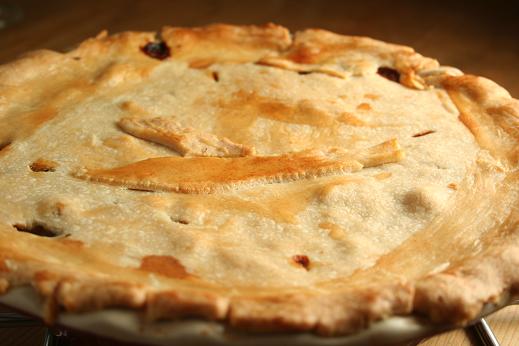
Having half a goose left after our pre-Christmas dinner yesterday, we embarked on a goose pie project. Kerri had seen Jamie cooking a turkey and leek pie, which served as partial inspiration. We only had one leek though, so we added an onion. And we didn’t have creme fraiche, so we used chicken stock. And we didn’t have puff pastry so we used shortcrust pastry… etc, etc.
Kerri found my rendition of a flying goose on top of the pie amusing, but I think it added a bit of interest to the pie, given that it was rather messy / rustic – the pastry broke as I was trying to get it on and we didn’t have an egg to brush it with so it doesn’t look nice and golden. We made a valiant effort but only managed to eat half of the pie. We’ll be having the other half for lunch tomorrow.
Pre-Christmas Dinner – Roast Goose
It’s become something of a tradition (if twice counts as a tradition – a tradition in the making maybe) for me and Kerri to have a pre-Christmas dinner with my sister and her husband shortly before we disappear off elsewhere for Christmas itself. Last year we had roast salmon with salsa verde; this year we decided to try our hand at cooking a goose.
I ordered the goose a few weeks ago, when we had decided on it. We liked the sound of Gordon Ramsay’s Christmas roast goose recipe, so went with that having never cooked one before. Because it said to get a 4kg to 5.5kg goose, that is what I asked the butcher for when I ordered it. And he wrote it down on the order form. When I went to pick up the goose, it was 6.5kg. Which is rather large. And the butcher claimed that it was very hard to get smaller ones. I ummed and aahed a bit about whether I still wanted it, but took it in the end because we’d planned everything around having goose, even though having the monster goose meant that we’d have dinner late and have loads of left-overs which we don’t need.
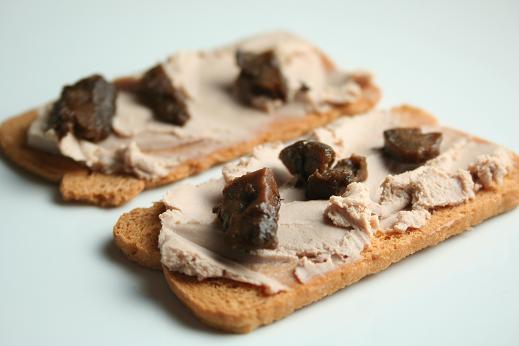
No, your eyes aren’t deceiving you, that’s not a goose. But it is goose foie gras on melba toasts that my sister brought along as a pre-starter snack. With some rather inexpertly sliced pieces of pickled walnut on top. The pickled walnuts were an impromptu addition that worked rather well.
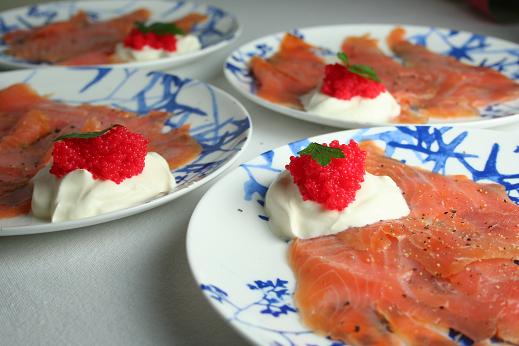
Next up was smoked salmon with sour cream and lumpfish caviar, which was bright red and made it all look rather festive.
From this point on, the photography got a bit random and… well… just bad, due to rushing and scalding and various other goings-on. So this is what the goose looked like when it was done. The lemon and lime pieces had burnt, which was unfortunate, but that didn’t really matter as we weren’t planning to eat them:
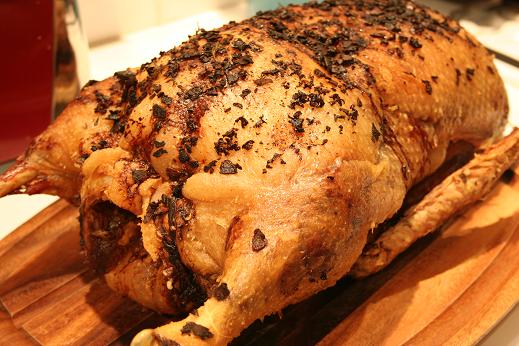
With the goose we had roast potatoes of course, roasted in a mixture of goose fat (we have a large supply of it now) and vegetable oil. And cabbage with pancetta which was really good – the cabbage was an organic savoy cabbage from our vegetable box and although there was no butter or cream with it (just the pancetta, some finely sliced shallots, the shredded cabbage, a splash of water and a good grind of black pepper) but it had a lovely almost buttery taste to it. And roast parsnips with parmesan on top of them. And Gordon’s date and red wine sauce.
With so much going on, we thought that it might not all work together that well, but it did. The goose was really tasty, I’m glad I took it even though it was huge and we have half of it left over and it complicated our already rather over-complicated cooking schedule.
When we cooked Christmas pudding recently, we ended up with three instead of one. Kerri had the genius idea of making Christmas pudding ice cream out of one of them. We followed Nigel Slater’s mincemeat ice cream recipe, except added crumbled Christmas pudding instead of mincemeat. We were worried that it wouldn’t be sweet enough when we tasted it after mixing it together, but once it was frozen it seemed just right.
Cue rather rubbish picture of the ice cream:
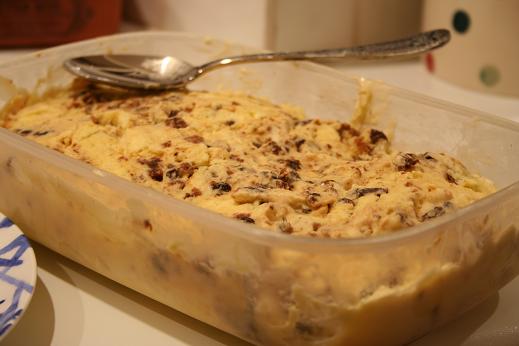
My sister’s husband flambeed some caramelised bananas in rum, then served with a dollop of our Christmas pudding ice cream, it made for a really good alternative Christmas pudding experience.
All in all a really lovely pre-Christmas dinner. Yum.
