Venison and Red Wine Pie

On our way back from the New Forest, we tried to buy some venison for dinner but couldn’t find any anywhere. Each shop we tried told us that they were expecting their delivery shortly but nothing had arrived so far. In the end, we gave up and bought some from our local butcher when we got back to London. It turned out that their supplier was actually from the New Forest and it seemed silly to be buying such a local product around the corner from where we live but at least we tried.
We decided we would make pie, it’s Stephen’s birthday and pie is his favourite. Since I didn’t bake him a cake, I decorated the pie instead which I think he probably preferred. Our pie dish is rather too large for two people though (which I mention each time I use it but always forget until it’s too late), hence the sinkage. It didn’t affect the taste though which was richly meaty with a background warmth from the ginger and juniper. This would have worked well as a casserole too but why you would want to eat casserole when you can have pastry I don’t know.
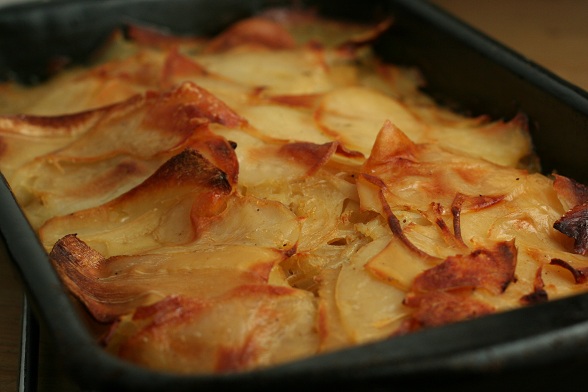
We would usually have mashed potatoes with pie but we had been talking about boulangere potatoes recently so decided to have those. It didn’t seem like an obvious pairing to me (we usually eat these with grilled fish or meat) but it worked well with the soft potato being the perfect vehicle for the redcurrant-heavy gravy. We were planning to roast some parsnips to go alongside the pie but ended up slicing those and adding them to the potatoes which worked brilliantly and resulted in less washing-up too.
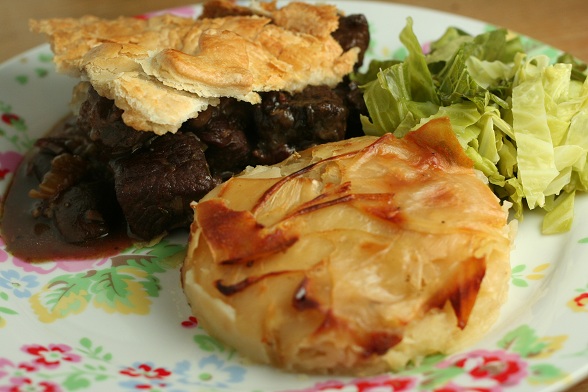
Venison and Red Wine Pie
Serves Two
500g venison shoulder, diced
Flour, seasoned with salt and pepper
1 large onion, sliced into half-moons
2 stalks celery, chopped
250g mushrooms, chopped into bite-sized pieces
Sprig of thyme
2 bay leaves
1/2 tsp dry ginger
1 tsp coriander seeds, crushed
Glass red wine
500ml beef stock
1 tbsp juniper berries, crushed
Start by tossing the venison in the seasoned flour and then brown in batches until the pieces have taken on a dark colour and the outsides have begun to char. Remove to a plate.
In the same pan, add a little more oil if necessary and soften the onions, celery and mushrooms with some salt and pepper and the thyme for about 5-7 minutes. Add the bay leaves, ginger and coriander, stir so everything is coated and cook for another couple of minutes.
Return the meat to the pan with the onions and mushrooms and add a glass of red wine. Bring to the boil and allow to bubble until the alcohol has evaporated – about a minute or so. Add the stock and the juniper berries and season. Once everything has reached boiling point, reduce the heat and simmer for about three hours.
Remove the meat to a pie dish and leave to cool completely, fishing out and discarding the bay leaves and thyme stalks. Leave any excess liquid in the pan for the gravy.
Top the meat with pastry, wash with egg (we didn’t have any eggs hence the slightly anaemic look to our crust) and then bake at 175 degrees for about 30 minutes.
Venison, Red Wine and Redcurrant Gravy
1 tsp mustard
1 tsp redcurrant jelly
1/2 tsp red wine vinegar
100ml red wine
150ml beef stock
To the leftover cooking liquid add the mustard, redcurrant jelly, the red wine vinegar and the red wine. If you don’t have a huge amount of liquid then add the red beef stock too. Bring to the boil, reduce and simmer for about 15 minutes.
Taste as you go and adjust to your liking, you want it to be reasonably sharp with a good kick from the mustard so that it works as a contrast to the richness of the pie filling.
Thicken with cornflour if necessary.


Hotel Terravina
I first heard about Hotel TerraVina online some time last year. It’s a boutique hotel situated in the New Forest and was devised by the people who put together the Hotel du Vin chain. The emphasis is on good food and wine (two of our favourite things) and while staying there, you can also learn the art of sabrage.
When we were in Champagne a few years ago, we saw lots of people taking the tops off Champagne bottles with swords but never got the chance to try it ourselves. It seemed like the perfect birthday present for Stephen so I booked it and tried to keep it a secret until the day arrived.
I’m not very good at keeping secrets but I managed this one and on Wednesday afternoon, we drove down to the hotel where we were greeted warmly by the staff before checking into a beautifully decorated bedroom with a view over the nearby forest. The rooms are all named after different types of wine and are all individually decorated, many with roll-top baths in the rooms. The emphasis is definitely on quality with handmade toiletries from nearby Wiltshire in the bathroom and bespoke furniture in the bedroom made by local craftsmen.
As lovely as the room was, we were keen to investigate the well-appointed bar that we had spotted on our arrival. After perusing the open-faced wine cellar, we chose a glass from the extensive and well-researched wine list that specialised in Californian wine. Not the nasty, over-oaked type that was once associated with California but the perfectly balanced, full-bodied examples that we both love. After finishing our wine, we were led outside where Stephen was shown how to use the sabre to remove the Champagne cork by one of the hotel’s expert sommeliers. After the short lesson, it was Stephen’s turn and he did a great job of taking the cork off while making the whole thing look very easy.
Back in the warmth of the bar and while enjoying our Champagne, we were presented with the evening’s menu which had a good selection of both meat and fish dishes (there were probably some vegetarian dishes too but we didn’t register those) with a heavy bias on seasonal and local produce. We struggled to choose as everything sounded wonderful and it was obvious that a lot of time and thought had been put into creating a compact menu with quality ingredients.
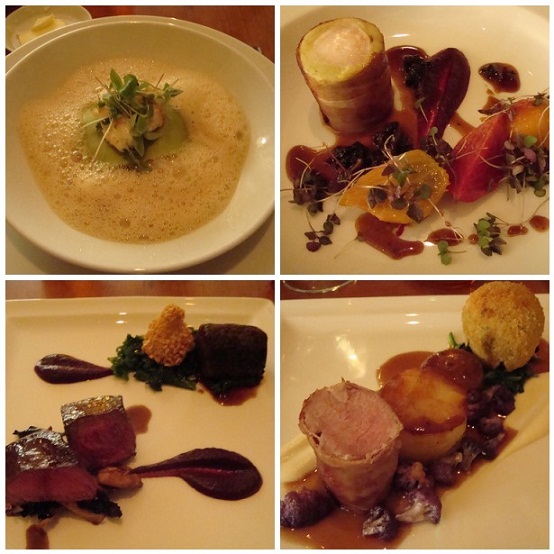
I opted for the lasagne of crab and langoustine to start and Stephen chose the loin of rabbit. The presentation of both dishes was beautiful and the flavours certainly didn’t disappoint. Crab and langoustine lasagne is one of my favourite starters and the execution of this dish was stunning. The basil added a slightly unusual note that I hadn’t come across in this dish before but, coupled with the lemongrass, was a fragrant compliment to the sweet and perfectly cooked fish.
Stephen’s rabbit dish was heartier than my fish but was well balanced and just the right size to not be too heavy. Even though I’m not a big fan of beetroot, I could tell that this worked well with the earthy rabbit and was a great nod towards the change in season.
Neither of us could decide between the pork and the venison main courses so we had both with the intention of sharing. I preferred the venison and Stephen the pork so the decision was made for us quite quickly. The standout for me was the slow roast venison which just melted in the mouth. We fought over that as we did the black pudding that accompanied Stephen’s pork: a great combination and one I’ll definitely try again at home.
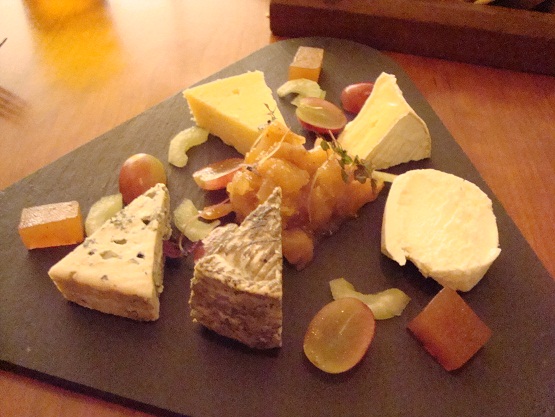
By the end of the two courses we were both reaching capacity but were so enjoying our time in the restaurant that we ordered a plate of cheese to share which we polished off with some dessert wine. I can’t remember what all the cheeses were but they were the perfect way to finish off a brilliant meal.
Things got a little hazy after that, for which I’ll blame the absinthe fountain. It was great fun and made even more enjoyable by the knowledgeable and charming barman who was happy to answer our questions. The full English breakfast we ate the next morning was definitely required to heal our heads and was prepared with just the same level of care and attention as the food had been the night before.
It was a brilliant trip and I can’t fault the food, the wine or the service. Since it was a gift, I can’t reveal the price here but it was great value and if you’re looking for a slightly unusual way to celebrate then I would definitely recommend the sabrage break. The hotel also offers a number of other wine breaks often with visiting winemakers which we hope to return for next year.
Spaghetti with Tomato Sauce and Scallops
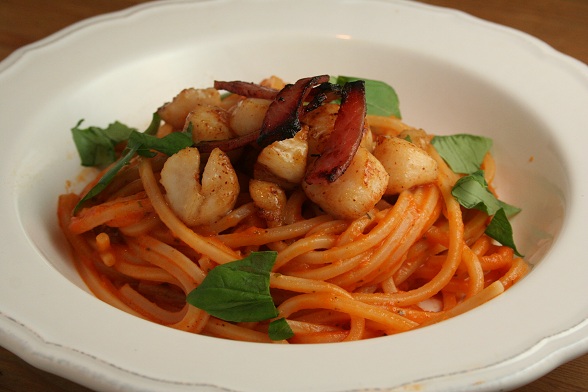
Stephen cooked this last night and I’m sure he won’t mind me saying that it didn’t turn out quite as planned. He had intended to use prawns but couldn’t find any and used scallops instead. The delicate flavour of the scallops didn’t really stand up to the tomato sauce and they became a bit lost, which we should have realised really. It would have worked well with prawns though so perhaps we’ll give this another go next week.
While this was far from a disaster, one thing we did learn was that blitzing the tomatoes before cooking them results in a really creamy sauce. Possibly too creamy when paired with fish but brilliant with the bacon. In a different dish, the addition of some cheese with that sauce and that bacon would have been great.
Smoked Mackerel with Butter Beans and Kale

I cooked these beans on Sunday with the intention of adding some white fish today. At the last minute, Stephen suggested we have mackerel instead and that worked out much better than I imagine the white fish would have.
The mustard in the beans cut through the oiliness of the mackerel very well and the smoky fish was complimented by the sweet leeks. The kale was leftover from Sunday and just stirred through as a bit of an after-thought but actually brought the whole thing together, adding a bitter, iron-like note which complimented all the other flavours.
Having the beans and the kale already cooked meant this was more of an assembly-job than anything else, we tend to keep smoked mackerel in the fridge anyway and there are usually beans of some variety in the freezer so I can see this becoming a regular dish. Great for lunches too.
Butter Beans with Leeks and Mustard
Serves Four
250g dried beans (or you can use tinned)
Olive oil, for cooking
2 leeks, sliced
2 cloves garlic, crushed
Olive oil, for dressing
Salt and pepper
2 tsps mustard
If you’re using dried beans, then cook these. Timings can vary but allow up to two hours and check often to make sure there is enough water in the saucepan.
While the beans are cooking, soften the leeks in some olive oil. You want them to brown a little and start to caramelise, about 25 minutes.
About five minutes before the leeks are cooked, add the garlic and cook for five minutes.
Add the leeks to the beans and stir so that everything is mixed. Add some olive oil, the mustard and season.
Slow Roast Shoulder of Pork – Leftovers
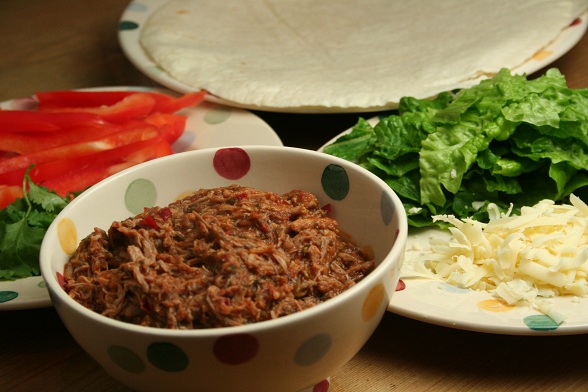
We only cooked a quarter shoulder yesterday and even though we ate plenty, we were still left with enough pork to serve another four people. A pretty good position to be in, in my opinion. I love leftovers and try as often as I can to make sure we have some, if they don’t get used for lunches the next day then they’re useful for dinner.
The addition of Stephen’s Special Sauce to the leftover pork turned a good thing into something brilliant. The flavour of the sauce managed to permeate the already-cooked pork really well which is not always an easy thing to achieve. Heaped onto to warmed wraps and loaded with lettuce, peppers, spring onions and cheese made for a speedy and satisfying dinner.
Slow Roast Shoulder of Pork
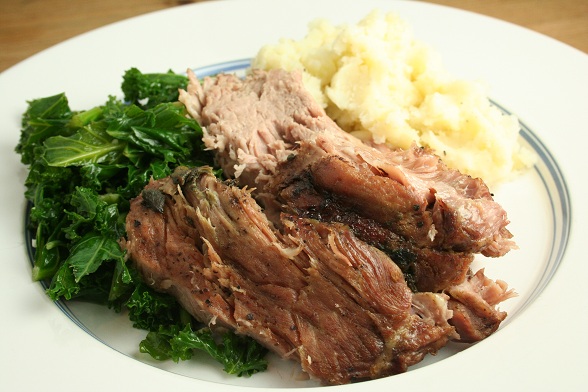
Slow roast shoulder of lamb is one of our most favourite things to cook and one of the things that gets the most hits on Dinner Diary. We’ve tried a couple of times to create something similar with pork shoulder but never really succeeded in getting anywhere close. It’s been a while since we last attempted it and it felt like a good time to try again. So, paying close attention to the mistakes we’ve made in the past, today we gave it another go.
And, we were successful! Sitting down to eat, I wondered why we had go this so badly wrong in the past. It was really easy: rest the seasoned pork (a quarter shoulder) on a bed of vegetables, sage and garlic with some water surrounding it (just enough water to cover the vegetables and stop them from burning but not enough to make much contact with the meat). Cover with some more sage and garlic (and poke some into any openings you can find in the pork) and cook for four hours at 150 degrees, basting every hour or so.
When it’s cooked, remove and rest the pork while you make the gravy: remove the vegetables from the roasting dish (if you like garlic then leave a few cloves in and squash them well), drain off the oil, add some white wine, some cider vinegar and bring to the boil. Thicken with cornflour and serve.
The pork remained beautifully tender and hadn’t dried out at all. There was a strong piggy flavour which was complemented really well by the cider vinegar in the gravy. A big handful of fresh sage would have been really good but we didn’t miss it particularly.
A good lesson is simplicity, no need to mess around with milk or varying temperatures like we have done in the past. Just roast the meat long and slow with a few aromatics and you’ll be rewarded with perfectly cooked meat that’s full of flavour.
Chilli and Baked Potatoes
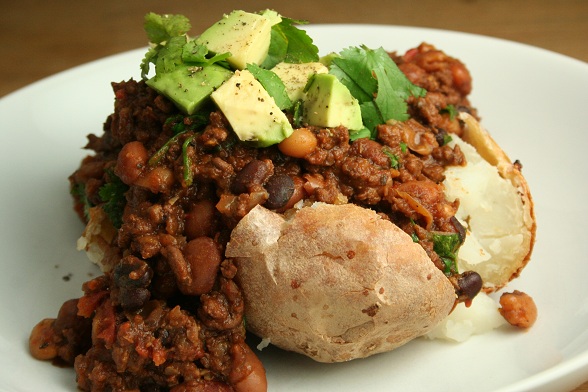
If we have a Saturday at home, we usually like to take the opportunity to cook something new. We were at home today but we had a long list of chores to get through and needed something that would sit happily in the oven while we got on with other things. The other thing is that cooking new things is all well and good but if you spend every spare minute doing that, you never get to eat your old favourites. Chilli with baked potatoes is definitely a favourite, especially in this kind of weather so, early this morning, we got on with this and then left it on a low heat for the rest of the day. It’s definitely better if you can cook it the day before you eat it but the long, slow cooking is not a bad option if you don’t have time for that. And really, who has time to cook chilli on a Friday night when there’s wine to be drunk and end-of-week celebrating to be done?
We mostly followed this recipe, but reduced some of the spicing since last time it was a bit too powerful. We also used beef mince this time and avocado leaves in place of bay leaves since we’ve had some in the cupboard since the last time I went to Borough market and haven’t used them. What they added I’m not sure but at least I won’t feel so guilty about not using them every time I open the cupboard now.
In place of the chilli powder, we used some dried chillies, rehydrated and then blitzed in the food processor with a little water. These are great for adding a sweet, smoky note and are fresher and more alive than the powder (the chipotle chilli powder is really good if you can find it though, we buy ours from Whole Foods or Borough market but you can buy it online too).
The other thing we did differently was to put this in the oven once it had come up to the boil, where we left it for about five hours. The reason we did this is because we needed to go out and didn’t want to leave the gas on. It was a good solution but, even better than that, it gave the chilli a wonderful baked texture that was similar to that of lasagne or cottage pie. Something we’ll definitely do again.
So, what I thought was our perfect chilli con carne recipe seems to have evolved again. I wonder if we’ll ever get it just right or if we’ll continue to play around with the recipe?
Chilli Con Carne
Serves Four
4 tbsp olive oil
1 large green chilli, roasted, deseeded and pulped
1 red chilli, roasted, deseeded and pulped
4 garlic cloves, roasted and then pulped
1 green pepper, charred and then finely chopped
Spice Mix
1 tsp ground cumin
1.5 tsp ground coriander
5 black peppercorns
1 clove
1 tsp chipotle chilli powder (or dried chillies, rehydrated and blitzed to a paste with water)
1.5 tsps ground cinnamon
1 tsp smoked paprika or 1 tsp sweet paprika
1 tsp dried oregano
2 tbsp tomato purée
500g red kidney beans (or any combination of similar sized beans)
500g minced beef
1 large onion, finely chopped
Bay leaf (or avocado leaves)
250ml dark beer
600ml beef stock (plus more boiling water as the sauce cooks, if required)
400g tin chopped tomatoes
1 tblsp Worcestershire sauce
1 tsp cocoa powder
To Serve
Salt
Juice of half a lime
Handful of chopped coriander
Roast the chilli and garlic in the over for about 20 minutes, on 190 degrees, before leaving them to cool down. Remove the seeds from the chilli and squash together with the garlic.
Blacken the pepper on top of the hob (if you have a gas hob, otherwise roast in the oven) and then transfer to a plastic bag to steam for a few minutes. Remove from the bag, skin, deseed and then chop finely.
At the same time, toast the coriander and cumin in a frying pan on a low heat, for about 10 minutes. Once cooled, grind them up with some black pepper and a clove and transfer to a bowl, add the other powdered spices.
In a large pan, brown the meat and remove to a plate. This took about 20 minutes. In the same pan, add some more oil and soften the onions for about five to 10 minutes. Then add the pulped garlic and chilli, the bay leaf and the diced pepper and cook for another five minutes.
Add the powdered spices and cook for a couple of minutes. Add the tomato puree and cook for two minutes. Return the meat to the pan and combine with the spice paste. Deglaze with the beer, then follow with the beans, the rehydrated chillies, stock, tomatoes, a dash of Worcestershire sauce and season with black pepper. Bring to the boil, reduce the heat and then transfer to the oven for five hours on 150 degrees.
Just before the end of the cooking time, add the cocoa powder and cook for another five minutes. Season with salt and serve with a squeeze of lime and a handful of chopped coriander stirred through (if you’re making this the day before then add the lime juice and coriander just before serving).
Jamie’s Sausage Pasta

This recipe comes from Jamie’s new 30 Minute Meals book which we were sent recently. It’s always the pasta recipes that catch my eye when paging through Jamie’s books and, having highlighted this one and with no plans for dinner, it seemed like a good option for a rainy Tuesday night.
I actually saw him cook this on TV recently and I think we followed the recipe quite closely (apart from the addition of some cavolo nero at the end). He mentioned that this is the kind of dish that tastes as if you’ve cooked it for a long time and one of the things that help with that (apart from the browning of the meat) is the addition of the balsamic vinegar. I don’t like balsamic vinegar very much so was slightly worried about using it and, as it turned out, I think we probably added too much.
It was pretty good though, I especially liked the combination of the pork and fennel. Fennel isn’t something I would have thought of adding to a ragu for pasta but it worked well and I’m keen to try something similar again. Just with less balsamic vinegar.
There’s actually quite a few recipes that I like the sound of in this book and I’ve taken it to work and left it on my desk. It seems like just the thing to have around when you don’t have a plan for dinner and need some inspiration before picking stuff up on the way home.
Thai Chicken Noodle Soup

We had a roast chicken on Sunday and, of course, there were leftovers. We normally turn these into chicken curry but I was keen to try this Nigella recipe that I’d seen her make on TV recently. We forgot the vegetables and played around with the recipe (adding lemongrass and fish sauce) and it was okay, but not brilliant. The tamarind and turmeric gave it a pungent, slightly harsh flavour which clashed with the other fragrant notes and it just wasn’t as fresh as I was hoping for. One for the “needs work” category.
Pizza Party

Last Saturday, Stephen’s sister, her husband and their little girl came over for lunch. We thought Stephen’s niece might enjoy making pizza so we made up a huge batch of dough and some tomato sauce and laid out lots of toppings for everyone to choose from.
I’d intended to experiment with a blue cheese and fig pizza but couldn’t resist the salami and mozarella so stuck to those. Stephen’s niece opted for cheddar instead of mozarella and it was a huge hit, reminding me of really good cheese on toast. A combination of that, the mozarella and some blue cheese would have been great but it was too late by the time I realised. Next time.
