Cumberland Sausage
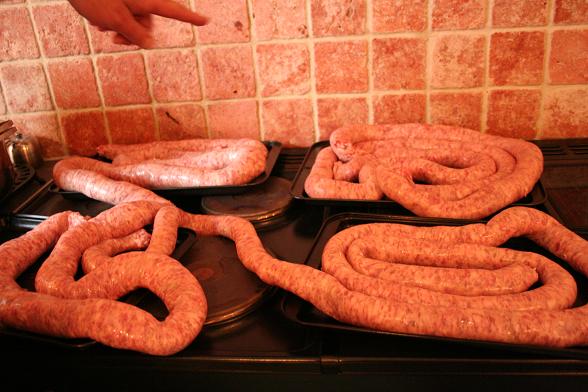
Stephen and I are on holiday in the Lake District with 14 friends. As you can imagine, catering for that number of people is potentially challenging but, on the first evening, the solution was obvious: Cumbrian sausage from the local butcher, Harrisons of Wigton.
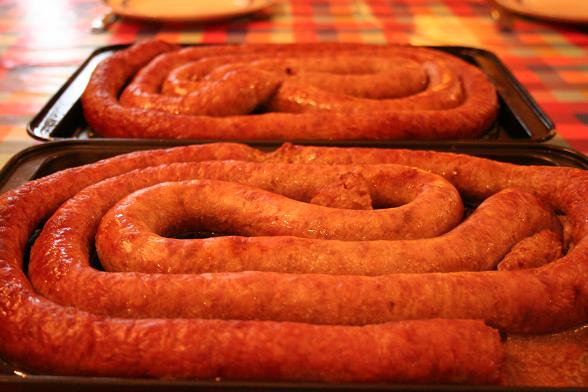
When I first heard of this plan, I idly wondered just how many sausages were required to to feed 16 people but I was quickly corrected – Cumbrian sausage isn’t served in individual portions and is purchased in either feet or yards. Unfortunately, I didn’t find this out until later so I’m not sure how long our sausage was, I do know it was 15lbs in weight though.
According to Wikipedia, the distinctive feature of Cumberland sausage is that the meat is chopped, not minced, giving the sausage a chunky texture. Having eaten quite a lot of it, I can confirm that this is indeed the case. What was also evident was the softness of the meat; it almost melted and was difficult to cut in slices, we used scissors instead of a knife to serve but I’m not sure if this is traditional or not. It was a very different product to the Cumberland style sausage I’ve eaten before and all the better for it, hopefully we’ll be able to find some to take home with us when we leave.


Scones
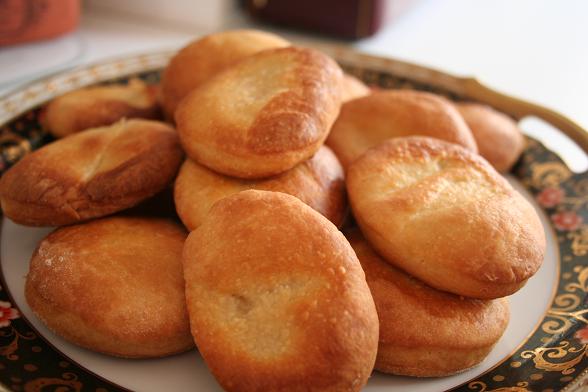
These were supposed to be scones but I think a more accurate name for them would be biscuits since they came out very flat. A little research has taught me that I probably overworked the dough and cut them too thin. They tasted good and the texture was right, they were just too small and flat.
Three Onion Tart
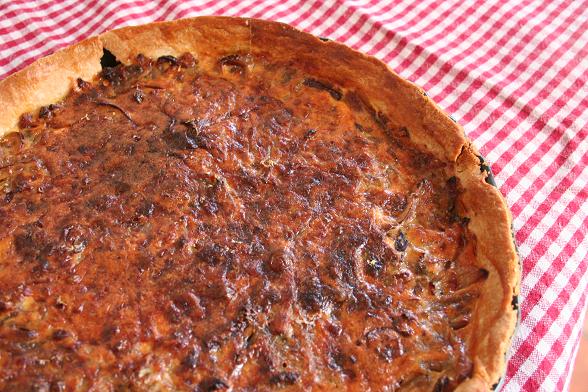
Today was a big baking day, starting with this Delia tart. I didn’t make the pastry and didn’t even manage to roll the ready-made stuff out very well but it tasted fine and the filling was very good. This is quite a time consuming recipe and there are various steps to go through that make it more difficult than an ordinary tart or quiche recipe but it was worth the pain.
Mine seems a lot darker than Delia’s version and I’m not sure why since it wasn’t overcooked, it may well be to do with the very dark yolks on the Burford Brown eggs.
Potato and Chorizo Salad
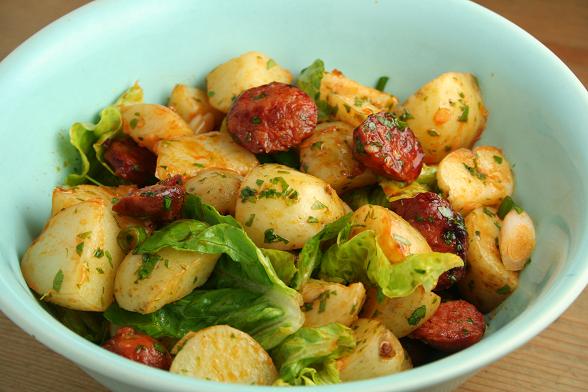
We’re going away on Saturday so this week is all about using up the stuff that’s hanging around in the fridge and cupboards. This is quite similar to the chorizo and potato dish we cooked last week but lighter and more like a tapas dish really. It worked well and was very quick and easy, some green beans or peas would have been a good addition.
Not really a recipe but take some cooked new potatoes and some warm chorizo, mix together, add some spring onions and lettuce, season and serve.
Lentil Ragu
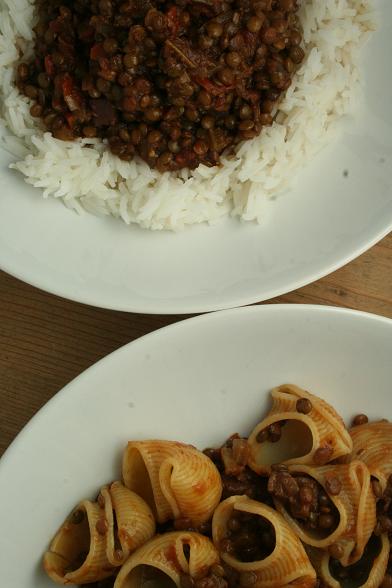
It doesn’t happen often but sometimes, I just don’t feel like cooking. It’s more likely to happen if there isn’t anything exciting to cook with which is precisely what happened this evening. Faced with a cupboard full of beans and lentils, inspiration deserted me and no matter how hard I tried, I just couldn’t think of anything to cook and moreover, I couldn’t be bothered. So, rather than resorting to toast and Marmite, I threw together a quick lentil ragu which I had with pasta and Stephen had with rice.
It was good, pretty similar to last time and the time before that and the…you get the idea. It’s not going to win any prizes for excitement or individuality but it fed us which was good enough.
(The camera obviously wasn’t feeling it tonight either, hence the very brown picture. Normal service will hopefully be resumed tomorrow).
A Day in Lille

I’m not very good at getting up early, particularly at the weekends. My favourite kind of Saturday involves lounging around watching Saturday Kitchen with some tea and toast while planning what we’re going to cook that weekend.
There was no time for that this weekend though since the alarm was set for 4am ready for our day trip to Lille, courtesy of Eurostar. As part of their Little break, Big Difference campaign, a group of food bloggers were invited to spend the day in Lille, sampling some of the city’s finest food and drink.
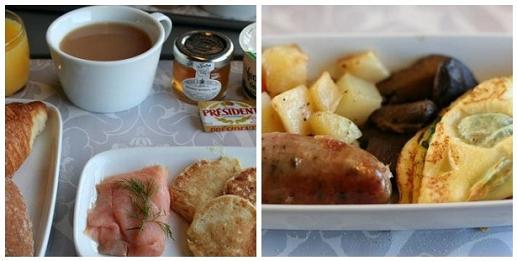
After just an hour and a half on the train, we arrived in Lille just as the city was starting to wake up. The architecture is beautiful and there were lots of interesting looking shops hidden down little alleyways all full of our favourite things: food and kitchenalia.
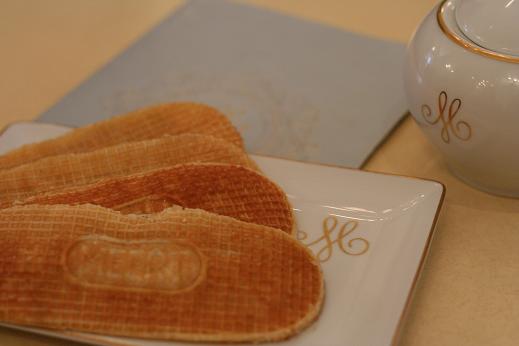
Our first stop was Meert, a pattisserie famous for it’s gaufre (waffles filled with vanilla sugar and cream). Having had breakfast on the train and macarons on the way to Meert, I don’t think anyone could be described as hungry but the window display left us in little doubt that we would be foolish to miss out. Stephen and I both ordered the gaufre and expecting something Belgian in style, we were surprised when they arrived; the French version was much smaller than the Belgian variety but intensely sweet and buttery. They were just the right size though and the perfect accompaniment to the bitter coffee we had also ordered.
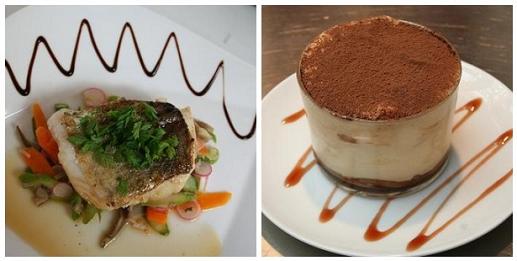
With coffee and pastries finished, we left Meert and made our way to L’atelier des chefs where we to cook our own lunch under the watchful eye of their head chef. In teams of four, we assembled tiramisu for dessert which was whisked away to the fridges to set while we got on with our main course: lacquered cod with pan-fried vegetables. Stephen and I do a lot of cooking together and have fallen into a comfortable routine so cooking with other people was a new experience for us but one which we enjoyed. Although we’ve cooked similar dishes to this at home we did pick up a couple of tips, one of which is that for crispy skinned fish, it’s better to start with a cold pan.

The last stop of the day was at La Capsule for a tutored beer-tasting. We had been expecting to visit Phillipe Olivier so that we could taste some local cheeses but he wasn’t available due to a family emergency (which he explained in typical French style: while leisurely sipping coffee at Meert!) so the cheese was brought across to the bar instead. It felt slightly odd to be drinking beer since these kinds of events normally involve wine, I was very glad of the opportunity though since I don’t normally drink a lot of beer. Our host ran through four different beers, all of which were local to the area (and by local, I mean within 20km). Our favourite was the La Bavaisienne which was deeply hoppy with a sweet, round note.
Full of cheese but bouyed by beer, we began making our way back to the station to return back to London. We didn’t have much time to browse on the return journey but I did manage to snap up one of the last baguettes from a boulangerie on the way. It would have been lovely to have spent the evening in Lille and there were certainly plenty of cafes and restaurants to choose from (not that any of us were hungry) but we made do with Champagne at the St Pancras Grand when we returned to London. Not our usual Saturday but a lot more fun than repeats of Saturday Kitchen and queuing at Waitrose.
The full set of photographs from the day can be seen here.
Salt Marsh Lamb and Sauteed Potatoes
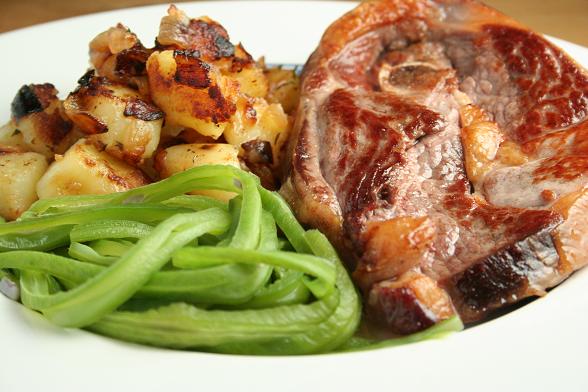
We were supposed to go on a picnic today but the weather looked so unreliable that we ended up cancelling. Faced with a second evening of non-planned meals, I spent a while looking at recipes online; nothing inspired me though so I paid a visit to the butcher to see if I could find anything there. I looked at sausages briefly but then I spied the Salt Marsh lamb. We both love lamb and eat it a lot, Salt Marsh lamb is our absolute favourite though and it’s not around for very long so it wasn’t a difficult decision.
We kept the lamb free of any herbs and just sprinkled it with a little salt before frying. These were thick, leg steaks so we cooked them for three minutes on one side and two on the other which resulted in very pink steaks. I think three minutes per side would have been better.
At the same time, we cooked some sauteed potatoes and steamed some runner beans, all of which worked well with the meat. Stephen commented on the almost game-like flavour of the lamb, a result of a long hanging time we suspect.
Chicken Fajitas with Sweetcorn and Black Bean Salsa
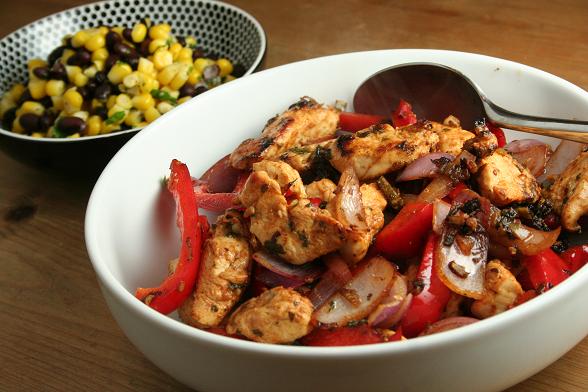
I thought we were going out this evening but I got my dates muddled up, luckily I realised in time and defrosted some chicken breasts without much thought on what to do with them. Chicken breasts are something we’ve got used to having in the freezer but we don’t eat them much now and couldn’t really think of anything inspiring to do with them.
In the end, we decided on chicken fajitas and, just to make it a little more interesting, a salsa that had been recommended by a friend. Both were really good, we used our normal recipe for the fajitas and the Good Food recipe for the salsa.
Chorizo with Cabbage and Potatoes
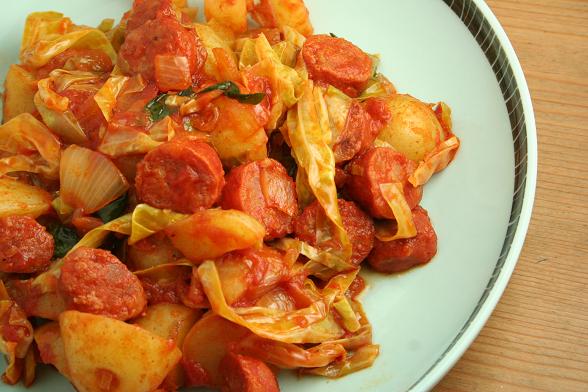
Having had presentation issues with last night’s dinner, we thought that it would be good if we could rectify that tonight. However, when we went through what we had and what needed to be used up, we ended up with chorizo, cabbage, potatoes and half a tin of tomatoes and the result was tasty but not particularly presentable. This reminded us of a previous chorizo, cabbage and potato dish we we had rather enjoyed, so decided to do something along those lines except with the healthier tomatoes replacing the creme fraiche.
We peeled and chopped the chorizo before frying it. When it had released some oil, we added diced onion and let that soften before adding chopped garlic and paprika. This all smelled really good when it was frying. Then we added the tinned tomatoes and let them cook for about ten minutes before adding shredded cabbage and pre-boiled new potatoes. We seasoned with salt and pepper, then put the lid on and let it all cook together for another five to ten minutes until the cabbage was done, then stirred in a little fresh basil.
The result was tasty, but not really cohesive. Perhaps we should have let the potatoes cook in the tomato liquid rather than pre-cooking them and adding them at the end, and added some herbs earlier on in the process.
Black Pudding and Pea Risotto
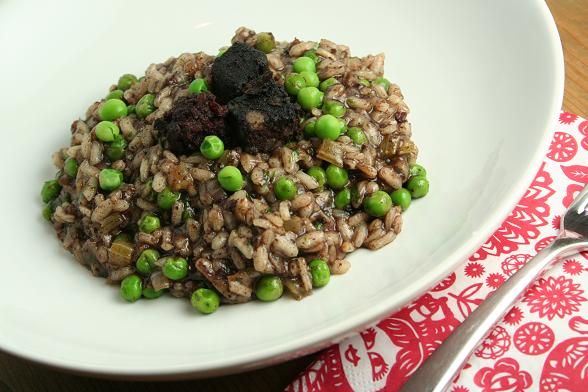
I can’t remember how we came up with this idea, but I do remember that we thought it would be brilliant. It didn’t quite turn out that way.
We started off by chopping the black pudding into cubes and frying it. We had planned to remove these and then put them back in at the end, but we only took half out and left the others in as they had started to break down a bit. Then we followed a normal risotto recipe – added onion, celery and garlic, softened that, then added rice and vermouth and then progressively added chicken stock.
It was at the first ladle of chicken stock that we realised that it was going to look like mud risotto because the black pudding had completely broken down. Not very appetising. We thought that it reminded us a little of cooking with squid ink which isn’t so bad, but the black pudding was a lot grainier.
Anyway, near the ended we added some peas, chopped parsley, grated parmesan, a squeeze of lemon juice and some salt and pepper. It didn’t taste that bad, just didn’t look particularly appetising. If we try it again, we’ll definitely cook the black pudding first, then remove it and put it back in at the end.
