Roast Chicken

Tonight we were planning to have a beef stir fry, but we ended up eating the steak last night. We had a chicken which we were going to joint and then use the breasts for the stir fry (and keep the legs for later), but as Kerri was home a bit early today she thought it would be a good opportunity to make roast chicken. And a very good idea it was too; when I got home the aroma was delicious.
Stuffed full of onion, garlic and thyme, it was a very flavourful chicken. And all that flavour gave the gravy a wonderful richness too. In an attempt to be healthy, we didn’t make any roast potatoes. We did have a bit of home made stuffing though. And turnips, green beans and cabbage.
It seems rather indulgent to be eating roast chicken on a Monday; after the first day back at work following a week of holiday, it was a very welcome indulgence too.


Steak Sandwich
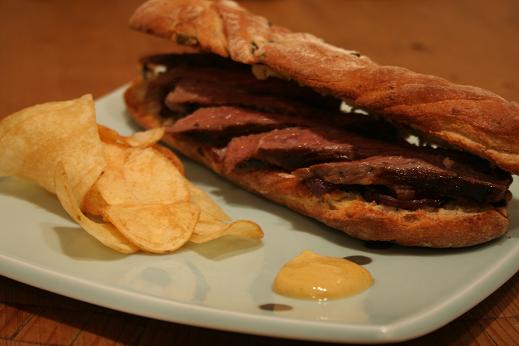
A fairly simple dinner tonight as I’d been playing cricket but got home a lot earlier then I usually do, and we realised that we actually had some time to cook something but hadn’t planned anything. So we “borrowed” the steak from tomorrow’s dinner, cooked that to nice and pink, then sliced it up and served it on toasted ciabatta with caramelised onions and horseradish sauce (yes, that’s mustard on the plate though; the horseradish sauce was inside the sandwich). And some Kettle Chip crisps. Yum.
Pesto

Stephen is out playing cricket today and I had planned on a quick lunch of spaghetti and puttanesca from the freezer. When I finally found the sauce buried at the back I saw that there were actually two servings and, not wanting to eat for two or let any any go to waste, I left it snuggling up to the chicken stock and re-thought my lunch options.
We bought a new basil plant yesterday so I decided to make up some pesto. With some trepidation I put my ingredients (basil, pinenuts, oil, parmesan, garlic and salt and pepper) into the Magimix and crossed my fingers that it wouldn’t let me down like it did yesterday (a handful of breadcrumbs for the veal, not a chance). It didn’t and within a few minutes the six ingredients had turned into a glossy, green sauce.
While I was waiting for the water to boil, I quickly cooked off some cherry tomatoes in a saucepan for about 10 minutes.
When the pasta was done, I mixed the whole lot together. I suspect it’s not all that authentic but it tasted good which was really what I was aiming for.
Veal Escalope

We’d been wanting to cook veal ever since reading an article in the Metro newspaper about how welfare standards had improved and many of the supermarkets were supporting the production of “friendly” veal. They may well have been supportive but we weren’t able to find any until we popped into Waitrose last week and came across one small, lonely packet. We weren’t able to find anymore so had to make do with the one piece and lots of vegetables.
We kept it simple and just breaded it so as not to hide the flavour too much and it worked really well. The flavour was delicate and the meat tender, a perfect contrast to the crisp breadcrumbs.
Chicken Fajitas in Pitas for Lunch
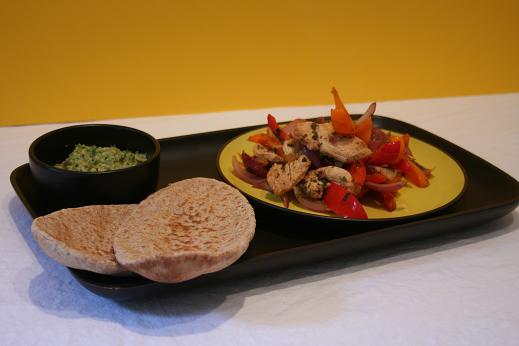
We’d planned on having chicken salad for lunch but after a visit to the gym we both felt like something more substantial was required. Luckily, we had all the ingredients for chicken fajitas and guacamole. Filling, tasty and hot. Just what we need before we embark on an afternoon of spring (well, autumn really) cleaning.
Angels on Horseback and Plaice with Nut-Brown Butter

Tonight we decided to cook ourselves a special dinner. Seeing as we are on holiday this week, we had some time to shop for ingredients today and start preparing early.
We were trying to think of dishes that would fit in well with British Food Fortnight, and after browsing various cook books, we ended up choosing two from the same book – Gary Rhodes’s New British Classics. Not that it’s that new any more, but it does contain some interesting recipes.
The first was Angels on Horseback, which are oysters wrapped in bacon. We bought six oysters and it took rather a while to shuck them – I have great admiration for people who have the skill of doing it quickly. The oysters were very briefly simmered, then wrapped in bacon and grilled for a couple of minutes on either side and served on a long slice of toast. It is the first time either of us remember eating these, and both the texture and flavour of the oyster (slightly squishy and salty and ozoney) and the bacon (um… just bacony really – it was unsmoked) go well together, complemented by the crunchiness of the toast.

For main course we chose Dover Sole with Nut-Brown butter, but as luck would have it, we weren’t able to get hold of any dover sole when we needed it. So we went with plaice, which is fairly similar. Gary’s instructions said to skin the dark skin side and implied that it would be very easy. It wasn’t. The instructions also implied that it would be easy to pull out the fish’s insides once the head was off. It wasn’t. Anyway, we eventually got there and put it under the grill skin-side up.
Then we made the nut-brown butter sauce and forgot about the fish and it caught a bit under the grill, leaving some black marks which don’t look that great in the picture. Still very tasty though; Kerri commented that it tasted like restaurant fish rather than home-cooked fish. Probably all the butter 🙂

To drink we had Nyetimber vintage 2000 sparkling wine to start with, to keep with the British theme. This was very good, with loads of toasty aroma coming from the glass even if you were nowhere near it. With the plaice we had a rather nice white Pernand Vergelesses (part of Burgundy) which went well with the fish and the butter sauce.
Janssen’s Temptation

This is one of those recipes that seems to have been following me around for a while which we finally got round to making this evening. Its a Swedish recipe and is usually part of a smorgasbord, served with cold meats and fish. Also traditionally served at Christmas and/or Easter.
Unfortunately, I tried to improvise so that I could use up some marinated anchovies that had been languishing in the fridge for a while. They didn’t end up melting down in the same way as the jarred anchovies do and I think this led to a lack of flavour; of course I can’t be sure as I’ve never had the real dish. As I understand it, Swedish anchovies are very different to the type we get here so the UK version is very different to the traditional anyway.
We followed Lizzie’s recipe, apart from her very good advice about which anchovies to use 🙂
It was still tasty and we both enjoyed it, it’s similar to one of our very favourite potato dishes: dauphinoise. We served it with some garlicky greens.
Guacamole
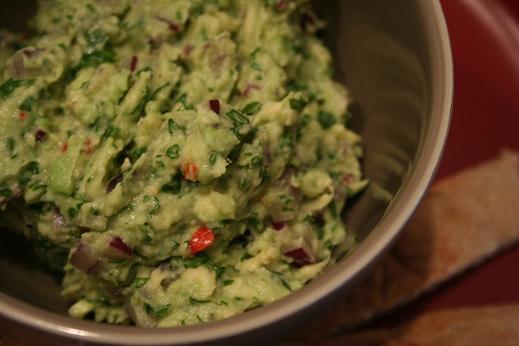
We’re on holiday this week, but I had to pop into work today. While I was out, Kerri had made some delicious guacamole. It was rather hot due to the birds eye chillies that were in it, but delicious and excellent served with toasted pita bread slices. Yum.
Lemon and Poppy Seed Cake

Stephen and I have this week off and don’t have much planned apart from a little cooking and a lot of relaxing. We’re both quite fond of cake but don’t tend to eat them very often or make them ourselves as we always seem to have one eye on the waistline. Being on holiday is a good excuse though so I did a little research and this is the recipe that stood out.
Another reason for the lack of baking is, as I’ve mentioned numerous times before, I’m not much of a baker. I’m a bit of a throw it all in the pot and see what happens kind of cook; baking and all its associated measuring and weighing doesn’t fit well with that kind of mentality and, if I’m really honest, I find it all a bit scary.
This recipe however was very easy to follow and took very little time to put together. I was slightly worried when, 10 minutes before the end of the cooking time, it was very brown on top and wet in the middle but I put some foil on the top and took a few deep breaths. We ended up cooking it for slightly over the one hour but it turned out well. Full of lemony flavour, moist in the middle and crunchy on the outside. Delicious and perfect with a cup of tea.
Recipe courtesy of Nigella via the lovely Penny of Penelope’s Pantry.
Butternut and Parsnip Risotto
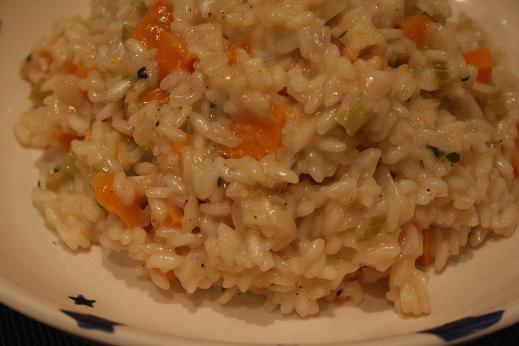
For a while now, Kerri has been going on about risotto. In a good way though. She initially mentioned butternut squash risotto, which I thought would be excellent with some added sage. At some point she changed her mind to parsnip risotto, but I managed eventually to persuade her that making risotto with both parsnip and butternut in it would be a good autumnal dish. As it turned out, we ended up adding thyme as we have some in the garden.
It was a fairly typical risotto recipe. We cut the butternut and parsnip into bite-sized chunks and roasted them in the oven with some olive oil, salt and pepper and a dusting of nutmeg. Then when the risotto was almost done, we added them and stirred them in, along with a big handful of grated parmesan.
The result was rather good (which is a good thing after all that stirring…) and the pieces of parsnip and butternut were tasty additions.
